

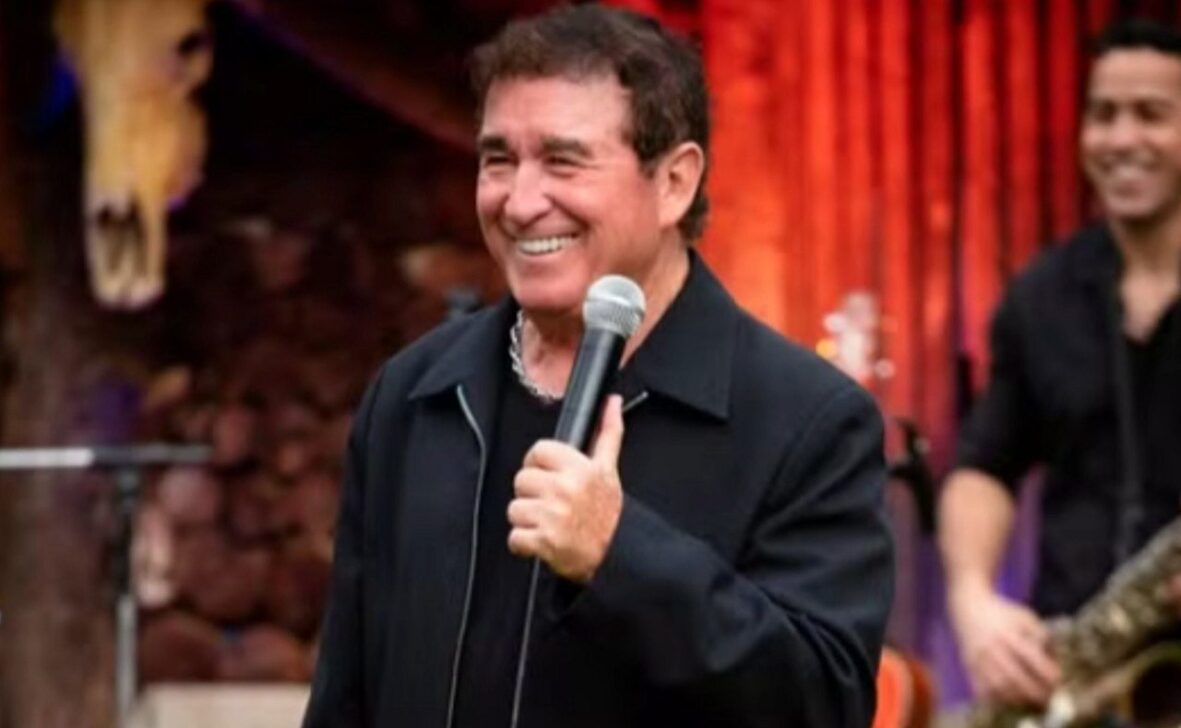
A recent verdict forced singer Amado Batista to pay R$453,000 in compensation to the parents of a three-year-old child. The boy, son of the property’s caretakers, drowned in 2022, on the artist’s farm, located in Goianápolis, in the Metropolitan Region of Goiânia. In addition to the principal amount, the sentence also establishes a monthly family pension.
The court order was issued on June 15th. The musician’s lawyer, Ildebrando Loures de Mendonça, issued a statement expressing deep respect for the family’s pain and recognizing the seriousness of what happened. However, the singer’s legal team has already declared that they will appeal the decision to higher courts, as they disagree with some of its grounds.
The defender emphasized that all defense considerations have a strictly technical-legal nature, without any intention of reducing the intense suffering caused by the loss of a child.
Aspects of the court decision imposed on the singer
The sentence by judge Leonardo de Camargos Martins, from the district of Goianápolis, outlined the following terms:
- Payment of a monthly pension to parents, corresponding to two thirds of 70% of the current minimum wage. This benefit will be granted from the date on which the child turns 14, extending until the child reaches 25 years of age.
- After the victim reaches 25 years of age, the value of the pension will be adjusted, rising to one third of 70% of the minimum wage. Payment will continue until the child reaches life expectancy, according to the 2022 Brazilian Institute of Geography and Statistics (IBGE) table, or until the parents die.
The judge highlighted in the decision that “the death of a child represents the deepest pain that a human being can endure, constituting moral damage in its purest form, which requires no proof.”
Compensation, as highlighted in the decision, has a dual purpose: compensatory, seeking to alleviate the suffering of parents, and pedagogical-punitive, aiming to prevent the offender from repeating conduct considered negligent.
Amado Batista’s legal team argued the existence of concurrent guilt, which was partially recognized by the judge. The Court established a proportion of responsibility of 70% for the singer and 30% for the child’s parents, due to a failure in the duty of care and supervision of the child at the time of the tragic accident. This consideration reflects the complexity in cases of accidents on private properties, where responsibility can be shared between the owner and those directly responsible for the victim, a crucial element in jurisprudence to determine the extent of compensation.
The artist’s lawyer also claimed that there was a restriction on the defense, justifying that the request for a technical examination to verify the safety conditions of the farm was denied. According to him, the production of this evidence would be essential to guarantee the full exercise of the adversarial process and broad defense.
The Goiás Court of Justice (TJ-GO) was consulted regarding the allegation of defense restriction and an official position is awaited.
The details of the child’s drowning in 2021
According to the parents’ statements to the Court, they were hired as caretakers in April 2022 and moved to the farm with their two children, one aged 11 and the youngest, aged 3. The month following the move, in May of the same year, the youngest son drowned in the property’s swimming pool.
The parents report that the assistance provided was inadequate, stating that the farm manager took the child to a hospital in Terezópolis. They claim that this city would be further away from Goiânia and would have fewer medical resources than the capital.
From the beginning of the contract, the parents had asked the farm manager to install protection in the pool, a request that, according to them, was ignored. However, the singer’s defense vehemently denies that any request for protection was made.
The official position of Amado Batista’s defense on the conviction
Amado Rodrigues Batista’s defense issued a statement regarding the sentence issued by the Civil Court of the District of Goianápolis–GO.
Initially, the singer’s representatives reiterate their deepest respect for the family’s pain and recognize the severity of the incident. They clarify that the following considerations are exclusively technical-legal in nature and do not aim, in any way, to alleviate the suffering generated by the loss of a child.
Regarding the decision, the defense pointed out the following main arguments:
- Recognition of shared responsibility by the Court.The sentence recognized concurrent guilt, determining that there was a failure in the duty of supervision and care for the child at the time of the accident. The court stated that the minor was under direct supervision shortly before the incident, which contributed to the causal chain of the event.
- Lack of proof of prior notice for protection.The court decision found no evidence of any prior warning or request for the pool to be isolated, fenced or secured. The judge concluded, based on the evidence presented, that there was no certainty that such a request had been made.
- Allegation of restriction of broad defense.The legal team understands that their rights of defense were curtailed, as the request for technical expert evidence was rejected. This expertise would be crucial to confirm the real security conditions of the farm, including the fact that the headquarters is completely fenced. The absence of this proof would be essential for the full exercise of the adversarial process and broad defense.
- Filing an appeal against the sentence.Due to disagreeing with several reasons for the decision, especially the recognition of omission or negligence attributed to the singer, the defense announced that it will file the appropriate appeal. Lawyers trust the review of the sentence by higher courts, arguing that Amado Batista did not act with omission or negligent conduct.
The defense remains available for any clarifications and reaffirms its confidence in the Judiciary.