

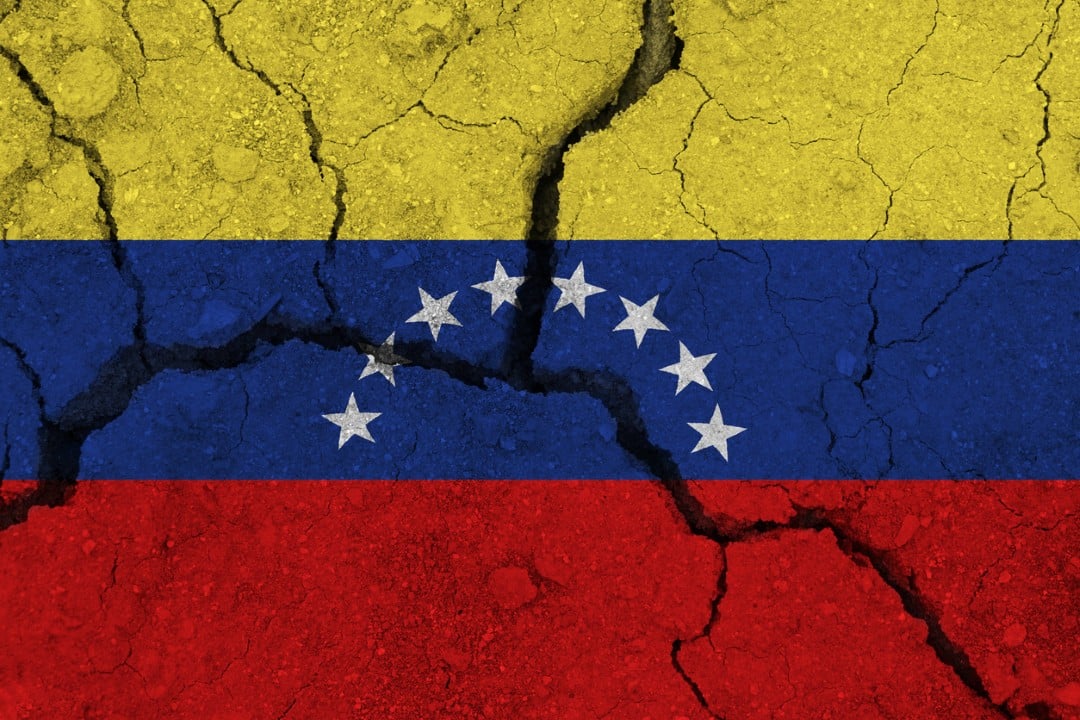
A series of highly intense earthquakes, with magnitudes of 7.2 and 7.5, shook the northern region of Venezuela and its capital, Caracas. Preliminary information indicates the collapse of several buildings in the city and the collapse of the roof at the main airport. The exact extent of casualties, between injured and dead, remains uncertain at this time.
The United States Geological Survey (USGS) reported two powerful earthquakes, measuring 7.2 and 7.5 on the Richter scale, separated by an interval of just 39 seconds, that affected multiple Venezuelan areas on Wednesday afternoon. The central point of the tremors was identified northwest of Montalbán, in the state of Carabobo, in the central portion of the country. Even 300 kilometers away, the vibration was clearly perceived in the capital, Caracas. The US National Tsunami Warning Center clarified that this sequence of events is known as a “double seismic”, characterized by the occurrence of two large earthquakes in quick succession in the same area.
Interior Minister Diosdado Cabello informed the nation about a strong tremor, the intensity of which surpassed the 7.0 mark. He detailed that the earthquake was noticed in locations such as Trujillo, Yaracuy, Carabobo, Aragua, Miranda, Caracas and La Guaira, with the most severe impacts concentrated in the epicenter area. Cabello confirmed the collapse of buildings in Caracas and the declaration of an “alarming situation” for several locations in the capital. Among the most affected areas are Palos Grandes, known for its seismic activity, and Altamira, where at least one building completely collapsed. At Maiquetía Airport, the main roof gave way, leading to the cancellation of all departures and arrivals. The minister advised citizens to avoid their homes due to the risk of new replicas, reiterating that the number of victims is still undetermined.
Faced with the intensity of the tremor, residents rushed to evacuate buildings. Audiovisual records circulated throughout the Venezuelan capital show widespread confusion and devastation, with at least one building completely collapsed and countless others showing significant structural damage.
According to data from the United States Geological Survey (USGS), the tremor originated at a depth of 13.2 kilometers, characterizing it as a surface, or “shallow” seismic event. After the main shock, the US Tsunami Warning System issued a warning for the regions of Puerto Rico and the Virgin Islands, indicating the possibility of anomalous waves.
Resident of Chivacoa, in the north of the country, veterinarian María José del Pino described the experience in her home. She reported hearing a loud bang while having lunch with her children, initially mistaking it for a truck, before the ground began to shake. “People were running in terror through the streets, some screaming. We are still outside; the apprehension of entering our homes is great, given the known structural fragility of many buildings in Venezuela, a factor of constant concern in a seismically active region”, he stated, according to Maolis Castro. She added that the lack of cell phone signal, leaving only Wi-Fi, made it difficult to communicate with family in Caracas. His uncle, in downtown Chivacoa, witnessed poles and electrical cables visibly swaying.
Favio, a driver traveling on a highway in Caracas, described the initial sensation: “I felt like I had hit something with the car.” He observed the subsequent evacuation of buildings, the appearance of cracks in walls and the collapse of objects and structures in different parts of the city.
The Venezuelan capital keeps the memory of a previous devastating earthquake, which occurred in 1967, which until then represented the most intense seismic event recorded in the region. That shock, measuring 6.7 on the Richter scale, resulted in 236 deaths and approximately two thousand injured people, serving as a historical landmark of the city’s vulnerability to such phenomena.