Toto Wolff criticizes Balance of Performance in F1 and warns about politicization of the sport
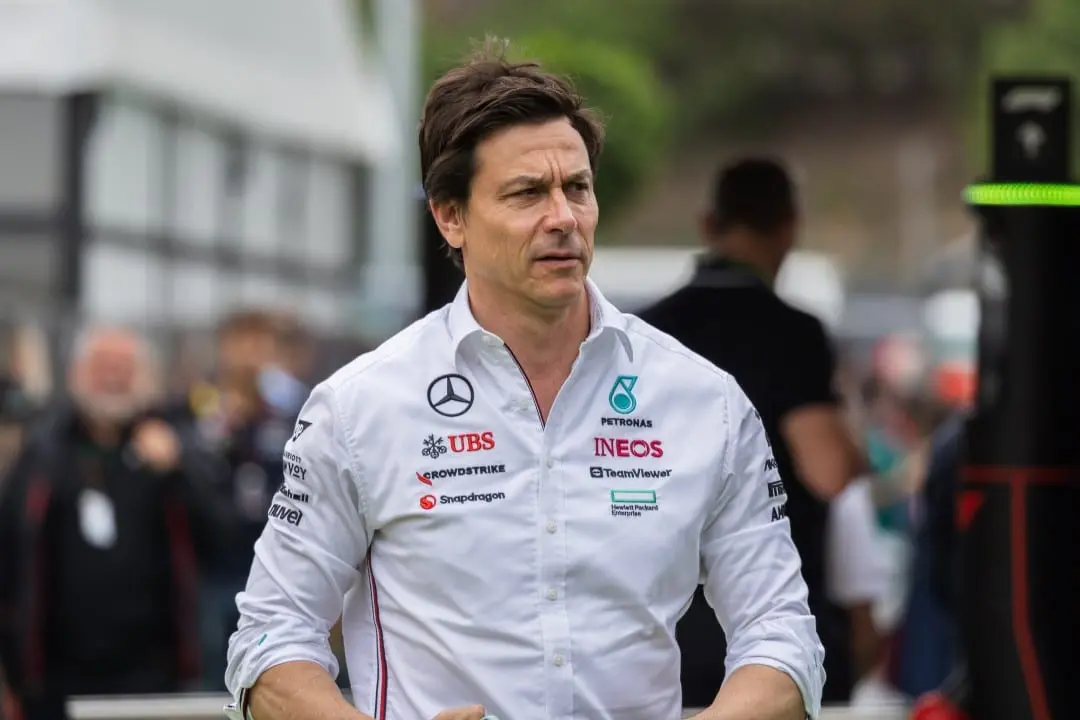
Toto Wolff, head of the Mercedes team, reiterated his defense for Formula 1 to stay away from Balance of Performance (BoP), a performance equalization system.
The Austrian executive highlighted that such a methodology introduces political complications and, for this reason, the main motorsport category should not implement it under any circumstances.
Although the International Automobile Federation (FIA) has developed a mechanism to safeguard engine manufacturers in the 2026 regulations, Wolff made an explicit distinction between this measure and the BoP.
He explained that F1 can accept small technical modifications; however, any system that seeks to level performance artificially would, in his view, be a serious mistake for the sport.
The search for balance: the ADUO mechanism for 2026
For many years, endurance competitions have used Balance of Performance to match vehicles with different designs, seeking greater parity on the tracks.
A widely cited example is that of the final phase of the LMP1 era, in which Toyota competed under this system after the departure of Porsche and Audi from the World Endurance Championship (WEC).
Even with its application, the BoP has always generated significant controversy, as many manufacturers argue that it penalizes those who invest in the development of technologically superior designs.
In Formula 1, Balance of Performance has never been an integral part of the official regulations, but the FIA created ADUO with the aim of assisting power unit manufacturers who may face challenges in the transition to the 2026 standards.
Previously, Wolff had expressed uneasiness about this feature, warning that it could theoretically allow less competitive manufacturers to outperform those who have created the most advanced engines.
Despite initial apprehensions, the Austrian leader emphasized that ADUO merely functions as a safeguard device, distancing itself, in his assessment, from an authentic Balance of Performance.
Toto Wolff details support for the FIA mechanism
When addressing the topic, Wolff clarified that the purpose of creating ADUO was to avoid a repeat of the 2014 scenario, when a single engine manufacturer achieved overwhelming superiority over the others.
Leia Também

Messi reaches 19 goals in FIFA World Cups with great free kick for Argentina in clash with Jordan

Cristiano Ronaldo shines beyond the pitch at the 2026 World Cup with business empire and family luxury

At 41, Cristiano Ronaldo reaffirms his historic legacy and prepares to shine in the 2026 World Cup
“It was a protective mechanism, exactly as it had been planned, to avoid the situation of 2014, when an engine manufacturer had such a huge advantage that it dominated test mileage and race results,” he said.
The Mercedes boss acknowledged that his team benefited from this advantage at the time; however, he highlighted that the FIA’s intention is to prevent new manufacturers from starting the next technical era with a gap that is almost impossible to overcome.
“We were on the winning side at that time. However, we wanted to prevent this from happening again, especially with new manufacturers like Audi, as well as Honda in partnership with Aston Martin and of course Red Bull”, explained Wolff.
Mercedes boss reiterates refusal to debate BoP
Then, Wolff reinforced his conviction on the subject, declaring that any mention of Balance of Performance causes him an “immediate allergic reaction”.
“When we start talking about BoP, I have an immediate allergic reaction. It’s something we should stay very far away from in F1,” declared the Austrian.
The director noted that the system is a constant source of political controversies in the categories that use it, which sometimes leads manufacturers to lose interest in participating in the sport.
“It’s political confusion in all other categories. It makes manufacturers abandon motorsport. I followed this very closely in the DTM, in the GT categories and also in Le Mans”, he detailed.
Finally, Wolff vehemently reiterated that Formula 1 should never determine the balance of performance through political agreements.
Instead, he suggested that subtle technical adjustments are the right approach to lessen excessive discrepancies between power units, without compromising manufacturers’ inherent competitiveness.
“We should never be tempted to let someone else decide how the performance balance should work,” he said.
“If there is a fine-tuning mechanism to ensure that no manufacturer is constrained on the UP side, that is the correct path. After all, when we look at aerodynamics, that mechanism was created for a completely different situation”, he concluded.