

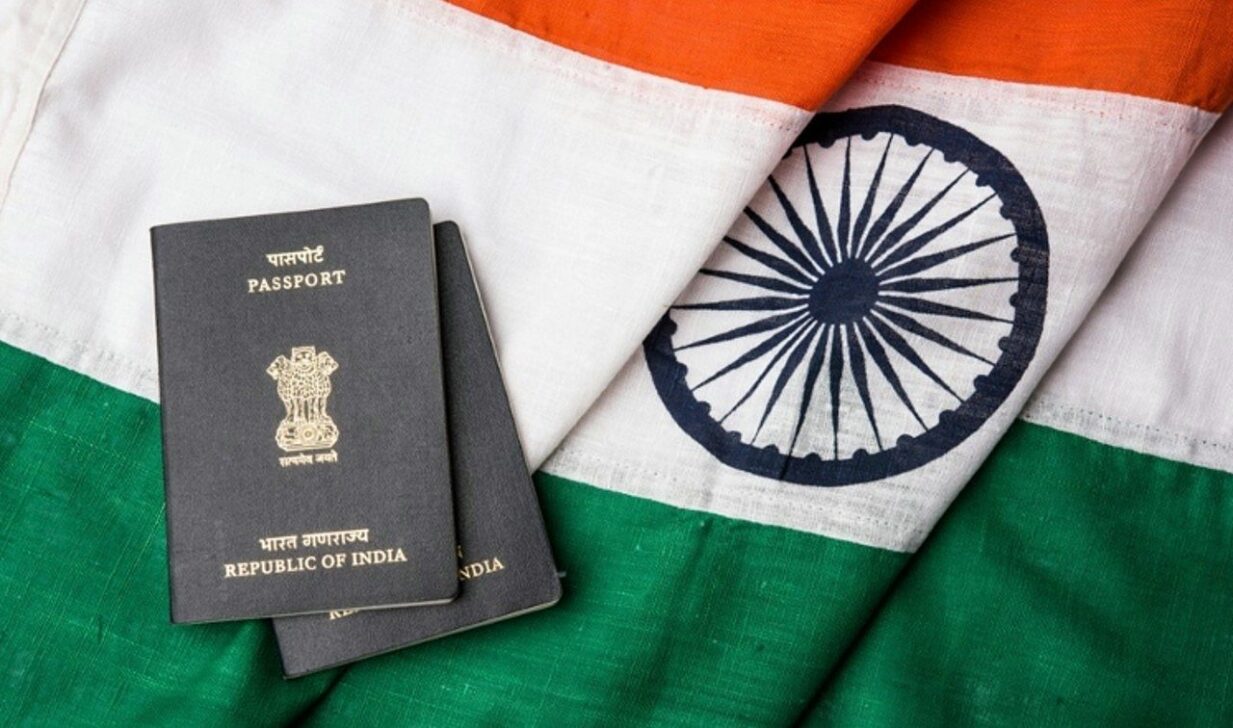
The government of India has sparked a national debate by declaring that the Indian passport is exclusively a travel document and not a definitive certificate of citizenship. The information, released by a senior official from the Ministry of Foreign Affairs, reverberated in several media outlets in the country, raising questions about which document would, in fact, be irrefutable proof of citizenship status.
New guidance from the Ministry of Foreign Affairs
Recently, officials from the Ministry of External Affairs emphasized that the primary function of the Indian passport is to facilitate travel to other countries and territories. The document, therefore, should not be compared to other certifications that serve to prove citizenship rights. The official position highlights that although the passport confirms nationality during travel, it does not have the status of conclusive proof of citizenship in all legal circumstances.
Differences between passport law and citizenship law
The legal distinction behind the Ministry’s statement is rooted in two distinct pieces of legislation. Former Indian Foreign Secretary Nirupama Menon Rao clarified that passports are issued under the Passport Act, 1967, while citizenship is governed by the Citizenship Act, 1955. These laws operate in different spheres: one controls the travel document and the other defines the legal status of a citizen.
Menon Rao argues that although the law and public perception are not always in sync, the distinction is legally correct. In situations of fraud or judicial challenge to citizenship, the final determination depends on the Citizenship Law of 1955 and the evidence presented in accordance with its criteria. This means that, before the law, the passport is not the only decisive document in all possible disputes about citizenship, even if its practical importance is undeniable.

Judicial precedents and the absence of definitive proof
The discussion is not unprecedented in Indian courts. Back in 2013, the Bombay High Court denied a habeas corpus petition from a man and three other individuals accused of being illegal immigrants. They had submitted passports (later cancelled), Aadhaar cards and birth certificates as proof of Indian identity, but were unsuccessful in their plea. At the time, the Times of India newspaper reported that a birth certificate, passport and Aadhaar card may not be enough to prove Indian citizenship, especially for those born after July 1, 1987.
The Passport Law of 1967, in its Section 5, requires rigorous analysis of the application and investigations before issuing the document. Section 6(2)(a) further reiterates that passport will be refused if the applicant is not an Indian citizen. However, in specific cases of fraud or incorrect information when acquiring citizenship, the government reserves the right to cancel or confiscate the passport.
Political reactions and questions about the scope of the measure
The official statement provoked a wave of criticism and doubts among political figures in India. Renowned lyricist and filmmaker Javed Akhtar expressed surprise on X, questioning whether the government was issuing passports to people with not fully proven Indian citizenship, calling the argument “extremely strange and contradictory”.
Former law minister and lawyer Kapil Sibal also spoke out on the same platform, raising the question: “what document proves citizenship?” He warned about practical implications, such as the possibility of an immigration agent challenging someone’s citizenship or denying the right to vote, suggesting that such measures could have an impact on election results.
- What do the police check before issuing a passport?
- Does the country issue Indian passports as travel documents to non-Indians?
- Wouldn’t this statement raise questions in other countries about whether Indian passports are also being granted to non-citizens?
The challenge of identifying conclusive proof of citizenship
With the relativization of the passport as definitive proof, Indian society is faced with a crucial question: which document can conclusively attest to citizenship? The voter ID card, for example, confirms registration on the voter list, but is not an independent and absolute proof of citizenship, although only Indian citizens can register.
The Indian Election Commission, however, retains the right to verify the eligibility of voters. During the Citizenship Information Recovery (SIR) period, the old voter card was not considered the definitive answer. Thus, if neither the passport nor the voter registration card are final proof, the search for a document that offers full legal certainty for citizenship remains a challenge for millions of Indians.