

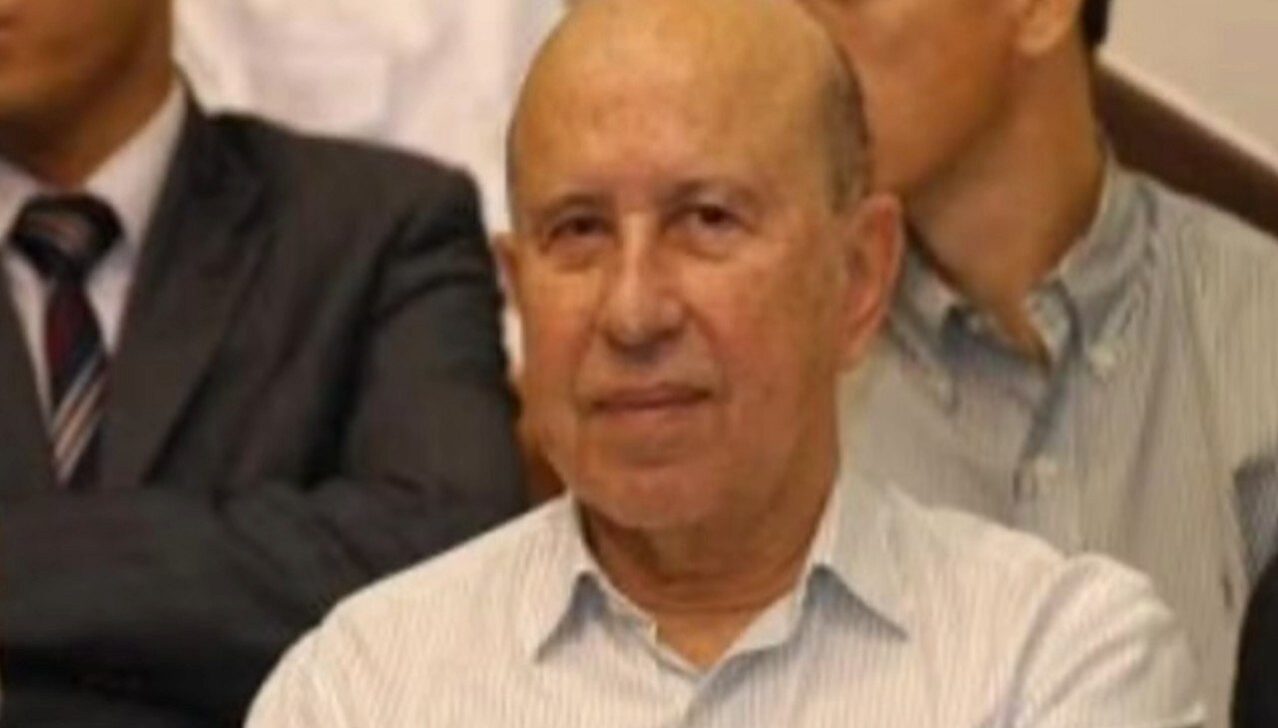
The capital of Mato Grosso do Sul, Campo Grande, records the death of Marcelo Miranda, former governor of the state, which occurred this Tuesday, the 23rd. He was 87 years old and the news of his death was officially confirmed by his family.
Miranda had been hospitalized for approximately twenty days in a private health unit in the city, facing pneumonia. According to reports, the politician had a history of heart and kidney conditions, and his health condition progressed to multiple organ failure.
The wake ceremony for Marcelo Miranda will be open to the public and will take place at the Legislative Assembly of Mato Grosso do Sul (Alems). Access will begin at 8am this Wednesday, the 24th, allowing the population to pay their last respects.
In recognition of his contribution, the governor of Mato Grosso do Sul, Eduardo Riedel (PP), declared official mourning in the state for three days. The measure was published in an extra edition of the Official State Gazette (DOE), highlighting the former governor’s significant political trajectory.
Political and administrative career highlights
- Marcelo Miranda’s public journey included important mandates, such as:
- Mayor of Campo Grande (1977 to 1979)
- Governor of Mato Grosso do Sul by appointment (1979 to 1980)
- Senator of the Republic (1983 to 1987)
- Governor of Mato Grosso do Sul elected by direct vote (1987 to 1991)
Born on December 1, 1938, in the city of Uberaba, Minas Gerais, Marcelo Miranda Soares obtained his degree in Civil Engineering from the Faculty of Engineering of Uberaba. He also specialized in Municipal Administration, standing out not only as an engineer, but also as a cattle rancher and a public administrator with vast experience.
Marcelo Miranda’s legacy in the formation of Mato Grosso do Sul
Marcelo Miranda’s influence in Mato Grosso do Sul even precedes the officialization of the state itself. As an engineer, he played a crucial role in fundamental infrastructure works for the region, such as the construction of the Jupiá dam, a complex located between Três Lagoas and Castilho.
Later, his work at the Department of Highways (DER) was vital. He contributed to the implementation of an extensive program that resulted in the opening of around 4,500 kilometers of local roads, infrastructure that proved essential for regional development at the time.
In the public sphere, Marcelo Miranda assumed highly relevant positions, serving as mayor of Campo Grande between 1977 and 1978. With the subsequent creation of Mato Grosso do Sul, he rose to the post of governor between 1979 and 1980, being one of the central figures in the initial administrative structuring of the new federative unit.
His tenure as governor was marked by projects of great impact, such as the installation of an electricity transmission line of approximately 400 kilometers, connecting Campo Grande to Corumbá. Furthermore, it encouraged the creation of fifteen municipalities in a short period and made significant investments in the paving of strategic highways, many of which were later incorporated into the federal network, establishing the foundations for the progress of the young state.
Subsequently, between 1983 and 1987, he represented Mato Grosso do Sul in the Federal Senate as a senator of the Republic. Throughout his multifaceted career, Marcelo Miranda also served as regional superintendent of the National Department of Transport Infrastructure (DNIT).