

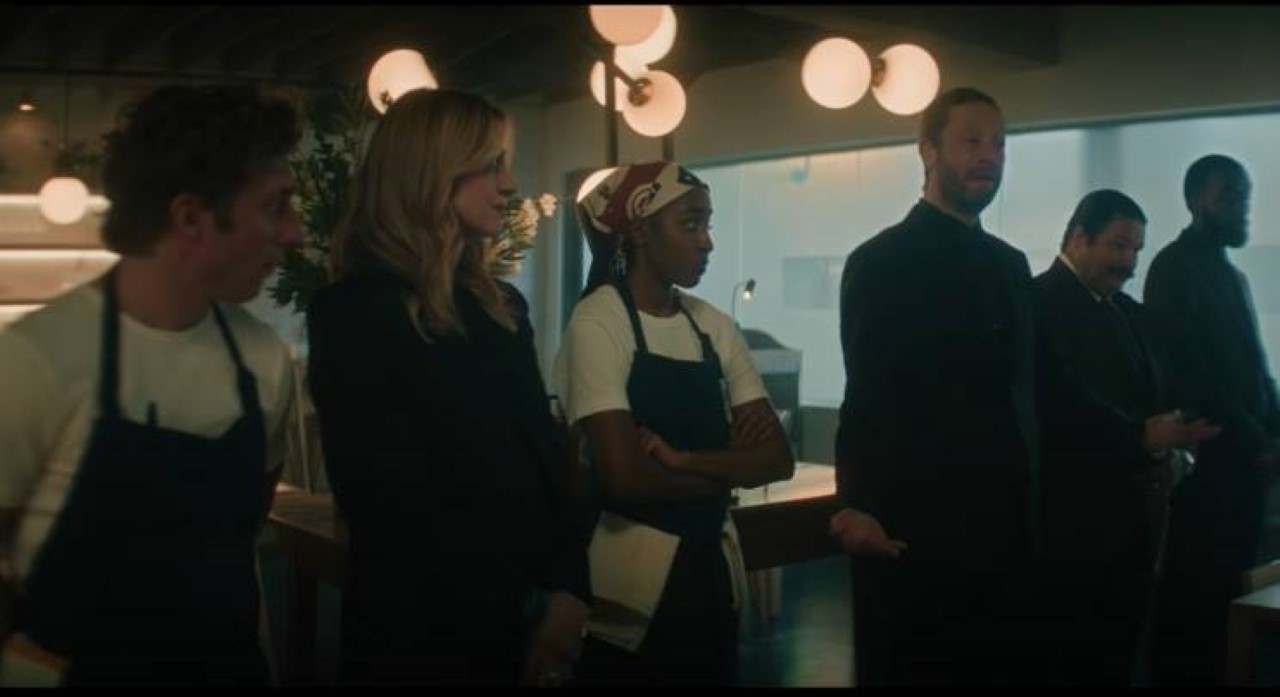
Acclaimed by audiences and critics, the series “The Bear” reaches its grand finale, cementing its legacy as one of the most impactful recent television productions. With the fifth season, the story of chef Carmy Berzatto and her team at The Bear restaurant reaches an outcome that many consider perfect, crowning an intense journey of self-discovery and challenges in the gastronomic universe. The conclusion of the saga delivers the maturity and depth that was missing to seal its place in the pantheon of great streaming narratives.
The chaotic scenario that precedes the farewell to the kitchen
The final season dives back into the turmoil of The Bear’s kitchen, but with a crucial difference: the imminence of the end. The restaurant faces a multifaceted crisis, with financial problems, lack of supplies and a work environment that borders on despair. Carmy, played by Jeremy Allen White, prepares to step down as leader, while Syd (Ayo Edebiri) deals with the pressure and Richie (Ebon Moss-Bachrach) tries his best to save the business from bankruptcy.
Chicago is the scene of torrential rain that becomes a visual metaphor for the internal chaos that consumes the characters. The water that invades the restaurant symbolizes the obstacles and repressed emotions that come to the surface, transforming this “last day” into a long and intense farewell episode, lasting more than five hours, which promises to captivate the viewer from start to finish.
Deep immersion in the kitchen and the challenges of each member
The essence of “The Bear” has always resided in the visceral depiction of life in a professional kitchen. In the final season, the series returns to this focus, concentrating on the four walls of the restaurant to get the most out of the talent of the main cast. Each character gets their moment of prominence and reflection:
- Gary (Corey Hendrix):Facing the doubt about which wine to serve after the flood damaged the bottle labels.
- Marcus (Lionel Boyce):Dealing with the weight of expectation, inviting his absent father to taste his dishes after last season’s award.
- Tina (Liza Colón-Zayas):Faced with the dilemma of moving forward after finally finding her gift in the kitchen and now seeing everything fall apart.
- Jimmy (Oliver Platt):In a parallel quest with Computer (Brian Koppelman) and newcomer Cheese to resolve the establishment’s chaotic financial situation.
These individual arcs intertwine into the central narrative of a restaurant on the brink of collapse, where initial anxiety gives way to palpable fear of failure, culminating in a dramatic and emotionally charged resolution.
Narrative and technical evolution in production
Since the first season, “The Bear” has demonstrated a remarkable capacity for innovation, mixing the tension of a kitchen with the personal drama of its characters. Christopher Storer’s team, creator of the series, knew how to polish the narrative over the years, transforming the initial fury and frustrations into moments of reconciliation and success that lead to a grand finale. The soundtrack, which in previous seasons featured names like R.E.M. and John Mayer, is now complemented by an original composition by Hans Zimmer, intensifying the race against time.
The cinematographic technique reaches its peak in accelerated episodes, lasting 25 to 30 minutes, which converge into a seventh and penultimate chapter praised for its exquisite editing and photography. The cast’s performance is described as an orchestrated “ballet”, where the usual shouting is replaced by firm commands and mutual recognition, elevating the series to a new level of television excellence.
The legacy of The Bear on contemporary television
In a period where many series fans lament unsatisfactory endings, “The Bear” stands out for delivering a conclusion that honors its trajectory. The production knew how to resist the temptation to expand its scope too much after its success, remaining faithful to its original premise and the depth of its characters. The “false simplicity” of the closure hides the complexity and hard work of five years.
The series also offers a counterpoint to the optimistic discourse of productions such as Pixar’s film “Ratatouille”. Instead of proclaiming that “everyone can cook”, “The Bear” questions the viability of enduring the pressure and harshness of life in haute cuisine, showing the scars and monumental effort required of chefs like Syd, Carmy and Richie. With a perfect final season, “The Bear” not only ends its story, but cements its place as a landmark in television, raising the bar for storytelling and social criticism.