Passion for Formula 1 becomes a story of overcoming an autistic boy
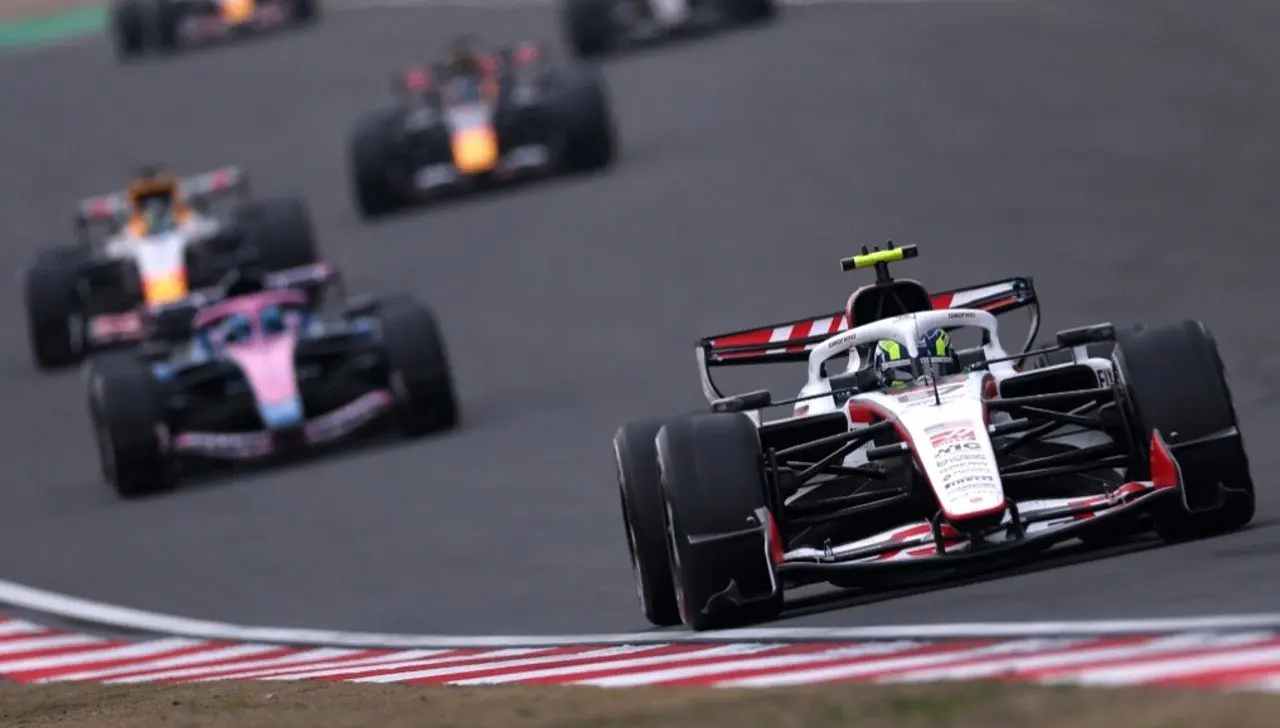
An unexpected moment of panic interrupted the experience of a father and his autistic son during the Formula 1 British Grand Prix at Silverstone. A sudden scream and a strong draft made nine-year-old Joshua, who has autism and ADHD, stop and cover his ears in the crowd.
The family was at the Silverstone circuit, immersed in an avalanche of sensations, a challenging environment for the boy. The father, Brendon Mitchell, felt brief regret for having exposed his son to such turmoil and anguish.
Contrary to expectations, the noise that triggered the crisis did not come from the powerful V6 turbo hybrid engines of F1 cars, but from something much more trivial. The incident occurred near a public bathroom, where the sound of a hand dryer was the trigger for Joshua’s sensory overload.
Immediately, the father picked up his son and led him back to his place at the edge of the track. Gradually, Joshua’s breathing normalized, and his eyes widened again, as the drivers prepared for the start of qualifying.
It is difficult for those who do not experience autism to understand how some sounds can be unbearable for Joshua, while the distant roar of Lando Norris’ McLaren, for example, seems almost comforting. This is the particular way the boy perceives the world.
Surprisingly, despite the sensory challenges, racing circuits like Silverstone have become a refuge for Joshua, given his intense passion for cars.
Silverstone adapts to welcome neurodiverse fans
Data from the National Autism Society reveal that more than one in every hundred people are diagnosed with Autism Spectrum Disorder (ASD), totaling at least 700,000 individuals in the United Kingdom. This reality includes Joshua, one of the 260,000 autistic students who attend schools in England.
Autism awareness and the rate of diagnoses are on the rise, with a staggering 787% increase between 1998 and 2018. This growth underlines the growing need for inclusion and adaptation across diverse sectors of society.
On the same topic: Lance Stroll receives three penalties at Silverstone for repeated track limit infringements
Autism, however, has complex nuances; Although individuals on the spectrum share characteristics, each person possesses a unique combination of traits. This diversity requires personalized approaches, making inclusion a constant challenge.
The complexity of meeting all the particularities is evident, but with demand for affordable tickets from neurodivergent fans reaching at least 20% of the total, Silverstone has implemented significant changes. The track recognizes that inclusion is fundamental, and the increase in demand for adapted spaces shows the relevance of these initiatives, which serve as a model for other major global events.
Louise Broomhall, head of customer service, reports that the transformations began almost a decade ago. In the beginning, knowledge and support for the area were scarce, but the sector has grown and strengthened exponentially every year.
For the team, ensuring everyone can participate in the Grand Prix experience is a key priority, reflecting the circuit’s commitment to accessibility and diversity.
One of the pillars of this welcoming structure is the Copse Triangle, an exclusive viewing area for neurodiverse fans. This space, although simple, covered in grass and at the edge of the track, is crucially limited in capacity, providing a more controlled environment.
Learn more: Singer Robbie Williams reveals autism diagnosis and finds relief in new perspective
Access to Copse Triangle is via the Silverstone Personal Assistance Programme. It is recommended that registrations be made well in advance, as tickets for the British Grand Prix generally go on sale nine months in advance and demand is high.
This special area offers a refuge from the general hustle and bustle of the circuit while maintaining a privileged view of the race. There, neurodiverse visitors and their parents find an environment of mutual understanding, free from judgment.
Sue Davidson, accessibility advocate on the customer service team, highlights the importance of being non-judgmental. “That’s wonderful to hear,” he says, noting that many friendships emerge in this welcoming environment.
Decision to go to a big event: the complexity for autistic families
For parents of children with autism, organizing a simple daily walk is already an arduous task, requiring constant assessment of risks and potential triggers for sensory overload.
Planning begins well before leaving home, involving calibrating expectations and preparing for what is to come. The consequences can last for days after return, with pent-up anxiety and excitement often resulting in emotional breakdowns and dysregulation.
Therefore, the choice to participate in a major sporting event becomes a highly complex decision, requiring the consideration of multiple factors. It is necessary to analyze the trip, the detailed schedule, the size and density of the crowd, as well as the smells, sounds and even the food options.
See Also



More on this story: Ralf Schumacher warns George Russell about risk of ‘second driver’ position at Mercedes after Canada
However, having a specific, focused and intensely dedicated hobby is a common characteristic in people with autism. For Joshua, motorsport manifested itself as an obsession from a very early age.
As a child, he liked to arrange his carts in rows, and as he grew older, he created rainbow effects on the living room floor with his vast collection. Currently, he recreates the races he watches on television.
It was this passion that drove the family to risk a full race weekend experience at Silverstone, overcoming initial apprehensions.
Although the tickets are digital, the accessibility team sent a printed leaflet detailing all available facilities. This simple but effective measure allowed Joshua’s preparation to begin in advance, minimizing surprises.
Louise Broomhall emphasizes that the Silverstone model is unique, not merely a copy of other venues. “Everything comes from constantly talking to people and ensuring that we are always up to date,” he explains, emphasizing the collaborative nature of developing initiatives.
Dealing with sensory exhaustion and the future of noise in F1
Still, there are aspects inherent to any major event that are unavoidable. Long lines and waits, often under the strong sun and intense heat, are inevitable.
Hand holding is required to navigate the dense crowd, and certain sounds and smells have the potential to trigger anxiety.
These challenges must be managed as they arise, because regardless of the precautions or resources made available, the sensory and emotional overload can become excessive.
Joshua was visibly downcast for much of Saturday. Although he does not express himself verbally often, his eyes and body language revealed the effort to deal with his emotions and the overload of stimuli.
This tension culminated on the morning of the race, when he woke up feeling unwell, torn between the desire to go home and the desire to return to the track. In tears, Joshua showed signs of the autistic exhaustion accumulated the previous day.
Fortunately, with patience and a period of rest, the crisis passed, and the boy was ready to resume the fun and noise of running.
The noise level of Formula 1 cars, especially considering the high-speed machines, is a topic of ongoing debate and particularly relevant to neurodivergent fans.
Learn more: Scientists identify autism as a cognitive variation in the evolutionary acceleration of the human brain
Mohammed Ben Sulayem, president of the FIA, has expressed a desire to bring back V8 engines in 2030 or 2031, which would mean a return to the more impactful and significantly louder sounds of past decades.
This change, while celebrated by some enthusiasts, could negatively impact the growing neurodivergent fan base, which has adapted to the quieter hybrid engines used since 2014.
In the short term, the Silverstone team focuses on what it can control, and has been successful on several fronts.
In the family area, accessible to everyone and where Joshua found refuge in the Lego universe, a sensory room was designed to offer a calm environment, away from the crowd.
The circuit has also increased its team of volunteers, called “race creators”, with 120 new people to help meet accessibility requirements until 2026.
Louise Broomhall expresses her delight: “It’s just wonderful to see more and more people realizing that they can go out, that they can do this, that they can take their families and that they can have a great time,” she said.
In the end, the lingering question was whether Joshua had truly enjoyed the experience.
The answer came from the boy himself, concise and full of joy: “One of the best days of my life.”