Ant Group revolutionizes robotics with AI capable of accurately detecting transparent objects
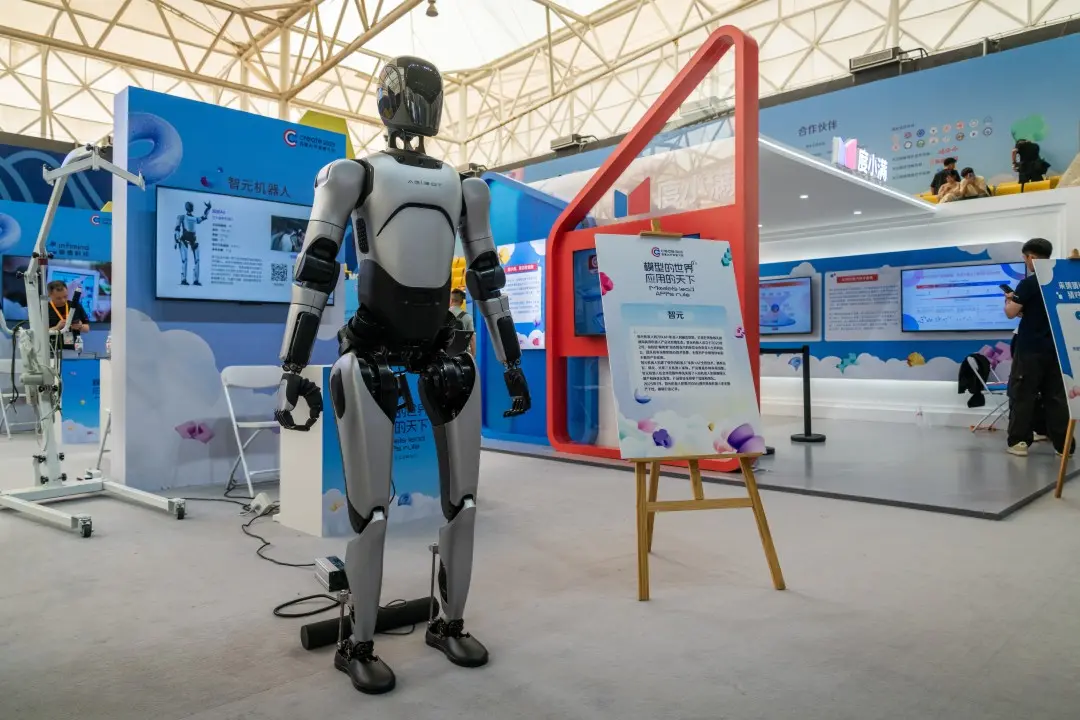
Robbyant, Ant Group’s embedded artificial intelligence unit, announced the launch of a new vision model that promises to revolutionize robots’ ability to accurately identify glass, mirrors and transparent objects. This advancement is crucial for machine navigation in complex environments, as transparent surfaces are a notorious challenge for conventional depth sensors.
The Ant Group branch, located in Hangzhou, unveiled its advanced spatial perception model, LingBot-Depth 2.0, and a new fundamental visual model, LingBot-Vision, this past Tuesday. This presentation comes amid an intense global race by AI labs to develop technologies that allow machines to interact intelligently with the physical world.
According to Robbyant, also referred to as Ant Lingbo Technology, the combination of these technological innovations seeks to overcome a crucial challenge in robotics. The goal is to ensure that robots are able to “see with precision and stability” even in unpredictable everyday scenarios. The company highlighted that this is the first model designed and trained specifically to detect the edges of objects. This ability allows artificial intelligence to identify contours with high precision, down to the fraction of a pixel, which significantly improves robots’ understanding of three-dimensional spaces.
Crucial advances in object detection and 3D spaces
LingBot-Vision competes directly with DINOv3, Meta Platforms’ open source vision model, which currently dominates the industry. However, while DINOv3 requires a gigantic computational scale, LingBot-Vision seeks to outperform its competitors through superior structural efficiency.
Learn more: Apple system update crashes cell phones and drains battery quickly
A study released by the Robbyant team details that LingBot-Vision outperformed DINOv3, which has 7 billion parameters (indicators of the complexity of an AI model), in several evaluations of the NYUv2 benchmark for depth estimation. This result was achieved using only one-seventh of the competitor’s parameters and less than one-third of the training data.
Superior performance and resource efficiency
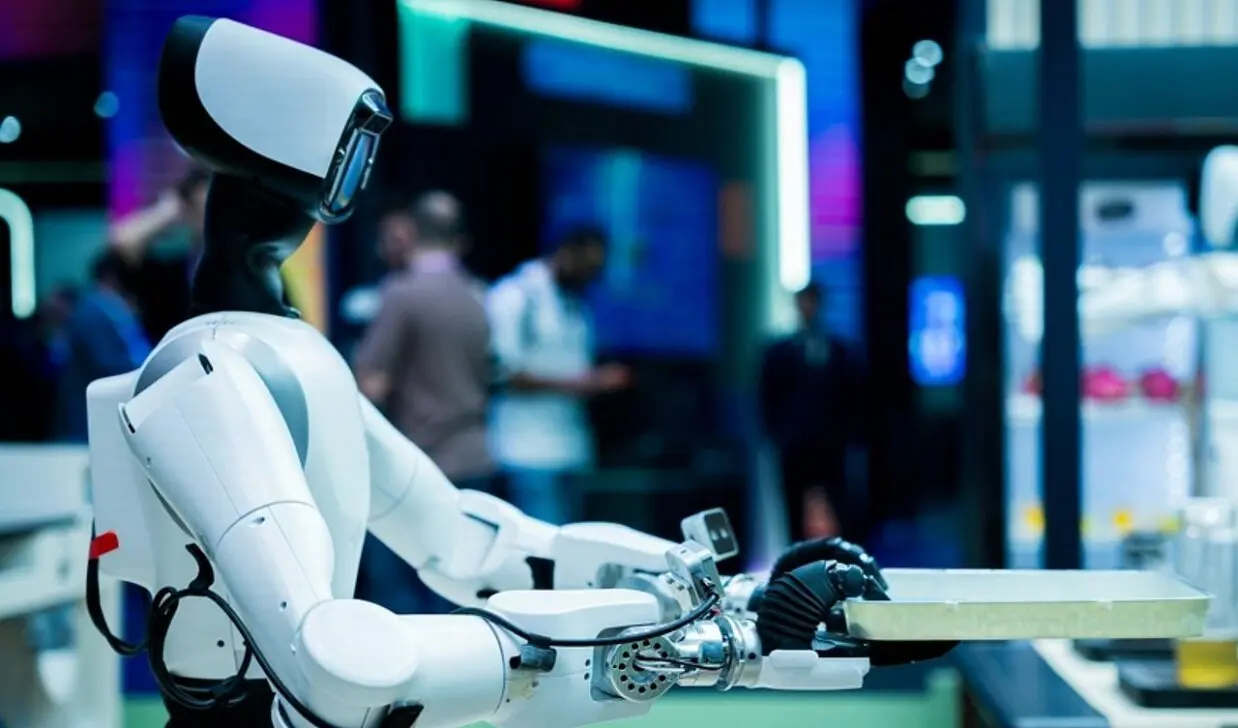
This new vision model acts as the core component of LingBot-Depth 2.0, driving its capabilities. With training using 150 million samples, LingBot-Depth 2.0 took the lead in 12 of 16 global depth fill benchmarks, as announced by Robbyant.
See Also

Kioxia and Sandisk Power AI with New High-Performance 9th Gen QLC 3D Flash Memory

Hackers claim attack and Uber Freight investigates data breach

Giant Anthropic plans to purchase startup Decart in a strategic move worth US$6 billion
In challenging indoor environments where traditional cameras fail to measure distances, the new model was able to halve measurement errors compared to the previous version. Robbyant highlighted that there has been notable progress in handling surfaces that usually disorient robots, making it possible to create accurate distance maps for glass and mirrored objects.
Full coverage: Latest News (EN)
Commitment to innovation and the future of AI
Robbyant has released the source code for the model weights for LingBot-Vision. The company says this action reinforces its commitment to industry collaboration and accelerating the commercialization of embedded AI solutions.
The Ant Group unit has invested heavily in fundamental robotics models to capitalize on a rapidly expanding market. In January, the company had already made its first AI models for robotics available in open source. Among them, LingBot-VLA stands out, being a vision-language-action model designed to function as a “universal brain”, aiming for a more scalable implementation of robots in various sectors.
It is important to note that Ant Group is a company affiliated with Alibaba Group Holding, a conglomerate that also owns the South China Morning Post news outlet.
Follow: all about AI