Smithsonian Offers Immersive VR Journey Through Deep Universe
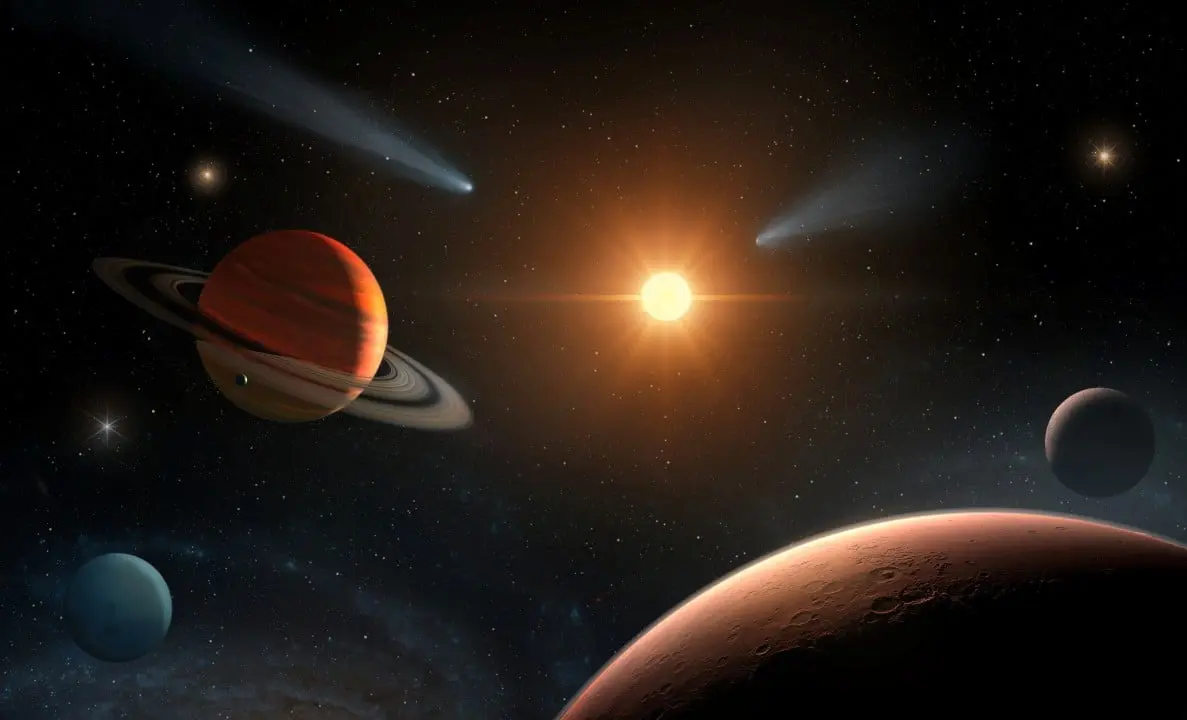
A new Smithsonian attraction has transported visitors on an unprecedented journey through the cosmos using virtual reality. The experience, called “Smithsonian Starstruck: An Immersive Experience”, allows the public to explore distant stars, exoplanets and observatories in stunning detail, promising to revolutionize the way the public interacts with astronomy.
Launched in Washington, DC, since May, the initiative is already preparing to expand to other cities in the United States. The proposal is to combine education and entertainment, offering a 40-minute tour that goes from the neighborhood of our Sun to supermassive black holes in the center of the galaxy. The tour also includes more distant destinations, such as an exoplanet 41 light years away.
On the same topic: NASA’s New Roman Telescope Sets to Uncover Billions of Galaxies and Dark Energy
The goal of “Starstruck” is to create a unique opportunity for the general public to connect with complex concepts of the universe in a practical and exciting way. Technological immersion seeks to make learning about space more accessible and engaging, moving away from traditional static exhibitions. The initiative reinforces the Smithsonian’s commitment to science communication and educational innovation.
A cosmic journey without leaving the ground
The 40-minute experience begins with visitors equipped with virtual reality headsets, which take them to a starry setting at Whipple Observatory, home to the Smithsonian Astrophysical Observatory’s Multiple Mirror Telescope. Guided by a virtual host, who appears to be wearing a spacesuit, participants walk through digital recreations that illustrate pivotal moments in the history of the universe.
Among the stops, the simulation of the birth of the cosmos through the Big Bang stands out, followed by a visit to the famous Pillars of Creation, which are gigantic columns of gas and dust where new stars are born, immortalized by images from the Hubble Space Telescope. The vivid description of these locations as a “cosmic cauldron under pressure” and “beautiful chaos” highlights the intensity of star formation. Scientific accuracy is a cornerstone of the experience, ensuring content is both educational and visually captivating.
Technology and immersion: what to expect from the experience
To guarantee the quality of immersion, “Smithsonian Starstruck” uses high-tech headsets. In its initial phase in Washington, the HTC Vive Focus 3 was the standard equipment, although there are plans to upgrade to the latest model, the HTC Vive Focus Vision. Visual performance is crucial to the credibility of the simulation, with the sharpness of the stars being able to vary depending on the movement of the head, a detail that the next generation of devices will seek to improve.
More on this story: $28 Vietnamese bread in New York becomes a phenomenon due to an immersive experience
The virtual journey also highlights four of NASA’s most advanced observatories: Hubble, the Chandra X-ray Observatory, the Parker Solar Probe and the James Webb Space Telescope. Each of these giants of space exploration is presented in detail, offering visitors the chance to interact with their virtual models and even “take photos” of what they see. This interactivity deepens understanding of how humanity studies the universe and the technological challenges involved.
See Also

Motorola’s new foldable cell phone surpasses the weight of the iPhone 17 Pro Max and gets a discount

Libra: Yukari Ishii’s horoscope predicts brightness and negotiation phase from August 17th to 23rd

Influence of the August 16 moon on skin care and well-being
Values and places to experience the cosmos
“Smithsonian Starstruck: An Immersive Experience” offers different ticket options, aiming for accessibility for different audiences. Single adult tickets range from $29 to $35 depending on the day of the week and demand. For groups of four or more, tickets start at $18 per participant, with an additional 15% discount on those currently in effect.
In addition to its debut in Washington, DC, the experience has ambitious expansion plans to bring this cosmic journey to an even wider audience. The next cities to host the attraction later this year include:
- Denver, Colorado
- Orlando, Florida
- San Antonio, Texas
This expansion demonstrates the success and interest generated by “Starstruck”, consolidating it as a new milestone in interactive education and the popularization of science in different regions of the country.
Learn more: Mario-themed cinemas expand to 30 units in Japan from May
The value of virtual reality in science education
“Smithsonian Starstruck” exemplifies the transformative potential of virtual reality in the field of science education. By enabling individuals to “visit” space and witness complex astronomical phenomena, the technology overcomes the limitations of static displays and videos, offering experiential learning that engages multiple senses. This method could be particularly effective for young people, inspiring a new generation of scientists and space enthusiasts.
Institutions like the Smithsonian play a key role in making knowledge accessible and engaging. By embracing technologies like VR, they not only modernize the way of teaching, but also democratize access to experiences that were previously restricted to a few. The ability to simulate environments and events inaccessible in real life opens new doors to understanding and appreciating the universe, solidifying virtual reality as a powerful tool for popularizing science.