Summer 2026 holds other meteor showers for night sky observers
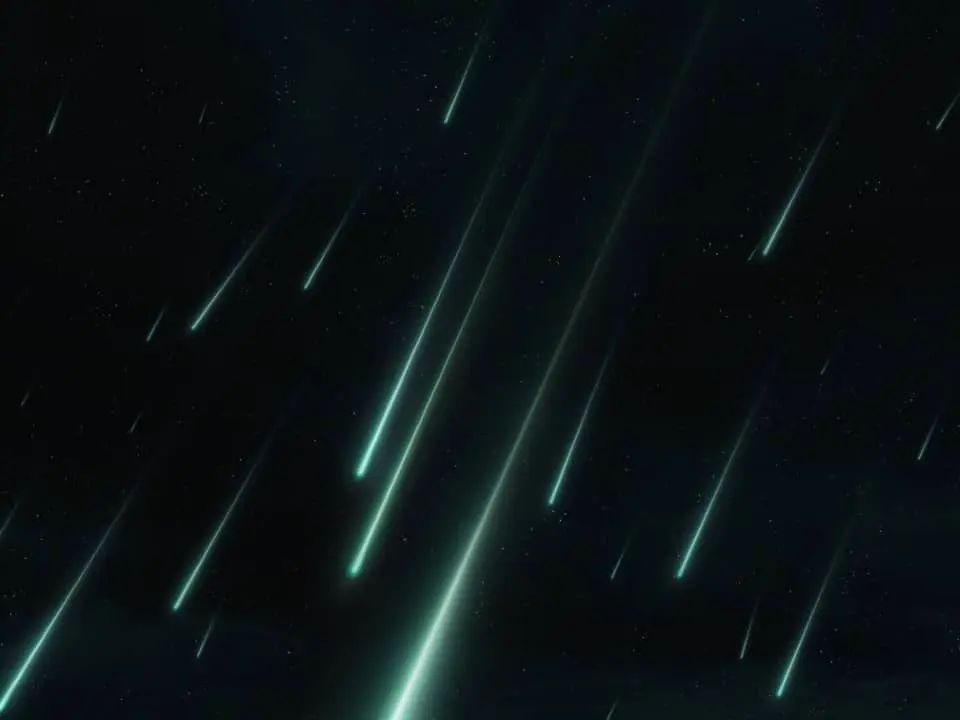
Although the Perseid meteor shower is the most anticipated event of the summer for many, it is far from the only reason to gaze at the sky at this time of year. Earth passes through a series of cosmic debris streams between mid-July and late August, resulting in several lesser-known meteor showers, especially visible in the Northern Hemisphere.
Most of these events will not reach the impressive hourly rate of the Perseids, and moonlight may unfortunately obscure some peak nights in 2026. However, for patient enthusiasts who have access to very dark night skies, these celestial displays offer the chance to spot bright bolides, faint contrails, and a fascinating preview of the great spectacle to come.
The exact duration in days for each meteor shower is often imprecise, as both the beginning and end of these phenomena are gradual and difficult to delimit. Although their hourly rates are a fraction of those produced by the Perseids, these showers collectively provide a rich diversity of meteors, varying in colors, speeds and trajectories, adding value to the observing experience for those seeking more than just a large number.
First to emerge: Capricornids
The Capricornids open the season, with activity that begins around July 10th, reaches its peak on July 25th and ends on August 15th. Under ideal conditions, it is possible to observe only a few bright meteors per hour from this stream. To identify them, it is necessary to trace the meteor tracks on a star map to the point of common intersection, as most sightings will be sporadic meteors or belonging to other showers.
The radiant of this rain reaches its maximum altitude of approximately 30 degrees in the south at around 2 am local time. On the peak night, the gibbous crescent moon will have set at approximately 1:40 a.m., providing a favorable period of darkness for meteor watchers throughout the remainder of the morning.
More on this story: July recommendations: three models of sandals and sneakers that guarantee comfort and style
Delta Aquarídios: the most abundant in July
Next, the Delta Aquarids meteor shower stands out as the most prolific of July, with its peak on July 29, offering up to two or three dozen meteors per hour in ideal observation conditions. This phenomenon covers the period from July 12th to August 23rd and is notable for having a double radiant, which indicates that we observed two distinct streams of celestial debris igniting in the Earth’s atmosphere.
Its meteors are mostly faint, although between 5% and 10% are bright and leave persistent trails. They move at medium to slow speeds as they enter Earth’s orbit sideways. At peak activity this year, the double radiant will be at its highest point – about 40 degrees above the southern horizon – at 3:30 am. Unfortunately, in 2026, the peak will coincide with the full moon, which will likely obscure much of these light trails.
Australid fish: a weaker current
Another meteor shower with lower intensity is that of the Pisces Australids, which reaches its peak on July 30th and can be observed between July 10th and August 10th. This stream is small in volume, with only about eight meteors per hour visible under the best conditions for observers located in the Southern Hemisphere, where the radiant, located close to the bright star Fomalhaut, reaches a considerable altitude in the sky.
Similar to the Delta Aquarids, the proximity of the full moon, just one day after its maximum phase, will significantly compromise the chances of a good view of this rain this year.
Alpha Capricornids: Yellow Fireballs
The last meteor shower to reach its peak in July is the Alpha Capricornids, with activity extending from July 7th to August 15th, reaching its peak on July 31st. Its radiant reaches its highest point, at approximately 30 degrees in the south, at around 1 am local time. Despite being sparse (about 5 per hour), Alpha Capricornid meteors are quite photogenic, often producing intense yellow fireballs that provide a remarkable spectacle.
Learn more: Five meteor showers light up the sky in 2026 with peaks in April, August, October, November and December
However, interference from the bright moon, with 93% of its illumination, located in the eastern portion of Capricorn, will seriously hamper the observation of the peak of this event this year.
Iota Aquarids: before the big attraction
The last of the smaller meteor showers before the arrival of the Perseids is the Iota Aquarids, an event characterized by two radiants and meteors detectable from July 15th to August 25th. At the peak of its activity, on August 6, about six meteors per hour are visible in good conditions; the radiants reach their maximum height, approximately 40 degrees south, at 2:30 in the morning. The first quarter moon, which will be about a third of its length in the eastern sky at this time, will interfere with the observation of these meteors.
The long-awaited Perseid meteor shower
The Perseid meteor shower is expected to peak in activity on the morning of August 13, 2026. The meteors, having their trajectories extended backwards, converge at a point close to the border between the constellations of Perseus and Cassiopeia, not far from the renowned Perseus Double Cluster.
The appearance of the meteor shower begins at dusk, reaching its highest point in the sky — almost directly overhead — at around 5:40 in the morning. When the peak occurs under dark skies, as will be the case this year, this rich shower shows a gradual increase in hourly rate, averaging more than 50 meteors per hour, although twice that rate has occasionally been observed. Many meteors with luminous trails are easily visible. Generally, this rain occurs from July 17th to August 24th.
See Also

Electrical discharge knocks man off roof in Jaguaruana after contact with power lines

Global auction raises US$11.9 million and Brazil’s historic currency reaches record value

Former fighter Prichard Colón dies at age 33 after decade in a vegetative state
The Perseid meteor shower is expected to be one of the main celestial spectacles this year, with minimal lunar interference, which guarantees better conditions for observation.
Kappa scynids: slow and intense fireballs
The Kappa Cysnid meteor shower marks the end of summer. Its period of activity extends from August 3rd to August 25th, with the peak on August 17th. Although the maximum rate is only approximately four meteors per hour, this shower is known to deliver slow-moving and quite intense fireballs, and a patient observer can be handsomely rewarded for time devoted to contemplation.
The radiant will be located slightly north of the star Kappa Cygni and almost at the zenith — about 80 degrees high — at around 10 pm local time. At almost the same moment, the crescent moon will be low in the southwest, about to set, offering minimal interference for observation.
On the same topic: NewJeans signals possible musical return with ‘Summer 2026’ campaign and new lineup
Best locations and directions to find meteors in the sky
The radiant is the point in the sky where the trajectories of the meteors that make up a shower, if prolonged, would intersect on a star map. Many people mistakenly believe that this is the best place to observe these meteors; however, only stationary meteors, which move almost directly toward us, are visible at this point.
The greatest number of meteors can usually be seen at about 30 degrees from the radiant, in the general direction of the zenith. To get an idea of the distance, remember that your clenched fist, extended at arm’s length, corresponds to approximately 10 degrees in the sky.
In addition to specific meteor showers, there are always sporadic meteors, which appear to be unrelated to each other, occurring at an average rate of about 7 per hour. Defining the duration in days of a specific rain is somewhat arbitrary, as its beginning and end are gradual and imprecise.
Essential recommendations for good celestial observation
The only equipment needed to observe meteor showers are your own eyes and a dose of patience. The number of meteors an observer can see in an hour is directly linked to sky conditions.
The rates mentioned here are based on a limiting stellar magnitude of +6.5 (an exceptionally dark, high-quality sky), the presence of an experienced observer, and the assumption that the radiant is directly overhead. The lower the radiant is in the sky, the fewer meteors are visible: at an altitude of about 30 degrees, the hourly rate is halved; at 15 degrees it drops to a third. It’s important to note that there is no single correct way to prepare for a meteor watch, and each observer may have their preferences.
More on this story: Summer 2026 FNS Music Festival reveals full lineup with Aimyon’s return and new collaborations
Llega la lluvia de estrellas más famosa de todo el año ¡Las Perseidas! Pero ¿podremos verla en todo su esplendor? ¿qué debemos saber sobre ella?
— Mar Gómez (@MarGomezH) August 11, 2024
Os cuento algunos datos curiosos sobre esta lluvia de estrellas.☄️🔭 #Perseidas #PerseidMeteorShower pic.twitter.com/a4arLJvFtz
Prepare yourself for the minimum temperature at night to be considerably lower than predicted by meteorology. If you remain still, close to the rapidly cooling ground, and with minimal moisture in the air, the cold can be intense. A short nap in the late afternoon is recommended, followed by a shower and clean clothes. Thick coats, sleeping bags, a tarp for the floor, a car mat and a pillow are essential items. Food and non-alcoholic beverages will also contribute to your comfort during observation.
Don’t underestimate the influence of the lunar phase. This year, the moon will be full on July 29th and new on August 12th. This configuration is very favorable for observing the Perseids, but less ideal for the rains that peak in late July and early August. However, most of them remain active for several days before and after the peak, which allows observation during periods of less lunar interference.
After all, is it worth following less intense meteor showers?
In short, the lower intensity meteor showers that occur in summer are worth it for those who like to observe the sky patiently and without high expectations of a dramatic spectacle.
They offer a long observing season, require no special equipment and can present a variety of meteors of different colors, speeds and trajectories, as well as, occasionally, bright fireballs. Additionally, they provide observers with more opportunities to spot them when the skies are clear and the lunar light is less intrusive.
However, most of these showers are weak compared to the Perseids, featuring low hourly rates and many faint meteors. Factors such as moonlight, low radiant positions, the overlap of different showers and the sporadic occurrence of meteors can make observation and identification difficult. Therefore, observers need dark skies and a lot of patience to enjoy these celestial events.