Scientists create artificial cell capable of feeding and replicating
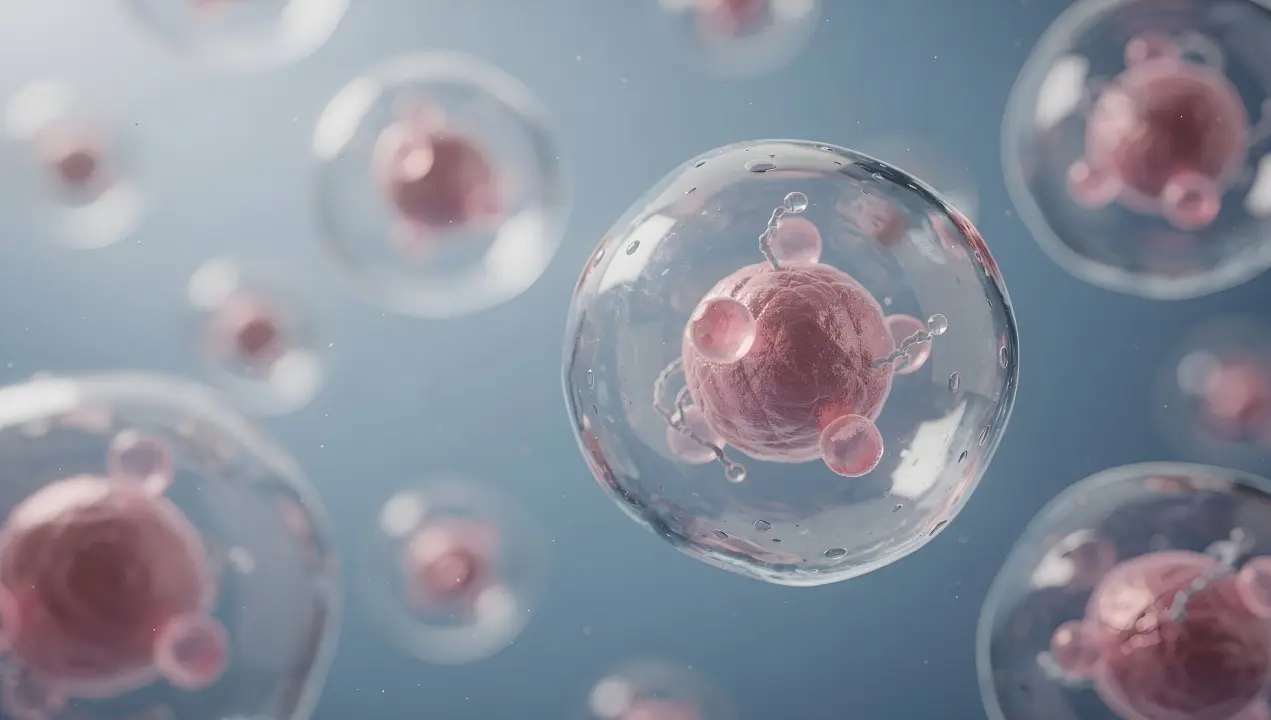
Researchers have announced the creation of a pioneering artificial cell, assembled from scratch, that demonstrates the ability to feed, grow and replicate in a similar way to a natural cell. This advance in synthetic biology promises to usher in a new phase in the engineering of personalized organisms, functioning as programmable biological machines.
Scientist Kate Adamala, an expert in synthetic biology and professor at the University of Minnesota, led the team responsible for assembling the cell component by component, using only non-living chemical elements. Although it is an early and delicate prototype, the creation has the potential to deepen understanding of the origin of life and can be developed to address global biological challenges. The structure does not fit into specific classifications of plants or animals, but presents characteristics closer to those of a simple bacterium.
“I know the cell’s complete list of ingredients, I know exactly which chemical substances, which molecules in which concentrations,” stated Adamala, highlighting that this total definition allows the structure to be entirely designed. This precise engineering capability is what sets it apart from natural organisms, paving the way for the development of highly controlled and specific solutions, such as new cancer therapies or innovative carbon capture methods.
For many years, science has been modifying natural cells to solve human issues, such as inserting human insulin genes into E. coli bacterial cells to produce the hormone to treat diabetes. Now, researchers see synthetic cells as the next key step, with the possibility of creating new treatments for cancer, optimizing carbon capture and developing innovative methods for producing chemicals.
Cells represent the essential components of life, yet their complexity is immense. The human body, for example, houses around 37 trillion of them, a number greater than the number of stars visible in the sky, and science still seeks to fully unravel the functioning of each cell type and its exact composition.
The synthetic cell developed by Adamala and his team does not represent “laboratory-created life,” but rather an “authentic milestone on the way to this question,” according to Yuval Elani, associate professor of biochemical technologies at Imperial College London, who was not directly involved in the study.
“Building a cell from scratch means that we are no longer tied to the limitations and evolutionary inheritance of natural biology. This opens up the possibility of designing systems and programming them to perform tasks that living cells may not do easily, or not at all,” explained Elani.
For him, the feat represents a “true advance in the ongoing effort to question whether chemistry can be organized in such a convincing way that we call it life”.
The field of synthetic biology is distinct from stem cell research, where scientists reprogram and manipulate existing cells originating from biological resources.

Understand the characteristics and limitations of SpudCell
Kate Adamala named her creation “SpudCell,” partly as a joke to avoid having the cell named after her. The name also references Sputnik, the Russian satellite that ushered in the space age in the 1950s.
More on this story: NASA’s Webb Telescope discovers new giant planet with innovative method
“We hope that we are really starting the true era of the bioeconomy, a technology that will allow people to engineer biology”, declared the scientist.
On July 1, 2026, Adamala and his colleagues released the scientific paper describing how SpudCell works, despite the research not yet being published in a peer-reviewed scientific journal. The researcher informed that the material would be submitted for publication during that period. Together with scientists Drew Endy and Jan Jedryszek, and biotechnology entrepreneur Chris Raggio, Adamala established Biotic, a public benefit institution that aims to expand the capabilities of the synthetic cell, making it available to other researchers.
Composed of 150 to 200 molecules, SpudCell can feed, grow and replicate for approximately five generations, according to Professor Adamala. Its complexity is significantly lower compared to a natural biological cell, which can contain millions or even billions of molecules.
Adamala classified SpudCell as “an incredibly weak organism that, at the moment, basically does nothing but eat and occasionally generate a daughter cell.” Each generation requires food and takes about 12 hours to replicate, at a temperature of 30 degrees Celsius. For comparison, E. coli bacteria divide every 30 minutes.
The genome of a synthetic cell is much smaller than that of a natural cell, having 90 thousand base pairs (the E. coli genome, for example, has 4.6 million base pairs). Although it replicates like a biological cell, SpudCell employs a distinct mechanism. While a natural cell uses a cytoskeleton, a support structure that SpudCell does not have, the synthetic version produces proteins that accumulate in the membrane, causing it to divide.
SpudCell also cannot manufacture its own ribosomes, crucial components of a natural cell responsible for producing proteins. Instead, it uses E. coli ribosomes, which are supplied during its feeding.
“It’s just the beginning,” said Adamala. “It’s a framework we hope to develop, and that’s significant because now we can have a reasonable idea of how to progress from there.”
Follow: all about Artificial biology
Elani commented that the synthetic cell does not exactly imitate a natural cell but stressed that this is not necessarily a flaw. “Some of these life-like behaviors are achieved by mechanisms quite different from those used in biology,” he said in an email. “That matters, because synthetic biology isn’t always about imitation. Sometimes it allows us to do things differently and take shortcuts.”
Other scientists who were not involved in the study called the work an exciting advance. Elizabeth Strychalski, group leader in the National Cellular Engineering Group at the US National Institute of Standards and Technology, described SpudCell as a link between “a jumble of chemicals and a naturally evolved cell.” She considered the research “important and impressive”, highlighting that it would be “tremendously useful”.
See Also

Electrical discharge knocks man off roof in Jaguaruana after contact with power lines

Global auction raises US$11.9 million and Brazil’s historic currency reaches record value

Former fighter Prichard Colón dies at age 33 after decade in a vegetative state
Tom Ellis, professor of synthetic genome engineering at Imperial College London, called the cell “probably the biggest recent advance in the field of synthetic cells.”
“Making a synthetic cell helps us understand the exact minimum requirements for life and how life could have arisen from chemistry — that’s a cool thing to try to understand,” Ellis explained in an email.
Chenli Liu, full professor at the Shenzhen Institutes of Advanced Technology and founding director of the State Key Laboratory for Quantitative Synthetic Biology in China, said synthetic cell research is a promising and rapidly evolving field. However, he stressed that it would not be possible to make a meaningful assessment of the work before its publication in a peer-reviewed scientific journal.
Can SpudCell really be considered life?
One of the crucial points of the work, according to the scientists, was to demonstrate that synthetic cells respond to the forces of selection, a process that causes certain characteristics to become more or less prevalent. By introducing a genetic change that increased the production of a growth protein, cells with this modification developed and divided more quickly. However, as this change was implanted in the system and did not arise from a spontaneous genetic mutation, SpudCell cannot be considered an organism capable of “evolving”.
SpudCell also cannot be considered a form of life, according to Drew Endy, associate professor of bioengineering at Stanford University. Endy was not involved in Adamala’s research, but is one of Biotic’s co-founders.
“We don’t fully understand life very far from that. We don’t have an all-powerful ability to manipulate matter to create things. I would say Kate built a cell. I don’t think she created life,” Endy said, comparing the situation to the fact that while physicists still don’t fully understand the mysteries of gravity, engineers are capable of building bridges.
In its current configuration, SpudCell does not present biosafety risks and could not, for example, be used to produce biological weapons, explained Endy. “It can only divide if we feed everything, including the ribosomes. It has zero capacity to reproduce outside of this context,” he added.
Full coverage: Latest News (EN)
“However, does it promise a future where more people can build cells? Yes. Are there potential safety concerns around this? Yes. Do we have to manage them well? Yes,” he added.
Adamala and Endy noted that, because it was built from scratch, SpudCell allows the insertion of safety and protection mechanisms into its genome. This would prevent the cell from posing risks if it were released into the environment. Furthermore, they mentioned that there are much simpler ways for malicious actors to create pathogenic organisms.
Scientists have also issued warnings about the possible creation of mirror bacteria, synthetic organisms with an inverted molecular structure compared to nature. In these cases, the molecules of a mirror cell would be replaced with identical but inverted versions, which could expose humans, animals and plants to dangerous pathogens.
Through Biotic, which will be responsible for licensing the core technology, Endy and Adamala expressed the hope that SpudCell will become a shared global standard for synthetic cell biology, functioning as an open source operating system, like Linux.
Laurie Zoloth, professor of religion and ethics at the University of Chicago, noted that the creation of Biotic could help address some of the ethical questions that arise with the introduction of new technologies: Who benefits? Who determines its use? Who sets the limits?
“We’ll have to see how it holds up in its initial, idealistic form,” Zoloth said. “I hope so.”
Ellis, from Imperial College London, indicated that a standardized, shareable and open-source model would be beneficial so that scientists can improve each other’s work more quickly.
“However, I’m not sure the work presented in this paper is something everyone in the world wants to pursue,” he said.
He added that “a synthetic cell is a common goal for many teams around the world, but the way they approach it and how they define success is very different.”
Adamala said the goal is to keep SpudCell’s core technology accessible to anyone who wants to work with it, explaining that academics and nonprofits could use it for free, while there would be licensing fees for commercial use.
“Right now, SpudCell can’t produce anything useful, it’s not efficient enough,” she said. “What excites me is that we are bringing the international community together to accelerate development and make it useful.”