Small plane crash in Mogi Mirim region results in tragic death
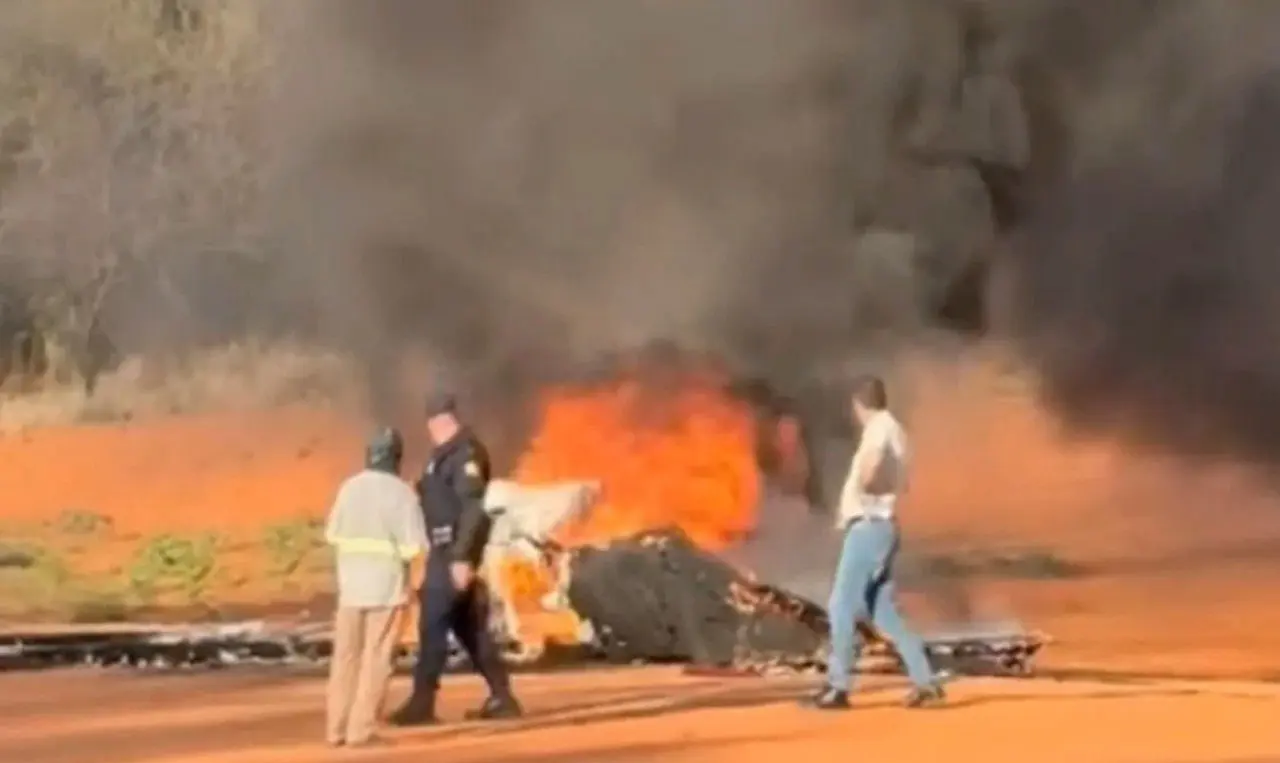
On the afternoon of July 29, 2026, a tragedy marked the airspace in the interior of the state of São Paulo, changing the routine of a peaceful community. A small plane crashed violently in an area far from the urban center of Mogi Mirim, generating a dense column of dark smoke visible from kilometers away. The impact of the metal structure against the ground generated an immediate fire that almost completely consumed the fuselage in a matter of minutes. Unfortunately, rescue teams confirmed the loss of a life at the scene of the disaster, highlighting the severity of the collision.
Rapid mobilization of emergency teams on the state highway
As soon as the first reports of the disaster reached the telephone call center, the Fire Department organized an urgent damage containment operation. It was approximately 4:30 pm when the sirens sounded at the barracks, directing four heavy vehicles towards Rodovia Luiz Gonzaga de Amoedo Campos, a road that crosses the region. The professionals faced the challenge of accessing a rural area with uneven terrain and dense vegetation to reach the burning wreckage. Speedy movement was essential to prevent the fire from spreading to neighboring plantations and causing a secondary environmental disaster.
More on this story: Parachuting plane crash leaves eleven dead in northeastern France this Sunday
The corporation’s initial priority was to extinguish the intense fire caused by the leak of highly volatile aviation fuel. This type of flame requires the use of specific chemical foams and smothering techniques, as ordinary water can spread the flammable liquid and worsen the situation on the ground. Only after the twisted hardware had completely cooled and any risk of further explosions had been eliminated, rescuers were able to completely sweep the affected perimeter. The work required the use of respiratory protection equipment due to the toxicity of the synthetic materials burned.
Challenges of technical expertise for identifying the victim
During a thorough inspection of the remains of the cockpit, firefighters located a body severely damaged by flames, trapped between the melted seats. The state of extreme charring prevents any type of immediate visual recognition by the police authorities who responded to the incident. Faced with this complex and painful scenario, the Scientific Police assumes the responsibility of collecting the remains with extreme caution, preserving the victim’s dignity. Forensic experts isolated a radius of fifty meters around the crater formed by the impact to search for documents or belongings that resisted the heat.
Learn more: Mid-air collision between two helicopters leaves six dead in the Recreio dos Bandeirantes region
The official identification process will require advanced laboratory tests at the region’s Legal Medical Institute, a procedure that requires time and scientific precision. Generally, coroners resort to analyzing the dental arch, comparing the remains with x-rays and previous dental records provided by possible family members. If this alternative fails due to the destruction of the facial bones, crossing genetic material through DNA tests becomes the only possible way to confirm the occupant’s name. This waiting stage creates enormous anguish for families seeking information about relatives who were flying in the region at that time.
Strict military aeronautical investigation protocols
To understand the technical reasons that led the equipment to lose support and collide with the ground, the Aeronautical Accident Investigation and Prevention Center takes immediate action. The agency, linked directly to the Brazilian Air Force’s Aeronautics Command, has specialists trained to read the signs left in the wreckage spread across the farm. The mission of these soldiers does not involve pointing out criminal culprits or imposing fines, but rather discovering mechanical, structural or human failures to prevent future similar occurrences. The detailed work seeks to guarantee the safety of the entire national small fleet.
See Also

Learn how to identify intrusions on WhatsApp and avoid financial fraud

PlayStation 5 owners gain lifetime access to three great games

Russian Islam Makhachev dominates Ian Machado Garry and wins main fight at UFC 330
Cenipa researchers establish a strict security perimeter to ensure that no fundamental parts are altered or stolen by unauthorized people. They photograph every inch of the site, measure the angle of impact on trees and collect critical components, such as the engine, propellers and navigation instruments from the dashboard. All this collected material goes to laboratories specialized in aeronautical engineering, where it will undergo stress tests, fluid analysis and reading of possible GPS data. The reconstruction of the aircraft’s final trajectory depends on the integrity of these parts recovered in the interior of São Paulo.
- Collection of meteorological data from the exact moment of the fall to rule out the influence of crosswinds, wind shears or sudden unforeseen storms.
- Detailed interviews with eyewitnesses who live on rural properties neighboring the highway to understand the sound of the engine before the crash.
- In-depth analysis of the aircraft’s maintenance history with workshops approved by the National Civil Aviation Agency, verifying the replacement of parts.
- Verification of the responsible pilot’s documentation, including updated physical and mental fitness medical examinations, in addition to flight hours records.
Geographic context and air traffic in the macro-region
The municipality of Mogi Mirim is located at an approximate distance of 165 kilometers from the capital of São Paulo, located in a hub of great economic and agricultural development. This macro-region is home to numerous traditional flying clubs, private airstrips at power plants and farms with their own hangars for agricultural and executive aviation. Consequently, the flow of small planes, gliders and helicopters is constant every day of the week, from sunrise to sunset. The proximity to large urban centers such as Campinas further increases the complexity of controlling local airspace.
On the same topic: Aircraft crash during forestry training leaves seven dead in Argentina
Executive pilots, businesspeople and landowners frequently use these low-altitude routes for quick trips between the productive interior and the financial metropolis. Due to this high density of non-commercial air traffic, safety regulations require rigorous periodic inspections of all equipment that flies over the area daily. Any negligence in preventive maintenance, no matter how small, can result in catastrophic failures during the cruise flight or during delicate approach maneuvers for landing. Constant inspection becomes the main tool for keeping accident rates under control.
Next steps and release of affected space
Until the expert reports are fully completed and signed by the engineers, the farm area close to the highway will remain under surveillance by state security forces. The removal of the plane’s carcass and the cleaning of the oil-contaminated soil will only take place with the express authorization of Brazilian Air Force investigators. This extreme and bureaucratic care guarantees the preservation of the impact scene until all technical doubts about the dynamics of the fall are resolved. Owners of affected land collaborate with authorities by providing unrestricted access to rescue teams and forensics.
The local aeronautical community awaits with trepidation the release of the preliminary reports, which are usually published in the official system months after the pieces are collected. Such technical documents serve as the basis for issuing service bulletins and safety alerts directed to all operators of the same aircraft model in Brazil. Until this rigorous process is completed, the mystery surrounding the last minutes of the fatal flight remains under careful analysis by the competent bodies in Brasília. The absolute priority now is to provide clear answers to prevent other families from going through the same pain in the future.
More on this story: Small plane crash in France kills Claude Guillemot, pioneer of the company Ubisoft