New DJI Osmo Pocket 4P camera brings dual-lens system for creators
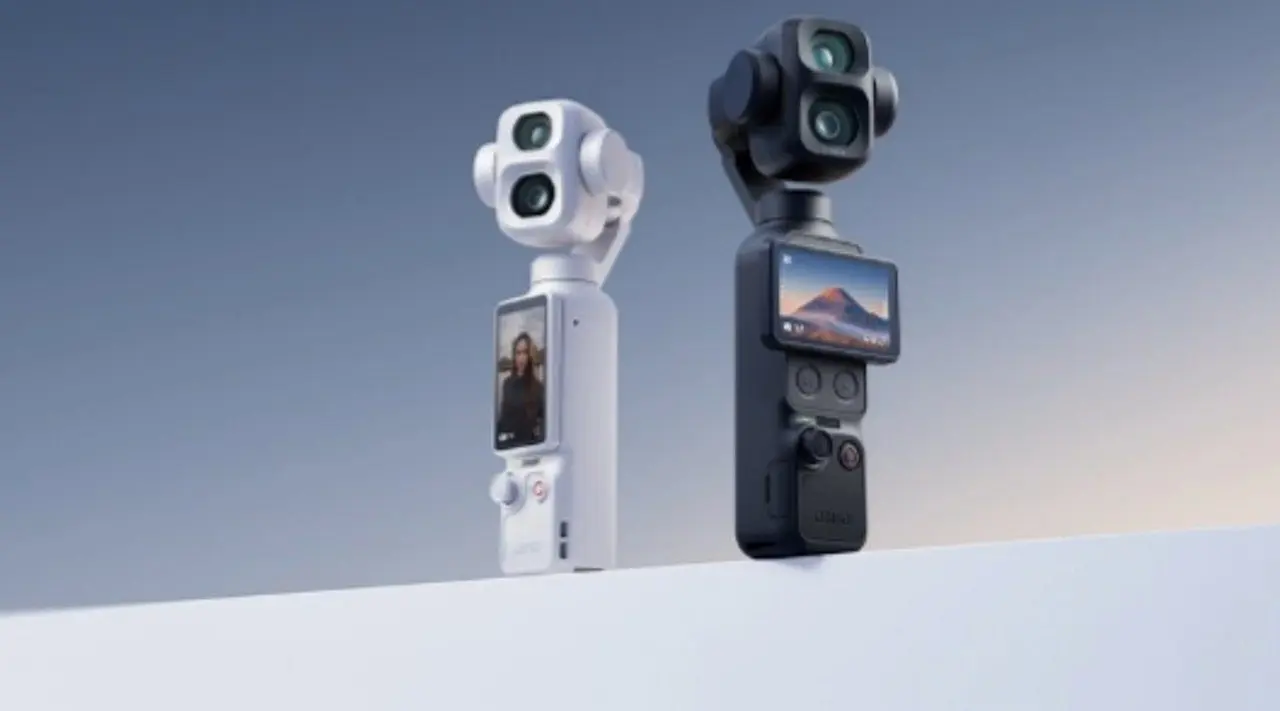
The internet-oriented audiovisual industry has just gained a boost with the arrival of the DJI Osmo Pocket 4P. The reduced dimensions equipment promises to change the work dynamics of videographers, mobile journalists and digital influencers by incorporating, for the first time in the line, a double optical set. This technological update seeks to consolidate the device as the main alternative for those who need to record moving images with professional quality, without giving up the extreme portability that fits in your pocket. The content creation market increasingly demands agility, and compact tools have become essential for high-level daily deliveries.
New visual capture technology transforms the routine of content producers
The launch’s biggest difference lies in the integration of a secondary lens, designed to multiply the framing possibilities directly on the device’s body. Unlike previous generations, the operator can now move between different viewing angles seamlessly. This flexibility is essential in scenarios where the action happens too quickly, such as when recording travel diaries, covering live events or documentary productions that require immediate reactions from the cameraman so as not to miss the exact moment of the action.
More on this story: DJI’s new portable camera features two lenses and promises to revolutionize vlogs
In practice, the innovation delivers unprecedented creative freedom and drastically reduces bottlenecks during material editing. The professional gains the ability to record open plans to contextualize the environment and, in the next second, focus on minute details, all using the same camera. This advancement eliminates the historical hassle of carrying heavy backpacks with multiple lenses or the frustrating need to interrupt a perfect take just to change shooting equipment, ensuring a seamless workflow for those working on location.
Technical improvements to the mechanical stabilizer and audio capture
In addition to the innovations in the lens glass, the Asian manufacturer implemented profound updates to the physical stabilization system, which has always been the hallmark of the Pocket family. The new motorized gimbal has been recalibrated to absorb shocks and shakes even more efficiently, ensuring cinematic results even when the user is running or walking on uneven terrain. This type of mechanical correction continues to be vastly superior to the purely digital stabilizations found in most current high-end smartphones, as it does not crop the image or generate artificial distortions.
The final quality of the generated file also took a significant leap thanks to the new image sensors built into the DJI Osmo Pocket 4P. The components have been optimized to process more faithful colors and maintain impeccable sharpness, even in nighttime environments or with poor artificial lighting. Accompanying the visual evolution, the sound department received special attention with redesigned microphones, capable of isolating external noise and delivering crystal clear voices, often eliminating the need for external lapel recorders during quick interviews.
See Also

Electrical discharge knocks man off roof in Jaguaruana after contact with power lines

Global auction raises US$11.9 million and Brazil’s historic currency reaches record value

Former fighter Prichard Colón dies at age 33 after decade in a vegetative state
Learn more: Nikon DL: new line of premium compact cameras arrives to compete in the market after 10 years
- Dual optical set that allows switching the field of view without cutting the recording.
- Three-axis mechanical gimbal recalibrated to nullify extreme shaking while walking.
- Updated image sensors for better performance in low-light scenarios.
- Improved microphone system for directional sound pickup and ambient noise reduction.
Dynamism in framing transitions during external recordings
The presence of the double optical set brutally simplifies the technical complexity of a daily recording session. Through intuitive commands on the touch screen, the cameraman can jump from a close-up shot of the presenter’s face to an ultra-wide-angle perspective that reveals the entire surrounding scene. The most impressive thing is that this change occurs without any software hindrance or need for physical adaptations, keeping the fluidity of the visual narrative intact and capturing the viewer’s attention.
These features transform the device into a true pocket studio, ideal for professionals who work alone and need to optimize production time. The union of very high resolution files, perfectly leveled images by the internal engine and the versatility of two different focal lengths puts the device in a category of its own. It goes from being just a support camera to assuming the role of main equipment in a wide range of commercial, artistic and journalistic projects.
How DJI’s new equipment puts pressure on competition in the audiovisual sector
The arrival of the DJI Osmo Pocket 4P to global retailers sets a new bar for the action camera and vlogging niche. By proving that it is possible to embed two high-performance lenses in such a tiny chassis, the company is forcing rival brands to rethink their next launches so as not to become obsolete in the competitive technology market. From the buyer’s point of view, the scenario is extremely positive, as it democratizes access to cutting-edge tools that, until recently, cost thousands of dollars and required camera assistants to operate. The miniaturization of complex optical components proves that the future of audiovisual is moving towards increasingly discreet and powerful equipment.
Historically recognized for dominating the market for commercial drones and professional stabilizers from the Ronin line, the manufacturer is now solidifying its empire in the mobile content creators segment. The recently announced product surgically meets the needs of an audience that consumes and produces videos at a frantic pace for digital platforms. With this bold bet on optical engineering, the brand not only retains its loyal fan base, but also attracts independent filmmakers and enthusiastic amateurs seeking maximum visual efficiency without carrying extra weight in their luggage.