Green comet lights up the Namibian sky in astronomical photography
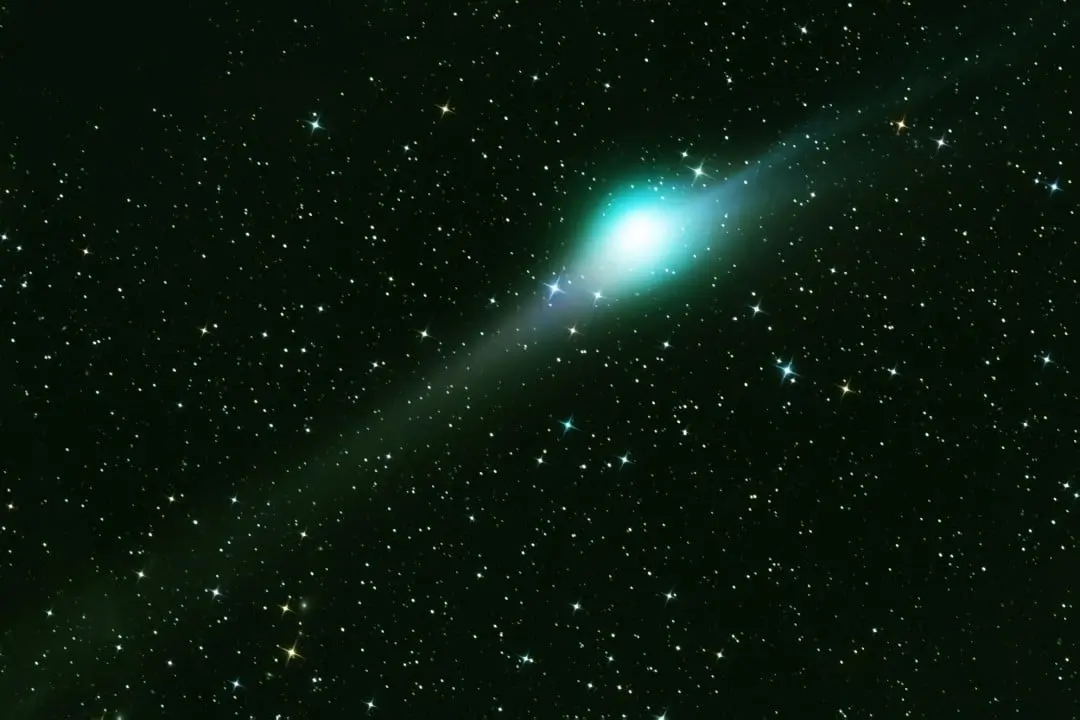
A stunning image was captured by astrophotographers in Namibia, revealing a bright green comet streaking across the night sky on August 8, 2026. The spectacular scene was captured in a new photograph that celebrates the rare beauty of the universe.
Comet 220P/McNaught and its characteristics
The star of this remarkable photograph is comet 220P/McNaught.
More on this story: Líridas astronomical phenomenon lights up the Brazilian sky at the end of July
This celestial body, discovered by Australian astronomer Robert H. McNaught, completes an orbit around the Sun every 5.5 years. In June, the comet reached its perihelion, which is the closest point to the Sun on its trajectory, resulting in a strong explosion that intensified its brightness by around 8,000 times.
In August, the comet once again showed a significant increase in its luminosity, becoming approximately 600 times brighter than usual. It was during this period of high visibility that astrophotographers Gerald Rhemann and Michael Jäger managed to capture the image over the skies over Namibia.
To immortalize this singular moment, the duo used a 12-inch astrographic telescope, equipped with a ZWO ASI 6200 MM Pro camera.
See Also

Electrical discharge knocks man off roof in Jaguaruana after contact with power lines

Global auction raises US$11.9 million and Brazil’s historic currency reaches record value

Former fighter Prichard Colón dies at age 33 after decade in a vegetative state
The rarity of observing a comet in the sky
It is not common to see a comet in the sky. Even when they are visible, these celestial bodies are often difficult to discern with the naked eye or are so far away that they become a challenge even with the help of a telescope.
What makes the new photograph even more extraordinary is the clarity and spectacular level of detail with which comet 220P/McNaught has been depicted. Observing such a phenomenon with such precision was certainly a special experience.
Although the sighting of a bright comet is not an everyday event, it is possible to witness the remains left by these stars. When a comet’s tail disintegrates upon entering Earth’s atmosphere, its fragments form the well-known “shooting stars” we see during meteor showers.
Currently, the Perseid meteor shower is active, an annual spectacle that occurs as Earth passes through the debris left behind by comet Swift-Tuttle on its journey through the solar system. In dark sky conditions, observers can admire up to 100 “shooting stars” from Swift-Tuttle.