European skies witness the end of a highly visible solar eclipse
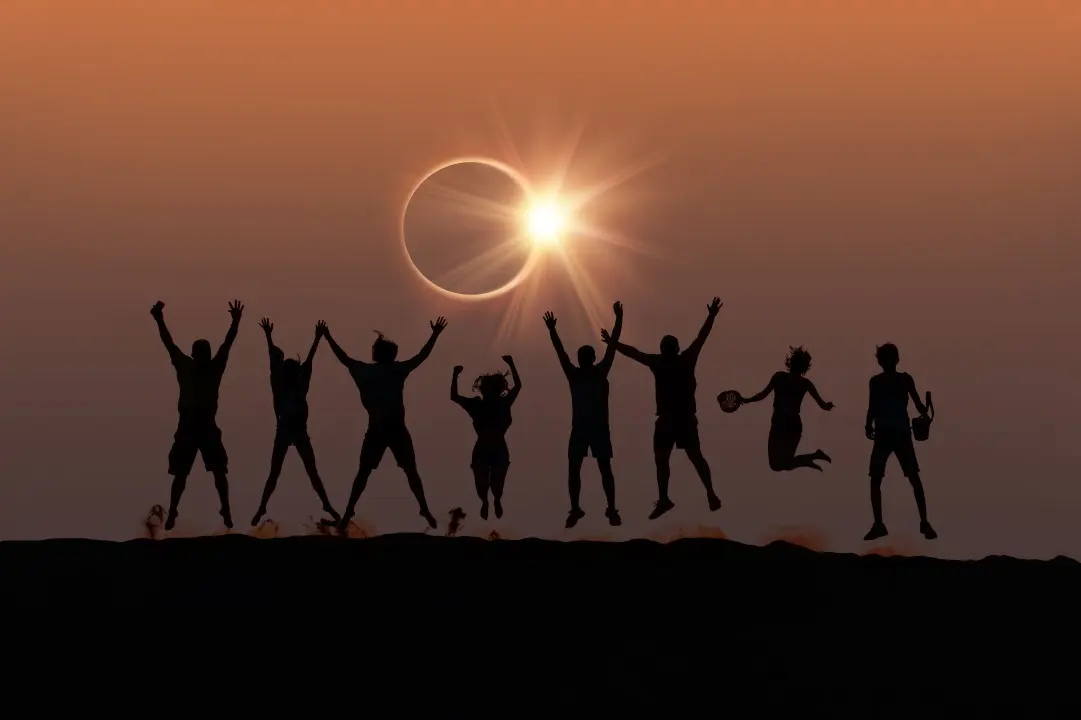
Millions of people across the European continent watched the end of a spectacular solar eclipse that mobilized onlookers and researchers. The celestial phenomenon reached its final point at around 4:57 pm, according to Brasília time, ending a period of rare astronomical observation. It is estimated that around 980 million individuals, which represents approximately 12% of the global population, were in regions where they were able to witness, at least in part, the eclipse.
The grandeur of the eclipse and its worldwide visibility

The scope of the eclipse was remarkable, providing a unique experience for a significant portion of the world’s population. Although focused on Europe, the event aroused global interest, with broadcasts and support from experts in different parts of the world.
More on this story: Runout of special glasses marks preparation for rare solar eclipse in Europe
- Visibility Details:
- Around 980 million people were able to observe the phenomenon.
- This corresponds to approximately 12% of the world population.
- Europe was the main stage for direct observation of the eclipse.
- Several regions around the world followed the event through digital and scientific platforms.
Despite its occurrence in specific regions, the eclipse generated a wave of curiosity and discussions about the mysteries of the universe. Observatories and research institutions mobilized resources to record and study each phase of the phenomenon.
Understanding the Solar Eclipse and Its Ongoing Allure
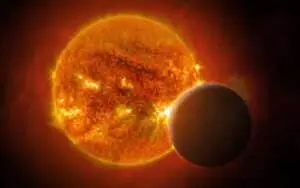
A solar eclipse occurs when the Moon positions itself between the Sun and the Earth, completely or partially blocking sunlight. This cosmic alignment casts a shadow on the Earth’s surface, creating a spectacle that has enchanted and intrigued humanity for millennia. The rarity and precision required for this alignment to happen contribute to the fascination surrounding these events.
See Also

Attract prosperity: check out the lucky numbers for each sign to bet on

Researchers identify doctor in Pompeii through his surgical instruments

Luigi Mangione admits to having shot CEO and pleads guilty at federal level
For scientists, solar eclipses are crucial opportunities for studies. They allow you to observe the solar corona, the Sun’s outer atmosphere, which is normally obscured by the star’s intense brightness. These observations provide valuable data about the composition and behavior of the Sun.
Learn more: August 12 total solar eclipse turns day into night for 15 million in Europe
The impact of observations for science and the community
The National Observatory, a research and teaching institution linked to the Ministry of Science, Technology and Innovation, was among the bodies that monitored the eclipse. Experts from the entity provided comments and analyses, helping the population to understand the scientific dimension of the event. The participation of official bodies like this is essential for the dissemination of astronomical knowledge.
Observation of eclipses is not limited to the scientific field; it also promotes education and public curiosity. Events like this encourage interest in astronomy, inspiring new generations to explore the exact sciences and better understand the cosmos. The experience of witnessing a solar eclipse live, even partially, is memorable for many.
Upcoming celestial events: waiting for new shows
Solar eclipses are relatively rare in the same location, making each occurrence a highly anticipated event. The rotation of the Earth and the orbit of the Moon cause these phenomena to be visible in different parts of the globe at varying intervals. Astronomers and enthusiasts are already directing their attention to the next predicted alignments.
Although the recent eclipse is over, the astronomical calendar is always full of other celestial phenomena. Meteor showers, planetary conjunctions, and other cosmic events continue to provide opportunities for observation and study. The passion for astronomy remains alive, driven by the incessant search for new knowledge and the beauty of the universe in constant movement.