Research reveals 5,000-year-old structure in England with possible link to Stonehenge
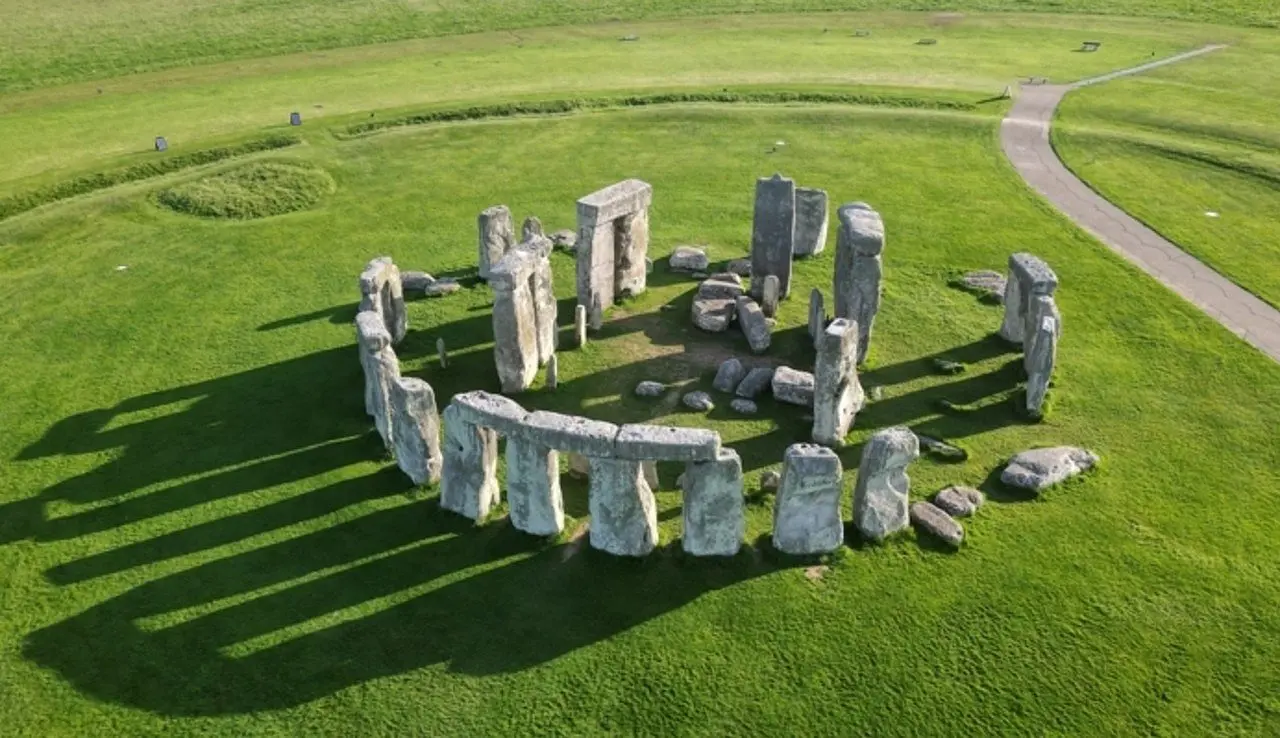
Archaeologists recently announced the discovery of a 5,000-year-old building in southwest England that could be a prototype for the formation of Stonehenge.
The find is made up of two wooden posts, placed 120 meters apart, which aligned with the sunrise on the summer solstice and the sunset on the winter solstice. This alignment pattern is the same as that observed in the famous Stonehenge stones, according to a statement from Wessex Archeology, a British archaeological company.
The research team, led by archaeologist Phil Harding, used radiocarbon dating methods to confirm that the wooden posts were installed in the original pits five millennia ago.
On the same topic: Prehistoric site before Stonehenge revealed just a few kilometers from famous British monument
This implementation took place at the same stage in which the first Stonehenge embankments were built. Interestingly, the iconic stones of the main monument were only placed in place five hundred years later, which highlights the antiquity and importance of this discovery.
Phil Harding commented that “the sun was incredibly important to these prehistoric communities, and they were able to plan and record its rising on the summer solstice with a high degree of accuracy.”
The archaeologist also stated that “this discovery is probably one of the biggest of my career and what makes it so important is how early it was.”
Harding added that “until now, our knowledge of this ancient feat of astronomy has been based on Stonehenge and other monuments from a similar period, but what we discovered at Bulford predates the famous stones we know so well by 500 years.”
More on this story: 5,000-year-old site in England could be a prototype of Stonehenge
Remains of the structure were found in Bulford, Wiltshire, just 5 kilometers from Stonehenge.
See Also

Horoscope of the week: Astrology points out paths and challenges for the signs between August 10th and 16th, 2026

Casagrande compares Memphis Depay and Carlitos Tevez at Corinthians and points out differences in commitment

Horoscope for August 14, 2026: discover the influences for each sign
Fabio Silva, an archaeologist specializing in celestial landscapes and a participant in the project, used reconstructions of the ancient skies, landscape and horizon to prove the alignment of the poles with the solstices.
Learn more: 3,600-year-old tomb discovered in Egypt reveals king of lost dynasty
Silva explained that “this discovery helps us understand Stonehenge not as a singular creation, but as part of a much longer conversation between people, earth and sky.”
In addition to the structure, the archaeological team unearthed artifacts such as pieces of pottery, animal bones, charcoal and cut flint. These finds indicate that the place was a meeting point for solstices celebrations.
The Wessex Archeology statement details that among the items discovered was an “extremely rare disc-shaped knife”, intentionally positioned, which could symbolize the sun’s disc.
Learn more: Treasure hunter finds England’s largest gold nugget with antique metal detector
Susan Greaney, professor of archeology at the University of Exeter, England, who was not involved in the study, called the discovery “intriguing” but noted that all the details have not yet been made public.
Greaney stated that “the possible alignment forms part of an important Middle Neolithic settlement at Bulford”.
She also noted that “this demonstrates the importance of the eastern part of the Stonehenge landscape, with people living and building monuments across the River Avon.”