New Suzuki GSX-8TT mixes classic track looks with 82 hp engine By Luís Henrique Costa
8 min read
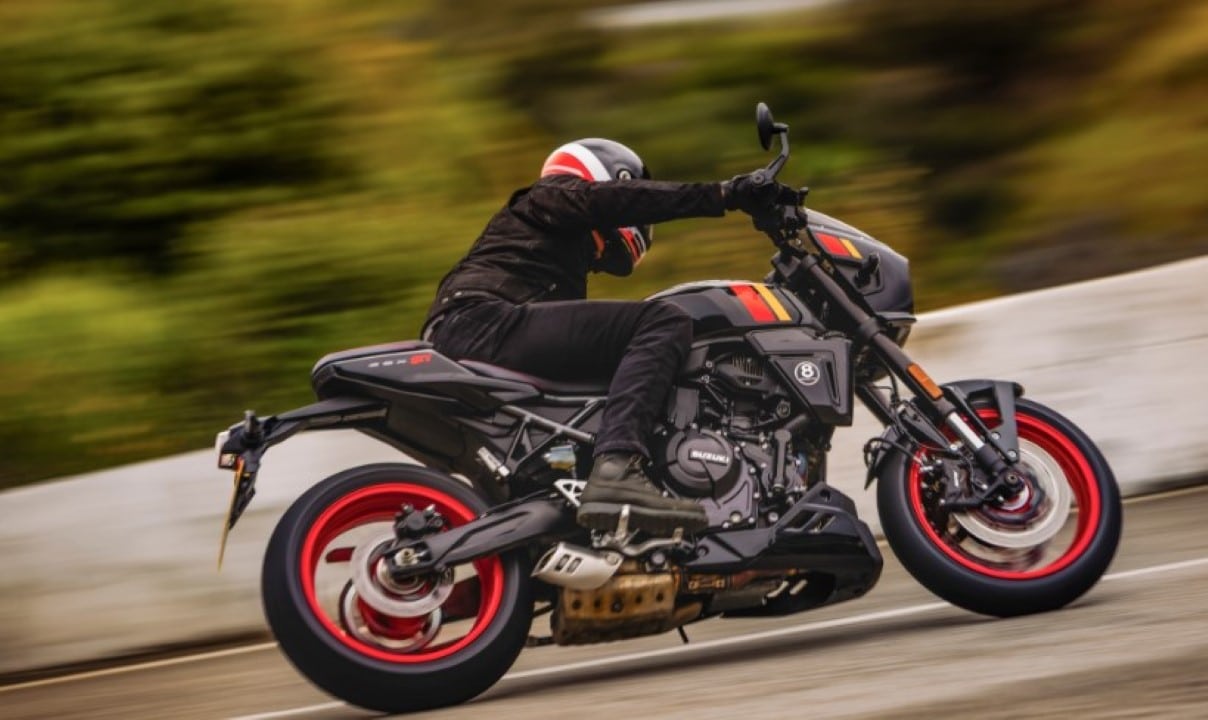 |
Japanese manufacturer Suzuki has just revealed the unprecedented GSX-8TT, a motorcycle that combines the charm of neo-retro style with highly adaptable chassis. Built on the same structural base as the GSX-8T and GSX-8S brothers, the new feature incorporates an exclusive front fairing and graphics that refer to the legendary track motorcycles of the 1970s and 1980s. Practical evaluations on urban routes and highways full of curves have proven that the model delivers docility in heavy traffic and vigorous reactions during sporty riding. The heart of the project is a 776 cm³ parallel twin-cylinder engine, capable of providing constant force from the lowest speeds, maintaining smooth operation even at high speeds.
The first contact with the machine on the city streets highlighted the fluidity of the mechanical assembly. With plenty of power available at around 3,000 rpm, the rider can safely overtake without needing to downshift, while the double-action quickshifter system makes gear changes extremely agile. Onboard electronics allow you to adjust power delivery through different driving modes and configurable traction control in three levels. To ensure comfort on extended trips, the brand’s engineering team adopted a two-axis balancer system, a technology that virtually cancels out all unwanted vibrations from the block.

- Two-cylinder engine measuring 776 cm³ and crankshaft offset by 270 degrees
- Maximum output of 82.9 hp at 8,500 rpm, accompanied by 78 Nm of torque at 6,800 rpm
- Factory-integrated bidirectional quick-shift system and low-rpm assist
- Front braking system equipped with dual 310 mm discs and ABS technology
Fairing aesthetics rescue the visual identity of Suzuki’s former competitors
The entire aesthetic design of the GSX-8TT pays direct homage to icons of the past, such as the classic T500, adopting elements such as the circular headlight, the lower engine protector and the side stripes characteristic of old racing tracks. A detail that draws attention is the emblem with the stylized number “8”, reinforcing the belonging to the new family of medium cylinders. Far from being just a copy of the past, the final design harmonizes nostalgia with contemporary features, the result of design work that began in the brand’s studios in Italy and was completed at its headquarters in Japan. The presence of gold-painted wheels in specific catalogs and the three-dimensional logo in high relief visually distance this variant from its naked sister.
Far beyond the aesthetic issue, the front bubble plays a fundamental aerodynamic role by diverting the force of the wind from the rider’s chest at road speeds. The fuel tank with anatomical cutouts and the seat with stitching reminiscent of the 1960s and 1970s complete the nostalgic package, without compromising the posture required by current ergonomic standards. With lean measurements, measuring 2,115 mm from tip to tip and weighing 203 kg on the fully loaded scale, the motorcycle guarantees easy maneuvering even for smaller riders.
Performance of the two-cylinder block guarantees vigorous acceleration in any speed range
The architecture of the 776 cm³ engine relies on an elongated piston stroke, a technical feature that favors power delivery in the intermediate rev counter ranges. During the dynamic evaluations, the resumption of speed from 3,500 rpm demonstrated great vitality, guaranteeing strong exits after negotiating tight curves. The most aggressive injection map, known as mode A, provides immediate responses on the accelerator for those looking for sportiness, while mode B softens the behavior to deal with daily traffic. Speed retention by the engine brake follows the expected pattern for this cylinder configuration, but allows millimeter control just by relieving the right hand.
Energy efficiency figures point to 34.5 km/l when running at a constant 60 km/h in a test environment, falling to 23.4 km/l in the standardized WMTC cycle, which simulates real use on the streets. Once filled, the 16-liter tank provides an excellent running margin for your work routine or weekend outings. The six-speed gearbox works in conjunction with the SCAS slipper clutch, which makes the lever actuation extremely light, while the quick shift assistant acts with precision up or down gears, requiring just a little more smoothness from the driver at very low speeds to avoid jerks.
Adaptive cycling transforms the riding experience between traffic and the highway
Driving along wide avenues and potholed streets, the new member of the GSX line provides the rider with unparalleled peace of mind. The ergonomic triangle leaves the body slightly projected forward, ensuring an active posture that does not overload the spine during hours of urban use. The distance of 810 mm between the seat and the ground makes life easier for those around 1.78 m tall, allowing you to plant both feet on the asphalt with your knees still slightly bent. This entire structure is supported by a steel frame that shines for its firmness at high speeds and its dexterity when changing lanes quickly.
When the asphalt begins to twist up the mountain, the true sporting vocation of the project comes to light. The front gear reads the ground with extreme fidelity, encouraging the rider to lean the bike into curves with complete safety. The stiffer setup of the front suspension prevents excessive diving under heavy braking, while the single rear shock absorber, supplied by the renowned brand KYB, filters out imperfections without losing stability. Although the general dynamics are very similar to the version without a fairing, the presence of the front protection creates an air bubble that gives the feeling that the front wheel is more glued to the ground.
Ergonomic design and instrument panel favor comfort on long journeys
The use of aluminum handlebars of variable diameter, combined with mirrors fixed to the ends, ensures a clear field of vision and keeps the rider’s torso in a natural position. For a motorcyclist weighing around 78 kg, mastering the machine in parking maneuvers occurs without any excessive effort. The total mass of 203 kg disappears as soon as the bike starts moving, and the turning diameter of just 2.9 meters becomes an asset when maneuvering in tight garages. All trip metrics and safety assistant settings are monitored by a modern 5-inch TFT digital panel, with high definition brightness and contrast.
The pilot’s seat uses higher density foam and has a narrower design at the junction with the tank, a detail designed exclusively to make it easier for the legs to reach the ground. In this configuration with retro appeal, the seat height is millimetrically lower than in the naked variant, but the perception of control over the handlebars remains identical. Under the portion intended for the pillion, mechanics easily find the connection port for the diagnostic scanners, simplifying periodic inspections.
High-performance components guarantee the safety of the structural assembly
Contact with the ground is made through Dunlop SPORTMAX Roadsport 2 tires, compounds chosen to deliver an ideal relationship between mileage durability and grip on cold asphalt. The stopping system features four-piston radial clamping calipers biting twin 310 mm discs on the front wheel, ensuring a strong and easily modulated bite. The anti-lock system (ABS) module works behind the scenes, coming into action almost imperceptibly only when the tire is about to slip. At the rear, the rider can change the spring preload to compensate for the weight of luggage or a passenger.
The exhaust system adopts a two-in-one format, housing a double catalyst that complies with the most severe environmental legislation on the planet. The small fairing installed at the bottom of the chassis not only reinforces the muscularity of the design, but also shields the oil filter and collectors from debris thrown by the tire. The controls on the handles were designed with a focus on intuitive usability, highlighting the main selector that allows you to navigate through the panel menus without taking your eyes off the track.
Factory technology package includes start-up assistants and advanced lighting
The list of standard items includes the cable-free accelerator, power maps and the system that prevents the rear wheel from slipping. A very useful technology when getting to and from cities is the assistant that slightly raises the engine speed when releasing the clutch, preventing the motorcycle from accidentally turning off at traffic lights. The starter button only requires a quick press for the starter to do the rest of the work on its own. The entire signaling system, including the main headlight, flashlight and turn signals, uses light-emitting diodes (LED) to ensure maximum visibility at night.
The skeleton of the motorcycle is formed by a tubular diamond-type steel chassis, boasting a wheelbase of 1,465 mm and a trail measurement of 104 mm, a geometry that results in neutral and predictable behavior. The tilt of the steering column set at 25 degrees was the balance point found by the engineers to mix stability on straight lines with quick changes in trajectory. It is exactly this structural mathematics that allows the model to move so fluidly between the chaos of traffic and the freedom of secondary roads.
Market positioning focuses on motorcyclists seeking style and daily agility
The novelty preserves intact the sporting soul of the automaker’s 800-cylinder lineage, using the classic look as an aesthetic attraction that does not come at the price of inferior performance. Street tests attested that the machine’s personality is shaped by the scenario: gentle when going to work and extremely skittish when required in a mountainous section. This fine calibration between ergonomic comfort, generous electronics package and elastic engine transforms the launch into one of the most rational options in the medium cubic capacity segment.
The manufacturer’s commercial strategy positions the product as a premium alternative, focused on careful finishing and a rich list of original equipment. At dealerships in Japan, the model arrives with a listed price of 1,386,000 yen, a value that reflects the level of technological sophistication on board. The brand’s target is consumers who do not give up the charm of old motorcycles, but who demand the reliability and cycling characteristics of a project developed in the 21st century.
Technical sheet reveals compact dimensions and optimized consumption for long distances
Official measurements reveal an athletic size, measuring 2,115 mm long, 775 mm wide and the highest point measuring 1,160 mm. The ground clearance established at 145 mm prevents scraping over bumps, while the total mass of 203 kg with all fluids makes the rider’s life easier. Depending on each country’s emissions rules, the propellant can deliver up to 59 kW of power, the equivalent of 80 horsepower, always delivering a forceful torque of 76 Nm to the rear wheel.
The six-speed gearbox has intelligent scaling, with short gears for urban agility and a long sixth gear to save fuel on the highway. The 16-liter reservoir, combined with the thermal efficiency of the twin-cylinder engine, ensures less frequent stops at gas stations. This combination of cutting-edge electronics, a well-resolved chassis and stunning looks consolidates the motorcycle as a true bridge between the glorious heritage of the tracks and the demands of the modern motorcyclist.