
What a forest sounded like in the Jurassic: research recreates insect songs 165 million years old
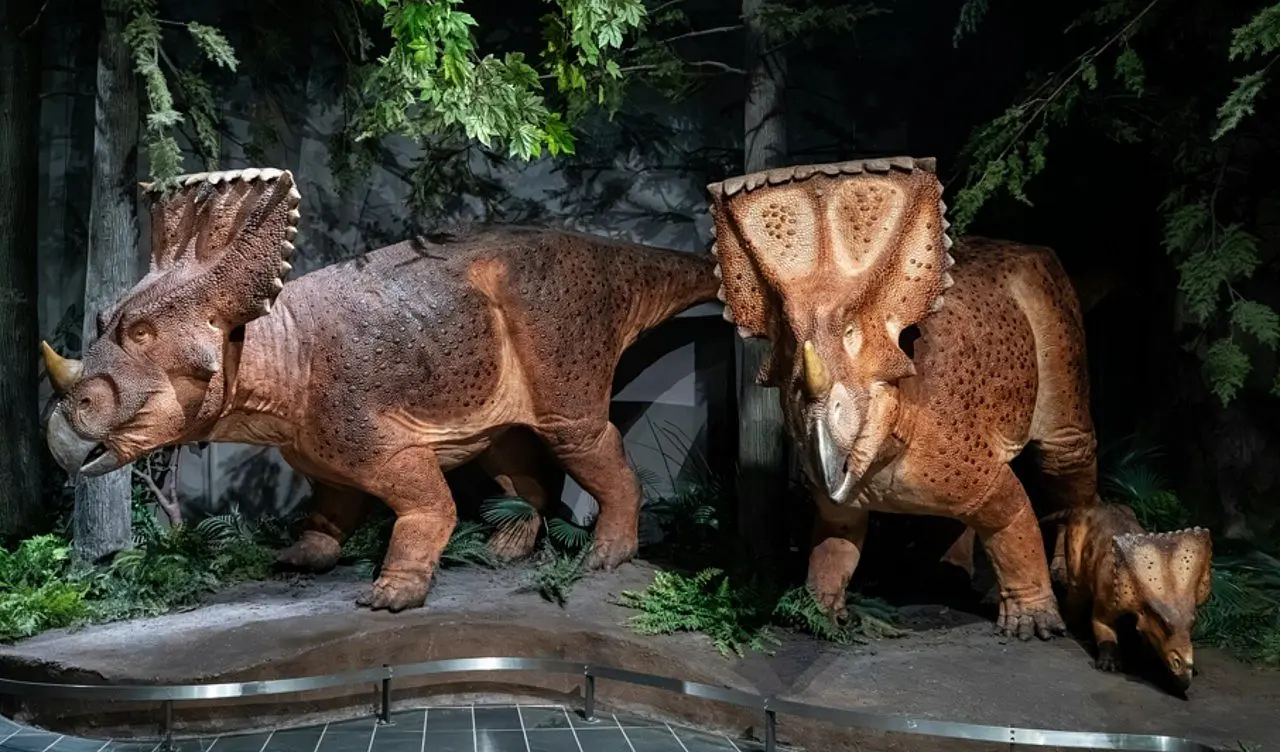
Scientists have managed to uncover the sounds of a 165-million-year-old forest, revealing that part of the soundscape of the Jurassic period was inaudible to humans. The reconstruction, which promises a rare glimpse into the planet’s auditory past, suggests a complexity much earlier than previously imagined, altering the common perception of the age of dinosaurs.
The research, detailed in the scientific journal Proceedings of the National Academy of Sciences (PNAS), analyzed fossils of 20 wings from nine species of insects. These specimens, found in the Inner Mongolia region of China, were fundamental in reconstructing the sound frequencies that these animals probably produced in their original habitat.
To achieve these results, the team of scientists employed an innovative approach: they compared the fossilized wings with those of contemporary insects, using precise laser measurements and computer models. AI simulation was a crucial component in estimating how the wing structures vibrated, allowing the reproduction of their possible calls.
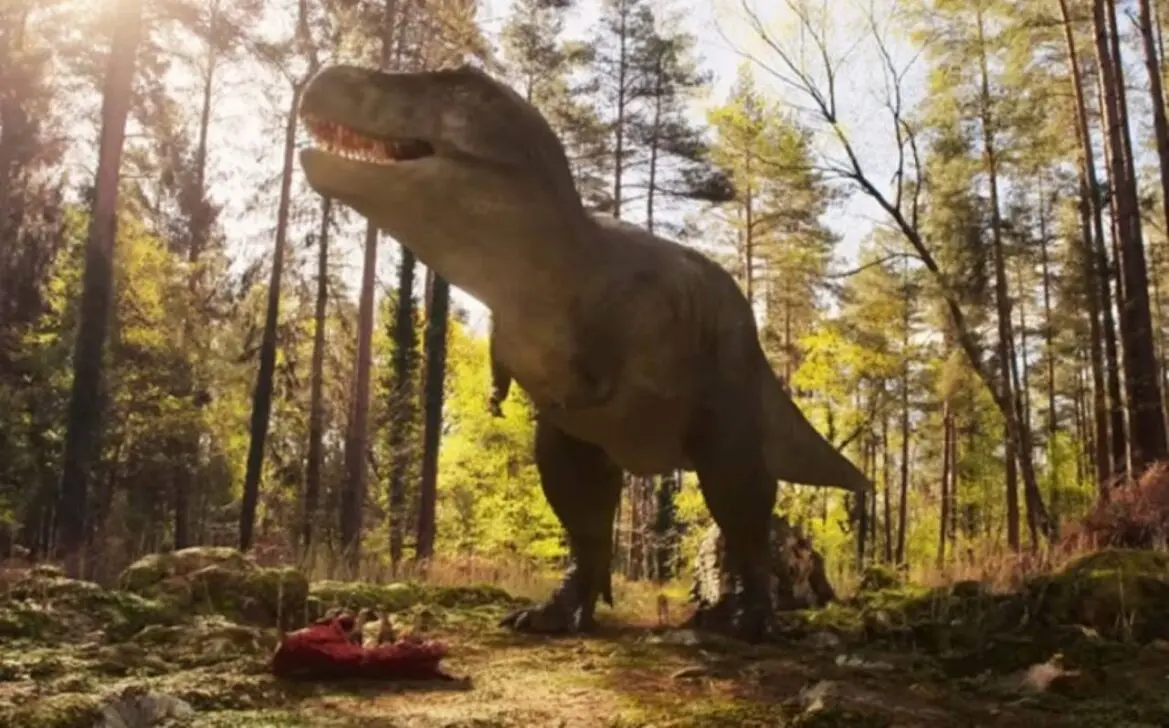
How prehistoric insects were able to make sounds
The wings of these insects had specialized characteristics for generating noise. In many species that live today, these structures operate in a similar way to a musical instrument, where one part of the wing rubs against another, generating vibrations that give rise to the characteristic sounds of each species.
Read also: Chinese court executes woman for torture and death of three-year-old stepdaughter
To determine how these sounds manifested themselves in the remote past, the researchers made a thorough comparison between the fossilized structures and those of modern insects. With the help of advanced methods such as laser vibrometry and computer simulations, it was possible to accurately estimate the sound frequencies that its wings could generate.
Most of the species studied emitted sounds in the range of 5 to 7 kilohertz (kHz), frequencies that can be easily detected by human hearing. However, one species in particular, called Sigmaboilus peregrinus, had a remarkable ability: it produced a frequency of approximately 20.5 kHz. This sound is in the ultrasound range, making it practically imperceptible to most people, whose upper hearing limit is around 20 kHz.
The relationship between the discovery and the evolution of bats
The revelation stands out for demonstrating that these insects inhabited the planet long before the emergence of bats, which are known for using high-frequency sounds in echolocation. A common theory suggests that the presence of bats directly influenced the development of ultrasonic communication in other creatures.
Understand the case: Scientists discover that Earth is home to up to 20 million species of insects
However, the new study indicates that this form of sound communication was already a reality among insects around 165 million years ago. This evidence alters the understanding of the evolutionary line, suggesting that other elements, such as the interaction between insects themselves and pressure from predators, may have been crucial for the evolution of such sounds.
Impossibility of an accurate “recording” of Jurassic forests
Despite the remarkable reconstruction, it is not possible to know with complete accuracy what the soundscape of a Jurassic period forest was like. Fossils can preserve details of the structures responsible for producing sounds, but they do not provide precise information about rhythm, cadence or intensity, essential data for faithful reproduction.
Therefore, researchers did not create a literal “recording” of the Jurassic era. The work offers a scientific estimate of a significant portion of the sounds emitted by these insects, allowing a window into the planet’s sonic past.
More on this story: Study reveals bumblebees surpassing complex intelligence test without prior training, redefining cognition in insects
Even so, the result helps to redefine the image of a prehistoric environment, generally associated only with dinosaurs, like those portrayed in films like Jurassic Park. In addition to large reptiles, a universe of small animals contributed a rich tapestry of calls at different frequencies, some audible to humans and others that would remain completely unknown to our ears.
More news in Latest News (EN)
See more →More news on Mix Vale
- 1Julia Louis-Dreyfus reveals intense creative clashes shaped iconic sitcom ‘Seinfeld’s’ groundbreaking humor
- 2U.S. forces dismantle sophisticated floating drug refueling station tied to Ecuadorian narco-terror group
- 3Giants make unexpected roster move, release longest-tenured player Darius Slayton as Harbaugh era begins
- 4Eiffel Tower closure sparks outrage as staff protest gender segregation during VIP religious group visit
- 5AfD electoral win in Saxony-Anhalt faces governance hurdles, minor party crucial
- 6Austin Reaves enjoys Labor Day weekend after pivotal Lakers contract, poised for leadership
- 7Quieter Russian nuclear submarines heighten NATO’s Arctic defense concerns, alliance boosts northern presence
- 8NTSB confirms Amazon cargo jet crew survived Miami crash, five dead and five injured in runway overrun incident
- 9U.S. diplomatic efforts confront persistent China-Peru economic ties amid rising regional tensions
- 10German racer Michael Schumacher remains secluded 12 years later