
German racer Michael Schumacher remains secluded 12 years later
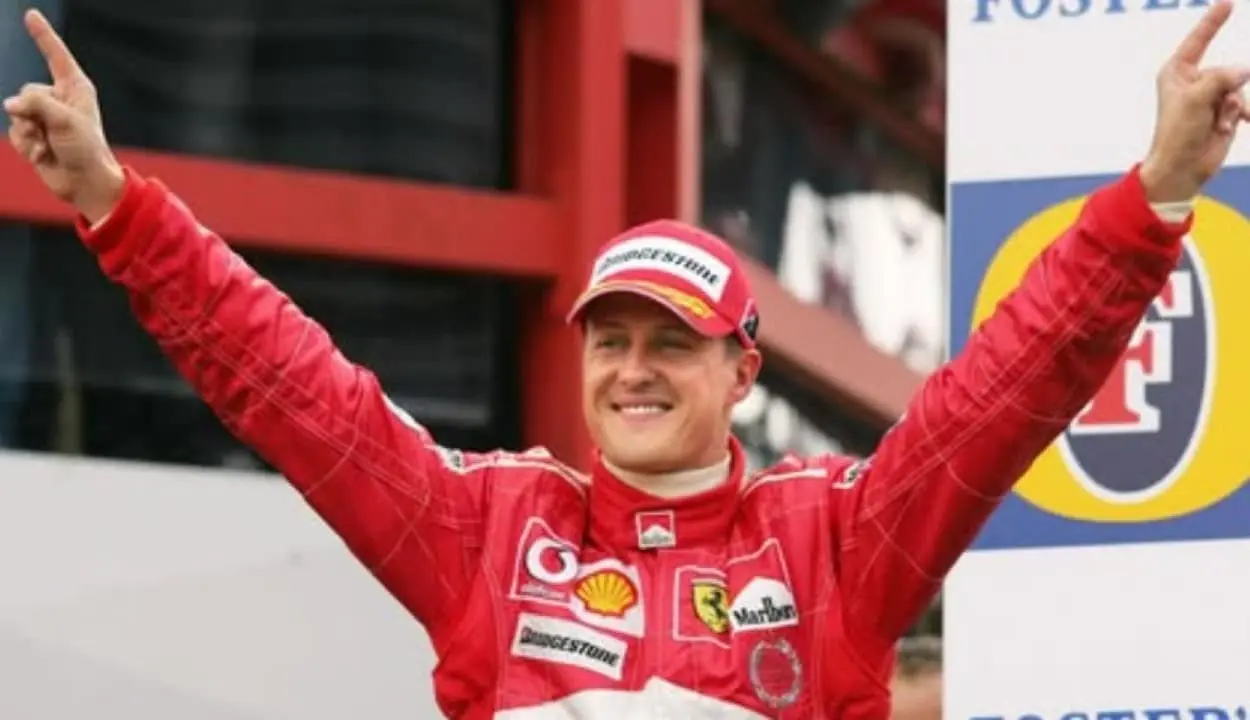
German driver Michael Schumacher receives round-the-clock medical attention at his private estate in Gland, Switzerland, on September 7, 2026, marking 12 years and eight months of continuous isolation following his catastrophic skiing accident in the French Alps. His family enforces an uncompromising protection protocol established after the severe brain trauma occurred in December 2013, granting home access only to verified medical staff and close relatives.
The specialized facility built within the Lake Geneva property features advanced neurological care units and tailored daily rehabilitation overseen by global healthcare specialists. Every treating physician, nurse, and therapist signs binding non-disclosure agreements that carry substantial financial penalties for unauthorized disclosures of patient records. Corinna Schumacher, the wife of the seven-time champion, oversees the family assets and directs all medical decisions.
Strict silence shields the residence.
Public news regarding Schumacher emerges exclusively through authorized comments from trusted associates. Former Ferrari team principal and past FIA president Jean Todt travels to the estate up to three times per month. Todt watches Formula 1 broadcasts with his longtime friend during private visits, withholding details about motor functions or communication abilities.
Todt noted in past public statements that Schumacher is no longer the man fans saw racing, yet he remains present and continues fighting. Security guards confiscate electronic items from guests at the front gate to eliminate unapproved recordings.
Severe head trauma and emergency surgery following the Méribel crash
Schumacher sustained critical injuries on December 29, 2013, while vacationing at the Méribel resort in the French Alps. The retired athlete skied outside designated trails between the La Biche and Mauduit runs with his 14-year-old son Mick Schumacher. His skis struck hidden boulders beneath fresh snow, launching him headfirst onto an exposed rock surface.
The violence of the blow split his protective helmet into two pieces. Air rescue personnel flew him directly to Grenoble University Hospital, where scans revealed serious traumatic brain injuries, internal hemorrhaging, and swelling.
Surgeons completed two emergency neurosurgical operations to lower intracranial pressure and remove blood clots. Medical teams placed Schumacher in a medically induced coma for six months inside the Grenoble intensive care unit. Family representative Sabine Kehm announced on June 16, 2014, that Schumacher had emerged from the coma and moved to the University Hospital of Canton de Vaud in Lausanne.
Therapists in Lausanne focused on fundamental motor recovery over eleven weeks. Doctors approved his permanent transfer home to Gland on September 9, 2014.
Understand the case: Security scheme takes Michael Schumacher to Switzerland to meet his first granddaughter
Experimental cell therapy and specialized medical trials
Specialists explored regenerative medicine options in the years following his hospital discharge. Schumacher traveled to Georges-Pompidou European Hospital in Paris in September 2019 for specialized treatment overseen by cardiac surgeon Philippe Menasché. Clinicians delivered intravenous stem cell infusions intended to produce systemic anti-inflammatory benefits across damaged tissues.
Menasché confirmed that the therapy involved targeted cell infusions rather than miraculous brain operations. Schumacher returned to his Swiss home shortly after completing the protocol.
The Schumacher family also transformed a villa in Mallorca, Spain, purchased from the Real Madrid presidency, into a winter residence. High-grade perimeter defenses and surveillance shields protect the property against paparazzi camera lenses and airborne drones.
Family statements and security against extortion attempts
Corinna Schumacher discussed their reality in an authorized 2021 biographical documentary. She explained that the family lives together, conducts daily treatments, and honors Michael’s longstanding insistence on keeping personal matters private.
Security measures at the Swiss property stopped multiple attempts at blackmail and corporate espionage. A Swiss air rescue employee stole confidential medical files from Grenoble in June 2014, but police arrested the suspect, who died in his Zurich cell before trial. Authorities in Germany arrested three individuals in 2024 for demanding 15 million euros to prevent the release of digital records stolen by a former security guard.
Full coverage: Latest News (EN)
Prosecutors brought those extortion suspects to trial before a district court in Wuppertal. Law enforcement retrieved the digital materials before publication.
Debut at Spa and immediate transition to Benetton
Schumacher made his Formula 1 debut on August 25, 1991, at the Belgian Grand Prix on the Spa-Francorchamps circuit. Jordan Grand Prix signed the 22-year-old German to fill in for Bertrand Gachot, who was detained by British authorities after an altercation in London. Driving the Ford-powered Jordan 191, Schumacher qualified seventh on the grid, outperforming veteran teammate Andrea de Cesaris.
Mechanical failure halted his race on the opening lap when his clutch burned out near the Eau Rouge corner. Benetton director Flavio Briatore recognized the rookie’s raw speed, dissolved Roberto Pupo Moreno’s contract, and hired Schumacher for the Italian Grand Prix at Monza two weeks later.
Schumacher scored his first championship points by finishing fifth at Monza ahead of three-time champion Nelson Piquet. His first podium result arrived on March 22, 1992, at the Autódromo Hermanos Rodríguez in Mexico behind Williams drivers Nigel Mansell and Riccardo Patrese.
He secured his first Grand Prix victory at Spa-Francorchamps on August 30, 1992, mastering wet track conditions to beat Mansell.
Schumacher ended the 1992 season third in the drivers’ standings with 53 points. That tally placed him ahead of Ayrton Senna, who took fourth with 50 points for McLaren.
First world championships secured with Benetton
The 1994 campaign established the Kerpen native as the sport’s premier competitor. Following Ayrton Senna’s death on May 1, 1994, during the San Marino Grand Prix at Imola, Schumacher piloted the Benetton B194 to six victories across the opening seven rounds. Williams rival Damon Hill mounted a determined title challenge as technical disputes and governing body penalties cost Benetton championship points.
The season finale unfolded on November 13, 1994, at the Adelaide street circuit in Australia, where Schumacher led Hill by a single point before crashing into the barriers on lap 36 and colliding with the Briton on the following bend. The collision eliminated both cars on the spot, confirming Germany’s first Formula 1 world champion.
Benetton switched to Williams-spec Renault V10 engines for the 1995 season. Schumacher took nine victories in 17 races, clinching his second championship at the Pacific Grand Prix in Aida, Japan, with two rounds remaining.
Rebuilding Scuderia Ferrari alongside technical leaders
Schumacher joined Scuderia Ferrari for 1996, taking on the challenge of a team without a drivers’ title since Jody Scheckter won in 1979. Ferrari president Luca di Montezemolo gave him authority to reshape the organization, leading to the recruitment of technical director Ross Brawn and designer Rory Byrne under team boss Jean Todt.
More on this story: Secretive medical operation takes Michael Schumacher to Switzerland to meet his first granddaughter
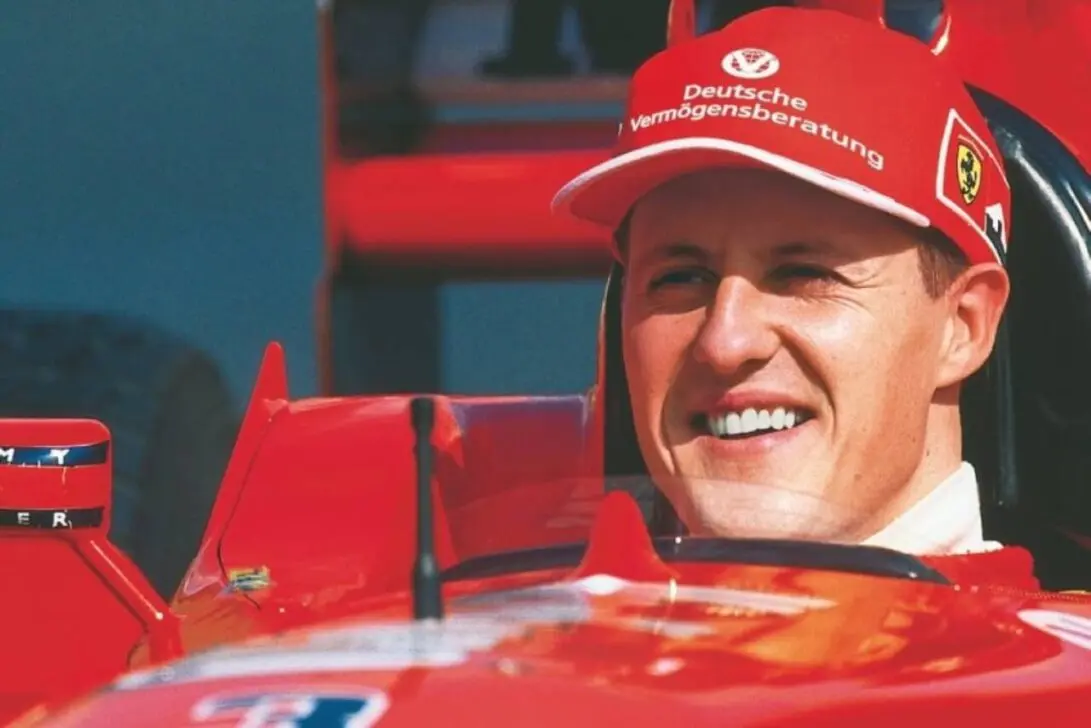
The Ferrari F310 suffered from mechanical fragility, but Schumacher produced a legendary wet-weather drive at Barcelona on June 2, 1996, winning the Spanish Grand Prix by 45 seconds over Jean Alesi. His pace ran four seconds faster per lap than rival machinery in torrential rain.
The 1997 title fight went down to the final round at Jerez, Spain, where Schumacher led Williams driver Jacques Villeneuve by one point. Villeneuve attempted an inside pass at Dry Sack corner on lap 48, prompting Schumacher to steer into the Canadian’s sidepod.
The collision stranded Schumacher in the gravel, while Villeneuve finished third to secure the title. The FIA stripped Schumacher of his 1997 second-place championship standing following an extraordinary hearing in Geneva, though his race results remained intact.
Challenging McLaren and ending Maranello title drought
McLaren-Mercedes fielded dominant cars engineered by Adrian Newey throughout 1998 and 1999. Schumacher won six races during a fierce 1998 rivalry with Mika Hakkinen, which ended when a tire failure stopped him at Suzuka on lap 31.
A rear brake failure at 107 kilometers per hour hurled Schumacher’s Ferrari into the Stowe corner tire wall during the British Grand Prix on July 11, 1999. The violent crash broke both the tibia and fibula in his right leg, forcing him to miss six consecutive races. He returned for the penultimate round in Malaysia, claiming pole position by nearly a full second to help Eddie Irvine as Ferrari secured the constructors’ title.
Ferrari achieved its long-sought drivers’ championship in 2000, breaking a 21-year drought. Schumacher took nine victories in 17 starts with the Ferrari F1-2000.
He clinched the crown on October 8, 2000, at Suzuka, defeating Hakkinen through strategic pit stops. Schumacher celebrated inside the cockpit as he crossed the line two seconds clear of his rival.
Record-breaking dominance during four consecutive seasons
Schumacher rewritten Formula 1 records between 2001 and 2004. He secured the 2001 championship with 123 points, nearly doubling the 65 points earned by McLaren runner-up David Coulthard, and surpassed Alain Prost’s all-time mark of 51 wins at the Belgian Grand Prix.
Ferrari deployed the dominant F2002 chassis the next year, giving Schumacher podium finishes in all 17 races. He claimed 11 Grand Prix victories and matched Juan Manuel Fangio’s historic five championships on July 21, 2002, at Magny-Cours with six events left to run.
The 2003 season brought intense competition from McLaren driver Kimi Raikkonen and Williams racer Juan Pablo Montoya. Schumacher captured his sixth world title at the Suzuka finale by a slim two-point advantage over Raikkonen.
Ferrari reached peak performance with the F2004, winning 13 out of 18 races with seven straight triumphs early in the year. Schumacher secured his seventh championship at Spa on August 29, 2004, concluding the year with 148 points compared to 114 scored by teammate Rubens Barrichello.
Key career figures and racing records
- World drivers’ championships: 7 titles (1994, 1995, 2000, 2001, 2002, 2003, and 2004).
- Total Grands Prix contested: 308 starts across Formula 1 from 1991 through 2012.
- Race victories: 91 first-place finishes at international circuits.
- Pole positions: 68 front-row grid starts from qualifying sessions.
- Career podiums: 155 top-three finishes recorded in official events.
- Fastest race laps: 77 best laps registered during official Grands Prix.
- Championship points: 1,566 career points credited by the FIA.
Rule changes and initial retirement announcement at Monza
New FIA tire regulations in 2005 ended Ferrari’s dominant championship run. The ban on mid-race tire changes hindered Bridgestone, allowing Fernando Alonso to capture the title with Michelin-shod Renault. Schumacher took his only win that year at the six-car United States Grand Prix in Indianapolis.
The return of tire changes and new 2.4-liter V8 engines revitalized Ferrari in 2006. Schumacher announced his retirement on September 10, 2006, immediately after winning the Italian Grand Prix at Monza.
An engine blowout at Suzuka and fuel pressure trouble in Brazil halted his push for an eighth crown. Starting his Ferrari farewell race in Interlagos on October 22, 2006, Schumacher suffered an early puncture, dropped to last place, and drove back through the pack to finish fourth.
Three seasons with Mercedes and final departure
Schumacher served as a Ferrari advisor and road car development tester between 2007 and 2009. Neck injuries sustained during a motorcycle crash in Cartagena, Spain, prevented him from substituting for the injured Felipe Massa in July 2009.
Ross Brawn persuaded the champion to spearhead Mercedes’ factory return to Formula 1 in 2010. The 41-year-old veteran signed a three-year contract alongside fellow German Nico Rosberg, facing difficulty adjusting to high-degradation Pirelli tires. He set the fastest qualifying time at the 2012 Monaco Grand Prix before a grid penalty dropped him back, and earned his final podium at age 43 in Valencia.
Schumacher drove his 308th and final Grand Prix at Interlagos on November 25, 2012, finishing seventh behind race winner Jenson Button. Lewis Hamilton replaced him at Mercedes for the 2013 season.
Next generation racing careers and historical collections
Mick Schumacher entered motorsports under the name Mick Betsch to deflect public scrutiny during his karting years. He advanced through junior racing formulas, claiming the 2018 European Formula 3 title and the 2020 Formula 2 championship with backing from the Ferrari Driver Academy.
Mick joined Haas F1 Team for the 2021 and 2022 seasons, earning his first championship points with an eighth-place finish at Silverstone after battling Max Verstappen. He totaled 12 career Formula 1 points before transitioning to reserve duties for Mercedes and racing with Alpine in the World Endurance Championship.
Gina-Maria Schumacher chose equestrian competition, winning multiple gold medals at the FEI World Reining Championships. The family preserves Michael’s racing machinery across permanent exhibits at the Nürburgring and inside the Motorworld complex in Cologne.
The Cologne exhibition displays his championship-winning Ferraris, the Benetton B194, and his original Jordan 191.
More news in Latest News (EN)
See more → Apple prepares iOS 27 with contextual Siri and visual search
 Chinese leaks reveal Xiaomi 18 Fold panel reaches 4,000 nitsXiaomi 18 Fold display reaches 4,000 nits peak brightnessApple redesigns iOS 27 with upgraded Siri and camera search
 Final Fantasy VII trilogy bundle hits Japan for 500 dollars
 Capcom classics and Mycopunk arrive on PlayStation Plus tiersDino Crisis 2 leads fresh wave of PlayStation Plus gamesTrilogy pack for Final Fantasy VII arrives in Japan for $500
 Ten classic PlayStation 2 titles that deserve full remakesClassic PlayStation 2 games demand complete modern revivals
More news on Mix Vale
- 1Menendez brothers granted earlier 2027 parole hearing, reigniting debate over high-profile case
- 2Alaskan cruise dreams shattered as technical woes force abrupt cancellation for hundreds of passengers
- 3Indiana farm manager affirms dedication to controversial Charlie Kirk corn maze despite widespread public backlash
- 4Beijing injects $53.6 billion into key financial institutions to bolster economic stability
- 5Classic RPG Astonishia Story arrives on Switch platforms in 2027
- 6Astonishia Story remake will launch on two Nintendo platforms
- 7Larissa Morata dies from gunshot wound in Embu das Artes
- 8Woman found shot dead with officer gun in Embu das Artes
- 9Standalone edition opens the frontier of Red Dead Online
- 10Frontier journey opens via standalone Red Dead Online release