
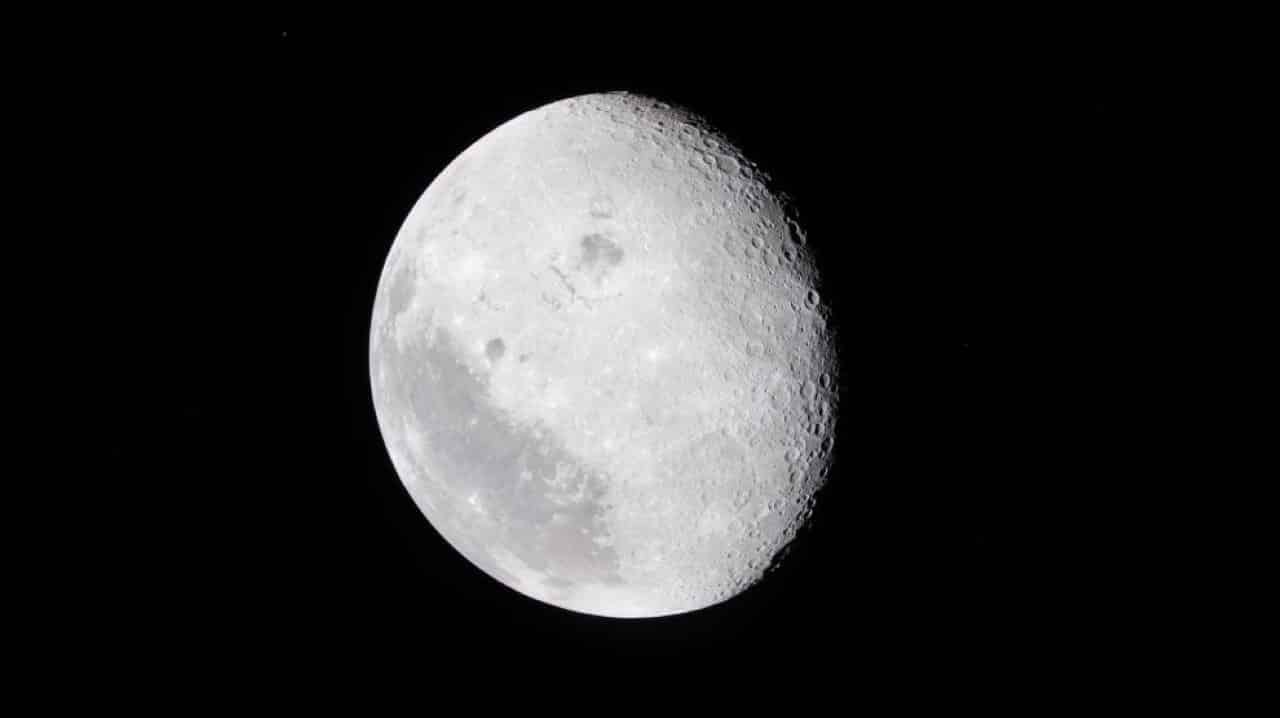
Large icy moons can preserve their subterranean oceans of liquid water even after catastrophic collisions smash them apart. Computer simulations led by researchers at the University of Maryland reveal that massive satellites coalesce back together under their own gravity and retain enough interior warmth to keep their oceans liquid for billions of years.
The findings indicate that cataclysmic smashups do not necessarily strip away habitability on large frozen worlds across the outer solar system. Marc Neveu, an associate research scientist in astronomy at the University of Maryland and an affiliate of the Goddard Space Flight Center of NASA, noted that the modeled events represented the most destructive scenarios possible.
“What we found was that those big collisions don’t really matter as far as oceans are concerned,” Neveu said. “If there was an ocean before, there’s likely to be an ocean after and vice versa.”
Size determines whether shattered icy moons stay warm or freeze
The research team combined smoothed particle hydrodynamics with structural and thermal evolution models spanning 4.5 billion years to evaluate bodies of different dimensions. For large moons with a radius of approximately 1,000 kilometers, the energy generated during the collision converts directly into internal heat. This supplementary energy can thicken an existing subterranean ocean and keep it stable for several billion years. However, the models demonstrated that collisions cannot melt a completely frozen satellite to create a new ocean from scratch.
Smaller satellites with a radius near 500 kilometers face the opposite fate when struck by large impactors. Before a collision, a small moon retains an outer layer composed of a chaotic mixture of rock and ice that acts as a thermal blanket, trapping internal warmth. The force of the impact destroys that balance, allowing dense rock to sink into the core while ice rises toward the surface. Once this internal differentiation occurs, the uninsulated ice radiates heat out into space, permanently freezing the interior.
Key findings from the University of Maryland impact simulations
- Researchers designed computational models simulating massive impacts alongside 4.5 billion years of internal planetary heating.
- Simulations established that gravitational attraction pulls shattered planetary fragments back into a single body within 48 hours.
- Sufficiently large satellites preserved their pre-existing oceans and gained heat that expanded their subterranean water layers.
- Smaller bodies experienced material differentiation, losing their insulating outer crust and freezing solid.
- Impact energy failed to generate liquid oceans on celestial bodies that were entirely frozen before the collision.
Saturn moon Rhea exhibits clues of ancient collision heating
Visual characteristics of existing moons in the solar system support the mechanical models developed by the scientists. Neveu pointed to Saturn‘s second-largest moon, Rhea, which measures 1,528 kilometers across and displays unusually flattened crater topography. Unlike solar melting, this softened appearance suggests heat rising from an interior ocean that expanded after an ancient collision. Other heavily battered bodies like Saturn’s Iapetus and Uranus’s Miranda also display fractured crusts consistent with disruption and reassembly.
Gravitational tides from host giant planets provide another mechanism to sustain liquid water on smaller satellites that survive smashups. For instance, tidal forces from Saturn keep the interior of Enceladus warm despite its compact diameter. Alyssa Rhoden, a specialist in ocean worlds at the Southwest Research Institute and coauthor of the study, noted that satellites like Enceladus and Dione have likely remained uninterrupted over the past 100 million years.
Parameters established for icy moons in the research study
- Modeled large moon radius: 1,000 kilometers.
- Modeled small moon radius: 500 kilometers.
- Thermal evolution timeline: 4.5 billion years.
- Debris reassembly window: 48 hours following impact.
- Diameter of Saturnian satellite Rhea: 1,528 kilometers.
The study received support through the Habitable Worlds program of NASA under contract 80NSSC22K0403, with backing from the NASA Hubble Fellowship and the Goddard Space Flight Center. The findings will help planetary scientists assess cryovolcanoes, salt deposits, and potential biosignatures during future outer solar system robotic missions.