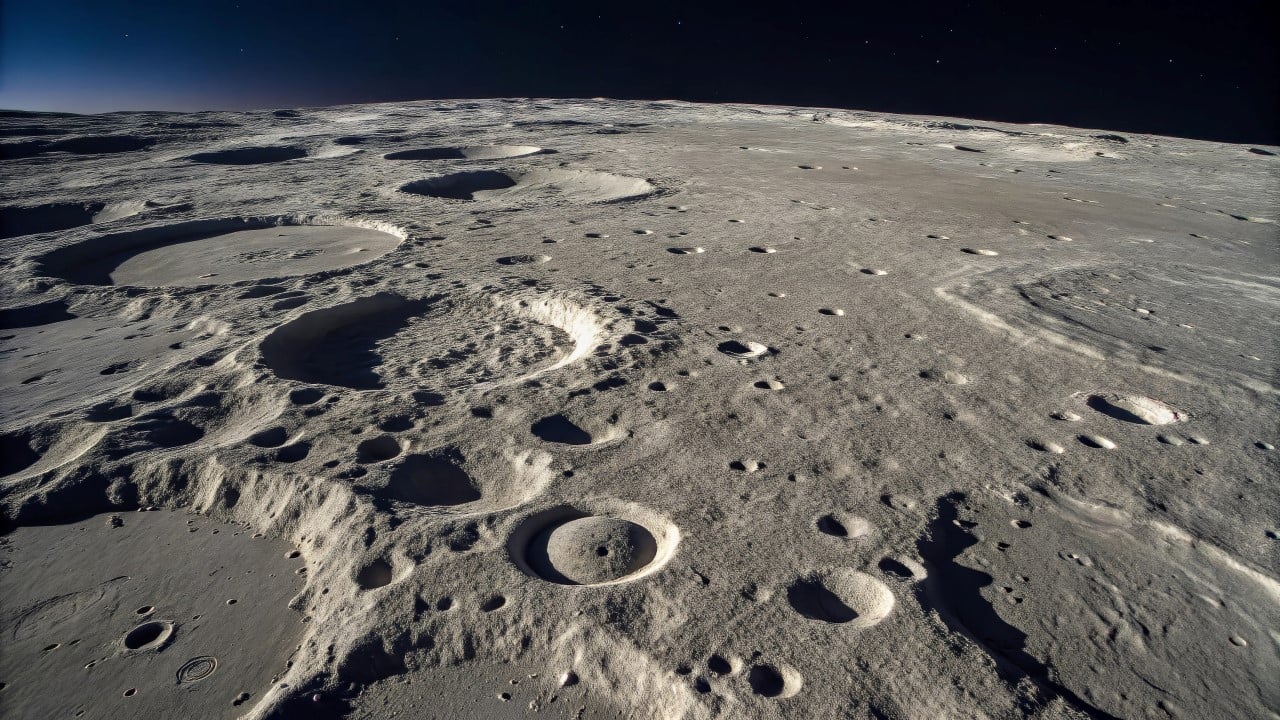
The GIMLI project earned NASA selection to determine whether the Marius Hills Pit connects to an underground lava tube on the Moon. Scientific instruments deployed directly to the lunar surface will evaluate whether subterranean structures can shield future astronauts from extreme radiation and sharp temperature swings.
Nicky Fox, associate administrator for the Science Mission Directorate at NASA headquarters, stated the strategic priority of the surface assignment. “NASA Science is building the ultimate interplanetary survival guide to ensure that science goes first to the lunar surface to provide our future astronaut crews with the vital information, resources, and safety precautions needed ahead of time to survive the night on the Moon,” Fox said.
NASA PRISM program finances the GIMLI investigation
NASA confirmed the selection on Wednesday, September 30, 2026, through its Payloads and Research Investigations on the Surface of the Moon program, known as PRISM. The selection formed part of a package of three scientific suites funded under the Moon Base initiative, which also approved the LEMS-SP environmental station for the lunar South Pole and the DISCO cold-trap imaging payload.
The Planetary Science Institute, based in Tucson, Arizona, directs the Geophysical Instruments for Marius Lunar pit Investigation, abbreviated as GIMLI. PSI published technical details of the effort on Friday, October 2, 2026, detailing how commercial spacecraft will deliver the gear to the target site. Commercial Lunar Payload Services partners will transport the suite to the surface using a dedicated lunar lander and rover.
Amanda Hendrix, director and chief executive officer of the Planetary Science Institute, welcomed the space agency’s funding decision. “GIMLI represents the type of ambitious planetary science that PSI was built to pursue,” Hendrix said. “Than and his team are taking a scientific question we’ve been studying from orbit and have developed a way to investigate it directly on the Moon. We’re excited to have PSI leading this effort and to be partnering with NASA and Honeybee Robotics to learn more about the Moon and its volcanic past.”
Dimensions and environmental conditions at Marius Hills Pit
The Marius Hills Pit sits within one of the most volcanically varied terrains on the lunar nearside, presenting a prominent opening that scientists suspect formed from the collapse of an ancient volcanic conduit. Surface conditions in the region fluctuate dramatically, making subsurface discovery critical for sustained exploration.
- Entrance opening dimensions: approximately 65 by 90 meters across the visible rim.
- Estimated pit depth: 34 meters from the surface rim to the visible floor.
- Surface thermal swing: ranges from 260 °F down to -280 °F, corresponding to roughly 127 °C to -173 °C.
- Instrument count: four integrated systems combining radar, seismology, gravimetry, and optical imaging.
- Payload suites selected in the NASA announcement: three investigations approved under the PRISM call.
Scientific suite for Marius Hills Pit subsurface mapping
To inspect the ground surrounding and beneath the opening, the GIMLI payload will integrate a ground-penetrating radar, an active-source seismic system, a gravimeter, and high-resolution cameras. While the cameras photograph the exposed internal walls and the immediate terrain, the geophysical instruments will measure subsurface density variations and sound reflections to detect hidden caverns.
Nathaniel Putzig, associate director and senior scientist at the Planetary Science Institute, serves as principal investigator for GIMLI. Than Putzig noted that the mission restores a geophysical technique unused on the lunar surface for more than half a century. “It’s long been a desire of mine to reintroduce intentional active-source seismic methods to planetary science, as it has essentially not been done since the Apollo astronauts conducted the first seismic surveys on the Moon,” Putzig said. “Combining that method with ground-penetrating radar and gravity measurements makes it all the more exciting, as these methods together will allow us to get a much better understanding of subsurface properties — including the anticipated detection of a lava tube extending away from the Marius Hills pit.”
Honeybee Robotics, a subsidiary of Blue Origin, will act as the industrial partner on the mission, overseeing project management and manufacturing the active-source seismic system, the gravimeter, and the camera hardware. Honeybee Robotics will handle payload integration onto the commercial lander and rover, and will collaborate with the research institute to operate the equipment after touchdown. The Norwegian Space Agency will provide the ground-penetrating radar instrument, joined by coinvestigators from Boise State University, Johns Hopkins University, the Lunar and Planetary Institute, and the University of Oslo.
Lunar volcanism research and Apollo seismic heritage
Earlier orbital observations by spacecraft such as NASA’s Lunar Reconnaissance Orbiter and Japan’s Kaguya orbiter captured visual and radar hints that lunar pits connect to larger subterranean networks. Scientists believe basaltic lava flows carved vast subterranean passages billions of years ago during intense periods of lunar volcanism. Over eons, meteorite impacts or structural fatigue breached portions of these roofs, leaving skylights like the Marius Hills opening.
Read also: Jezero Crater rocks yield organic carbon in Mars mission
Gareth Morgan, senior scientist at the Planetary Science Institute and deputy principal investigator on GIMLI, pointed out the broader geological value of the expedition. “Confirming a substantial lava tube would give us an insight into how volcanism operated on the Moon,” Morgan said. “Lava tubes are a common feature of basaltic volcanism on Earth, so identifying them on the Moon means we could use knowledge of such terrestrial caves to better understand lunar history.”
Investigating the exposed rock faces provides access to stacked layers of volcanic basalt and ancient lunar regolith that normally remain hidden beneath meters of churned dust. Even if the sensors reveal that the subterranean void collapsed or never formed an expansive passage beyond the opening, the measurements will supply definitive structural data on how the pit itself originated. In addition, resuming intentional active-source seismic exploration revives field practices pioneered during the Apollo landings, advancing geophysical techniques for planetary science.
Next milestones for the GIMLI lunar mission
Subterranean cavities offer prime locations for future human outposts under the Artemis campaign because thick basalt ceilings naturally shield habitats from cosmic radiation, solar particle events, and micrometeorite impacts. By operating in an environment protected from surface temperature swings, astronauts could establish long-duration infrastructure with reduced mass requirements for artificial radiation shielding.
Keep reading: IRAS 18293−0941 microblazar confirmed with relativistic jet facing Earth
NASA and the Planetary Science Institute have not yet specified the target launch date for GIMLI. The space agency also has not yet identified which commercial aerospace vendor under the Commercial Lunar Payload Services initiative will supply the lander and rover assigned to deliver the instruments to the Marius Hills region.