

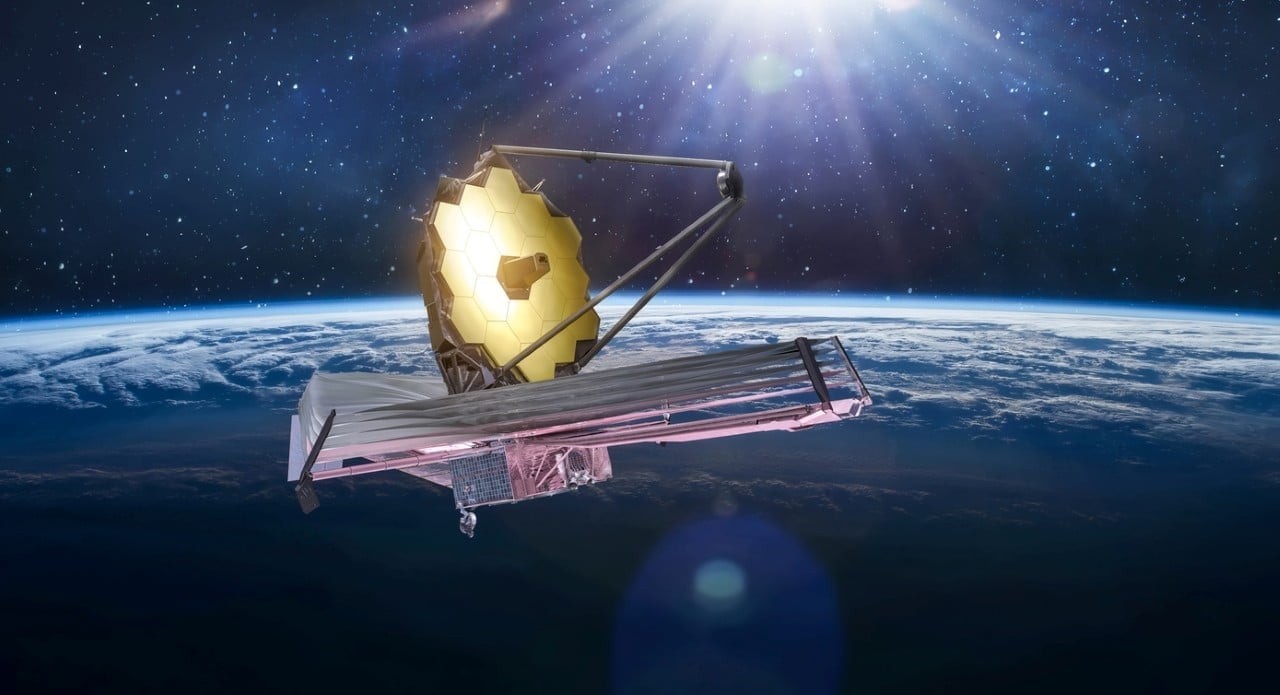
The James Webb Space Telescope has uncovered distinct mineral traces left behind by violent collisions between developing planetary bodies across 21 extreme debris disks. Researchers established that the mineral composition of orbital dust reveals whether young systems suffered catastrophic impacts between Mars-sized bodies or experienced smaller collisions between Moon-sized objects during the assembly of rocky worlds.
Lead author Kate Y. L. Su, an astronomer at the Space Science Institute in Boulder, Colorado, confirmed that examining a large sample allowed the team to classify the physical processes driving these violent environments. “This is the first time we have gathered enough systems to truly understand this subclass that we call extreme debris disks,” Su said. “Now that we have more data, we can pin down what these disks represent for planet formation and evolution.”
James Webb observations classify silica signatures across 21 systems
Astronomers analyzed the mid-infrared spectra of the 21 extreme debris disks by combining observations from the James Webb Space Telescope with archival data from the retired Spitzer Space Telescope. The survey separated the catalog into two primary mineral categories: systems rich in silica and systems poor in silica that instead feature significant amounts of forsterite.
Silica-rich disks originate from high-energy collisions between planetary embryos roughly the size of Mars, where extreme heat vaporizes large amounts of rocky material before it condenses into fine dust. In contrast, silica-poor disks emerge from lower-energy collisions or glancing, grazing impacts involving bodies closer to the size of the Moon, which crush rock without releasing enough thermal energy to vaporize silica minerals.
Extreme debris disks remain remarkably uncommon across the cosmos, appearing around an estimated 1% of young stars. Unlike typical protoplanetary disks or cold debris rings, these extreme systems hold unusually large quantities of warm dust packed tightly near the central star, accompanied by submicron grains smaller than the dust particles normally detected around young stars.
Coauthor Ágnes Kóspál, an astronomer at Konkoly Observatory in Hungary, noted that mid-infrared spectroscopy provided the only available window into the physical nature of these collisions. “To just see their mid-infrared emission and beautiful spectral features with the JWST, which allowed us to identify their compositions, was the most exciting thing for me. We have no other way to study these planetary embryos directly because they are too small,” Kóspál said.
Keep reading: Webb reveals surprising lack of small worlds beyond Neptune
Stellar age limit of 300 million years marks Mars-scale collisions
The catalog revealed a strict age boundary for the highest-energy impacts. Disks rich in silica appeared exclusively around host stars younger than 300 million years. This window matches the timeline during which terrestrial planets accumulate the bulk of their mass through high-velocity collisions, mirroring the critical era of the early Solar System when rocky worlds like Earth and Mars took shape.
Silica-poor systems displayed very different demographic patterns, surrounding stars across a wide distribution of ages rather than remaining restricted to the earliest stellar youth. These systems also exhibited stronger, irregular fluctuations in infrared brightness over time, a signature attributed to rapid orbital restructuring and ongoing secondary collisions among newly generated fragments.
The presence of silica-poor dust around older stars aligns with models of the Late Heavy Bombardment, an epoch when orbital shifts among giant gas planets destabilized asteroid and comet populations throughout the Solar System. Gravitational perturbations sent smaller bodies crashing into one another and into inner rocky surfaces, producing sustained debris without the massive vaporization characteristic of giant embryo collisions.
Technical breakdown of the 21 extreme debris disks catalog
The survey published on Thursday, October 1, 2026, in The Astrophysical Journal compiled detailed observational measurements that contrast the physical characteristics of these energetic environments:
- Total sample size: 21 extreme debris disk systems evaluated through infrared spectroscopy.
- New James Webb spectra: 12 systems observed for the first time in the mid-infrared with the Mid-Infrared Instrument (MIRI).
- Spitzer follow-up: 4 systems re-examined from the archival catalog of 5 original Spitzer targets, alongside 16 total targets evaluated with the James Webb Space Telescope.
- Silica-rich proportion: 8 of the 21 systems, representing approximately 38% of the analyzed catalog.
- Stellar age threshold for silica-rich disks: restricted to host stars under 300 million years old.
- Frequency among stellar populations: detected in approximately 1% of observed stars.
Comparative timeline links disk chemistry to Solar System formation
The mineral discoveries offer a direct framework for reconstructing the first several hundred million years of our own Solar System, which formed 4.6 billion years ago. Numerical simulations show that terrestrial planets form within the first few hundred million years of stellar birth, indicating that the Sun was once part of the rare 1% of stars hosting an active extreme debris disk.
Earth experienced its defining planetary collision roughly 100 million years after the formation of the Sun, when a Mars-sized protoplanet named Theia collided with the young Earth. The colossal impact vaporized massive quantities of rock, ejecting orbital debris that eventually coalesced into the Moon. The detection of silica-rich dust around exoplanetary systems under 300 million years old confirms that such catastrophic, moon-forming events represent a standard developmental phase during terrestrial planet assembly.
Su emphasized that the evolution of both small and large planets remains intertwined throughout stellar history. “How rocky planets formed and giant planets evolved are part of the broader story of the solar system’s formation. It’s all one story,” Su said, noting that tracking disk debris bridges the gap between giant planet migration and the building of habitable terrestrial worlds.
Technological limits in observing planetary embryos directly
Astronomers cannot directly resolve the surviving planetary embryos or newly formed exomoons embedded within these extreme debris disks. Current telescope technology lacks the resolving power required to photograph compact rocky bodies across interstellar distances, leaving orbital dust, gas, and spectral signatures as the sole diagnostic tools for mapping the aftermath of planetary impacts.
Future investigations with the James Webb Space Telescope will continue monitoring brightness fluctuations across the 21 cataloged systems to track how quickly impact dust disperses and clears from inner planetary orbits over multi-year baselines.





