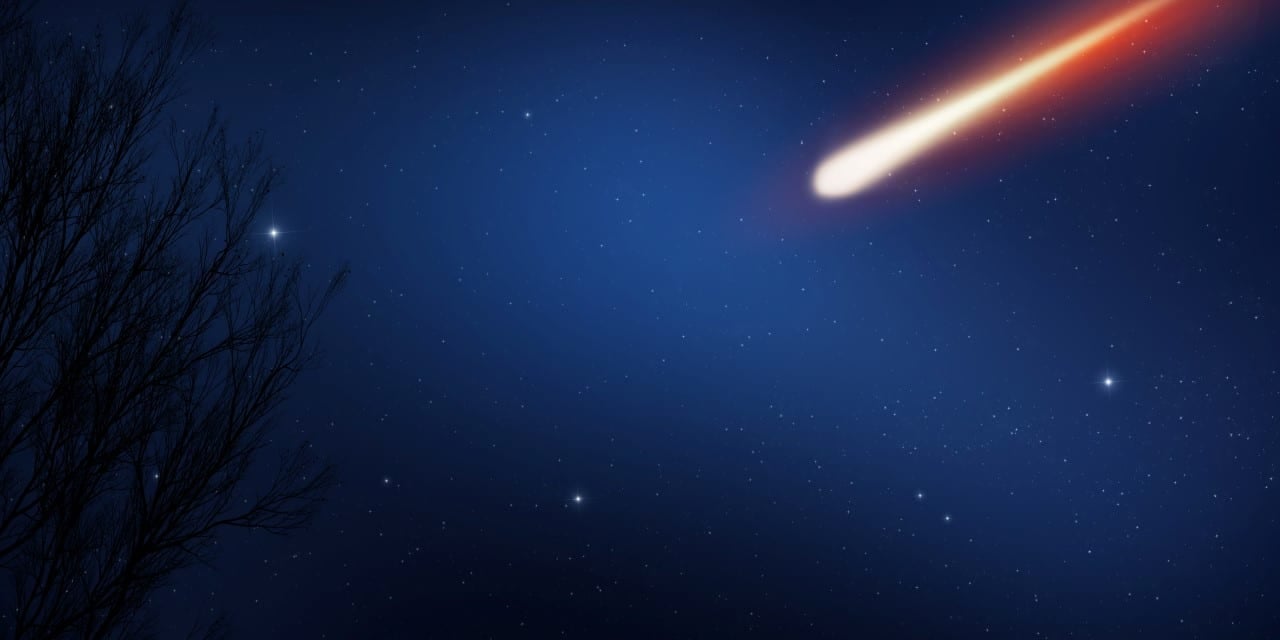
The Ames impact crater buried beneath Oklahoma formed approximately 370 million years ago, nearly 100 million years later than geologists long estimated. The redating removes the site from an ancient Ordovician asteroid bombardment and instead aligns the strike with a devastating prehistoric extinction that decimated marine life across the globe.
Researchers at the University of Texas at Austin determined that the cosmic collision occurred during the Late Devonian period rather than 467.5 million years ago. Lead author Elizabeth Catlos, an associate professor in the Department of Earth and Planetary Sciences at UT Austin, verified the age shift after multiple tests. “No matter what technique we used, it was coming back to this younger signal,” Catlos stated regarding the laboratory findings.
Learn more: Heading to Mars and the Moon: NASA and SpaceX launch Crew-13 mission with 4 astronauts into space
Zircon crystals reveal Late Devonian collision date for Ames crater
Scientists determined the new chronological marker by applying uranium-lead isotopic dating to microscopic zircon crystals extracted from granite altered by the meteor strike. These minerals preserve physical and chemical records of extreme thermodynamic events, allowing geologists to isolate the exact moment when the impactor struck the continental crust. Analysis narrowed the formation timeframe to approximately 369.7 million years ago, confirming that the structure originated well after the Ordovician period concluded.
To verify that the mineral samples documented the extraterrestrial strike itself rather than normal magmatic heating, the research team collaborated with NASA. Investigators used cathodoluminescence imaging alongside electron backscatter diffraction to examine the internal architecture of the crystals. The instruments revealed distinct shock deformation and recrystallization textures produced under extreme pressure, confirming that the crystals captured the physical disruption generated when the meteorite penetrated the Oklahoma terrain.
See also: NASA engineers blend bacteria and simulated space dust to manufacture tools on the Moon
Danny Stockli, dean of the Jackson School of Geosciences at UT Austin and co-author of the study, highlighted the value of microscopic minerals in resolving ancient timelines across North America. “These small crystals allow us to go back in time and learn about the major changes to Earth’s ancient landscapes,” Stockli said. “It would be great to do this for more of the meteor impact sites across the continent so we could get a more accurate timeline for these major events.”
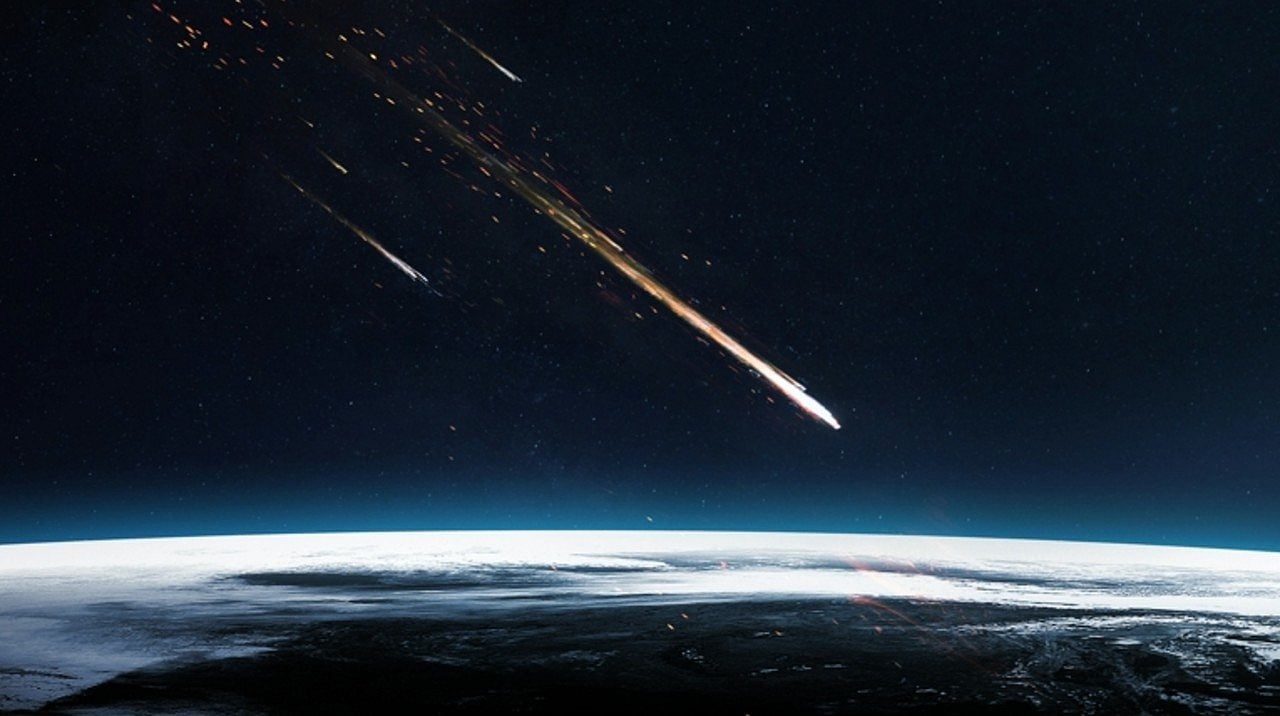
Geological profile and key metrics of the Ames impact structure
- Site location: Ames, Major County, Oklahoma, United States
- Burial depth: 2.7 kilometers beneath accumulated sedimentary strata
- Structure diameter: 14 to 16 kilometers measured across the outer rim
- Revised impact timeframe: 370 million years ago during the Late Devonian
- Previous estimated age: 467.5 million years ago during the Middle Ordovician
- Academic publication: Meteoritics & Planetary Science, volume 61, issue 8
Subsurface discovery in 1991 and the error of Ordovician fossil dating
The Ames crater remained completely hidden from surface observation until January 1, 1991, when exploration crews for the oil and gas sector identified anomalous circular geometry underground during seismic surveys. Subsequent drilling revealed a fractured basement structure sealed by younger sedimentary layers. The geological depression developed into a productive commercial petroleum reservoir, making it one of the rare extraterrestrial impact features worldwide to yield significant hydrocarbon extraction.
Follow: Comet 3I/ATLAS speeds at 66 km/s through solar system as NASA confirms safe orbital distance
Early geochronological estimates for the crater relied on biostratigraphy rather than isotopic mineral dating. Geologists originally assigned an age of 467.5 million years to the site after finding microscopic teeth from conodonts, an extinct class of primitive eel-like marine animals, embedded within the crater rocks. Because conodont fossils were index species for the Ordovician period, scientists concluded that the meteor must have collided with North America while those animals inhabited ancient seas.
The latest geochemical data showed that the conodont teeth were already tens of millions of years old when the meteorite collided with the planet. The blast excavated the ancient fossil-bearing rock layers, breaking apart the bedrock and churning prehistoric debris into the newly created crater depression. Because the impact preserved the old organic remains within fallback material, previous researchers mistakenly assumed the biological specimens recorded the actual year of the collision.
Ames removal weakens theory of ancient debris ring around Earth
The chronological correction carries wide implications for planetary science, particularly regarding the hypothesis that Earth once possessed a debris ring similar to Saturn. For years, geophysicists grouped Ames alongside nearly two dozen crater structures that formed near the equator during the Middle Ordovician. That cluster gave rise to the theory that a disintegrated asteroid created an equatorial ring that steadily rained meteorites across the planet over millions of years. Removing the Ames structure reduces the physical evidence supporting that orbital ring scenario.
Instead, the revised date places the Ames collision within the timeframe of the Frasnian-Famennian extinction event, a catastrophic environmental collapse that unfolded 372 million years ago. That event eliminated roughly 40 percent of all marine genera, destroying extensive reef ecosystems and shifting the trajectory of vertebrate evolution. “With this research, we’re basically taking a major pawn out of the Ordovician Meteor Event and dumping it into the Frasnian-Famennian event, and saying, ‘This is where this impact belongs,'” Catlos stated.
Check out: SpaceX Starship engine shutdown threatens NASA 2028 Moon landing
The investigation was initially launched by Andrew F. Parisi, a graduate student at the Jackson School of Geosciences who obtained original drill cores from the Oklahoma Geological Survey, separated the zircons, and ran early isotopic trials. Parisi died before the project reached completion. Co-author Michael E. Brookfield, an affiliated researcher at the institution, also passed away before the peer-reviewed report appeared in print alongside contributions from Research Professor Sean P. S. Gulick and Professor Emeritus Mark Cloos.
Causality between Oklahoma strike and marine extinction remains unproven
Although the 370-million-year timeline brings the Oklahoma impact close to the Frasnian-Famennian crisis, geologists caution that the crater has not been confirmed as the direct cause of the biological die-off. Scientists continue to debate whether the Late Devonian extinctions were sparked by space collisions, intense volcanic eruptions, or ocean anoxia driven by internal climate cycles. Additional core sampling and radiometric analysis from other North American sites are required to determine whether extraterrestrial strikes acted as the primary catalyst for the ecological collapse.