
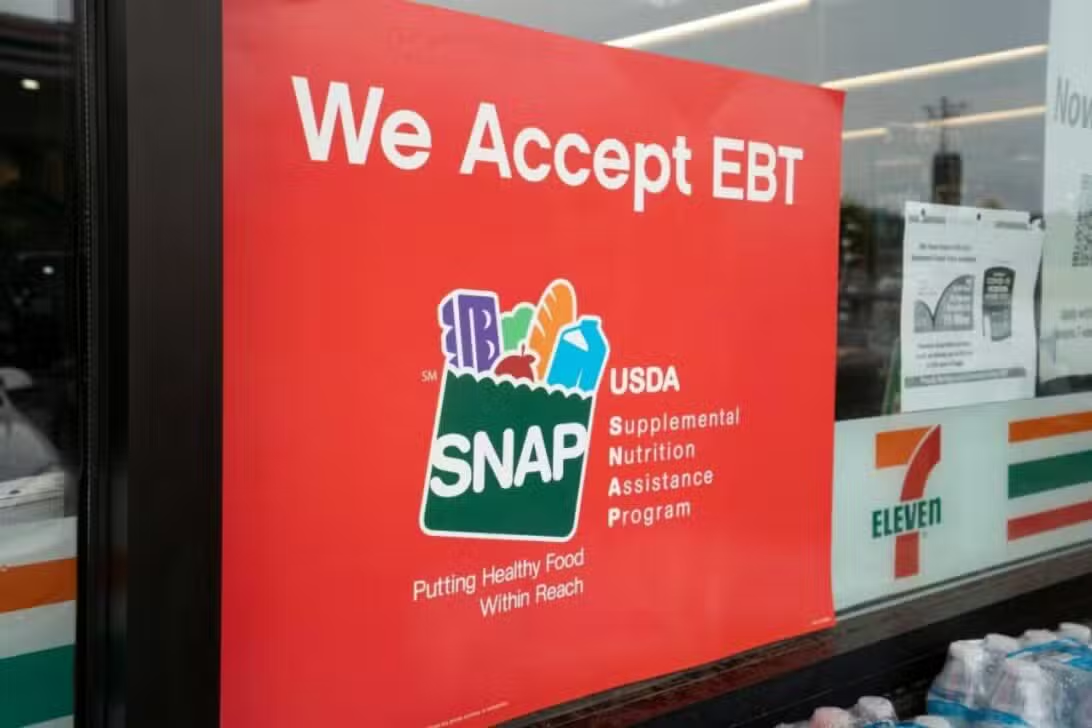
Supplemental Nutrition Assistance Program participants across the country began receiving higher monthly allotments following an annual cost-of-living adjustment that took effect on Thursday, October 1, 2026. The recalibration lifts the maximum monthly food payment for a single person to $306 and expands support for a four-person household to $1,023 across the 48 contiguous states and Washington, D.C.
While recipients see modest additions to their electronic benefit cards, state agencies are confronting an immediate structural shift in how the program is financed. Under federal rules that also took effect on Thursday, October 1, 2026, state governments must now fund 75% of all administrative and operational expenses required to run the food assistance program, reducing the federal contribution from 50% down to 25%.

New monthly SNAP payment rates and state funding split
- Single-person household maximum allotment: $306 per month, up from $298
- Four-person household maximum allotment: $1,023 per month, up from $994
- State share of administrative expenses: 75%, up from the previous 50% split
- Federal share of administrative expenses: 25%, reduced by 25 percentage points
- Target payment error threshold: 6% maximum before food purchase penalties apply in 2027
- Effective date of cost-of-living adjustment and administrative shift: Thursday, October 1, 2026
Check out: Donald Trump attacks Tom Cotton over stalled permanent daylight saving time
Administrative budget reductions under the One Big Beautiful Bill Act
The sudden increase in administrative responsibility stems from the One Big Beautiful Bill Act, officially registered as H.R. 1, which President Donald Trump signed into law on Friday, July 4, 2025. The legislation overhauled several federal welfare frameworks and directed the federal government to scale back its ongoing subsidization of state-level program management. Nonpartisan fiscal analyses project that reducing the federal government share of administrative support from 50% to 25% will trim federal expenditures by $16.9 billion over a five-year period, removing roughly $3.4 billion each year from federal outlays and transferring those operational costs onto state budgets.
For large states managing expansive welfare rolls, the revised administrative calculation translates into major annual budget allocations. Texas state agencies estimate that covering 75% of local operational overhead will require approximately $117 million in additional state funding each year simply to process applications, maintain call centers, and keep regional eligibility offices staffed at existing levels without cutting public service hours.
Stricter rules and potential penalties for state payment errors
Beyond the administrative cost increase that began this month, state governments face severe financial exposure tied to the accuracy of their benefit distributions. The One Big Beautiful Bill Act establishes that starting on Friday, October 1, 2027, any state recording a payment error rate of 6% or higher will be compelled to pay between 5% and 15% of the direct cost of the food benefits distributed within its borders. Historically, the federal government covered 100% of the actual grocery dollars provided to recipients, limiting state fiscal obligations strictly to local administrative overhead.
Official performance data compiled by the United States Department of Agriculture for fiscal year 2025 showed widespread compliance hurdles, with only about 10 states keeping their payment error rates below the 6% statutory ceiling. Texas logged an error rate of 9.34% during that fiscal evaluation period. If state administrators fail to compress payment discrepancies beneath the 6% limit before the enforcement clause takes effect on Friday, October 1, 2027, Texas could be forced to remit up to $709 million annually to the federal government to offset benefit distribution costs.
Food bank operations and the distinction between errors and fraud
Charitable relief networks are closely tracking the administrative strain on state agencies, warning that operational deficits could delay application reviews and leave food-insecure residents without timely support. Local pantries emphasize that private charity cannot replace the scale of federal nutrition assistance if state backlogs worsen or eligibility processing slows down.
“When you think about the San Antonio Food Bank, for every one meal we put out, SNAP provides nine. Should we see an increase in the number of families, we just won’t have the food supply to meet that need,” said Eric Cooper, chief executive officer of the San Antonio Food Bank.
Advocacy leaders have also sought to clarify the nature of the metrics used by federal regulators to penalize state agencies. The payment error rate measures accounting exactness rather than criminal deception or intentional abuse by families enrolled in the program.
“The most important thing to know about the payment error rate is that it is not fraud. It is a measure of accuracy,” said Celia Cole, chief executive officer of the organization Feeding Texas. The measurement captures clerical discrepancies, processing oversights, paperwork backlogs, and fluctuating household earnings that caseworkers or participants failed to report within rigid statutory deadlines.
Checking SNAP account balances and accessing local assistance
Households currently enrolled in SNAP do not need to submit supplemental paperwork to receive the cost-of-living increase, as local agencies applied the revised baseline figures directly to electronic benefit accounts on Thursday, October 1, 2026. Beneficiaries can verify their updated monthly sums by checking their electronic benefit transfer account balances through regular state customer portal platforms or by reviewing their balance receipts at authorized grocery checkout terminals. Anyone experiencing eligibility disputes or questions regarding specific benefit amounts can contact their local SNAP administrative office.
Check out: Donald Trump releases Tom Cotton number to force daylight saving vote
Anti-hunger organizations and state welfare directors have petitioned federal lawmakers to grant an administrative grace period before the financial penalties take effect. Congress has not confirmed whether it will take up proposals to postpone the October 1, 2027 penalty start date by two years, leaving state agencies to operate under existing statutory deadlines.