
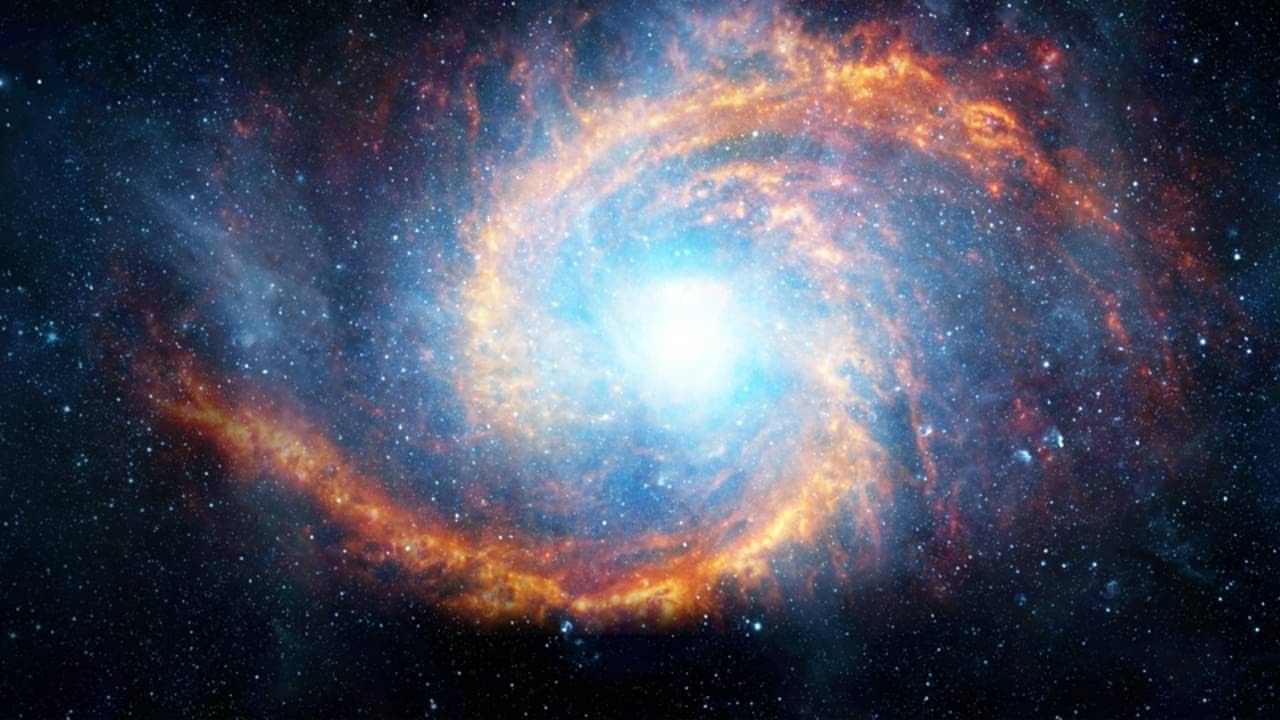
The MEGATRON simulation project has established a physical bridge connecting early galaxy observations from the James Webb Space Telescope with the chemical composition preserved in ancient Milky Way stars. Researchers led by the University of Bath published four simultaneous studies outlining how the earliest stellar generations populated the universe with heavy elements, altering models of galactic evolution.
Astrophysicists confirmed that simplified models previously underestimated the role of stellar radiation and gas dynamics during the formative eras of cosmic history. “MEGATRON provides a common physical framework for interpreting two of astronomy’s most exciting new datasets: JWST’s view of the earliest galaxies and the stellar fossil record. Together, these complementary observations allow us to test competing models of the first stars in ways that weren’t previously possible,” stated Martin Rey, physicist at the University of Bath and a lead contributor to the project.
University of Bath team maps primordial star formation

The international research team published the collection of four papers in The Open Journal of Astrophysics on Wednesday, September 30, 2026. Led by the University of Bath, the scientific collaboration includes researchers from the Institut d’Astrophysique de Paris, the Cambridge Kavli Institute for Cosmology, the Lund Observatory, the Kavli Institute for Cosmological Physics, the Cavendish Laboratory, the Kavli Institute for Particle Astrophysics and Cosmology, the Sterrenkundig Observatorium, the Laboratoire d’Astrophysique, and the Ecole Polytechnique Federale de Lausanne.
The investigations track the timeline of cosmic evolution starting from primordial gas composed purely of hydrogen and helium without any heavy elements. The numerical models recreate the ignition of Population III stars, which were the very first stellar bodies to form following the Cosmic Dark Ages, roughly 100 to 400 million years after the Big Bang. When these massive stars collapsed into supernovae, they forged and expelled the first heavy elements into interstellar space, fundamentally altering the chemistry of subsequent stellar generations.
See also: James Webb Little Red Dots are overfed supermassive black holes
According to the findings, tracking the exact behavior of starlight, gas motion, and chemical dispersion is necessary to evaluate the data gathered by modern space observatories. “The elements that make our world and life possible – carbon, oxygen, iron and many others – were forged by stars. To understand where those elements came from, we need to understand how the first stars formed and enriched their surroundings. MEGATRON allows us to test these ideas directly by comparing detailed simulations with observations from JWST and the chemical fingerprints preserved in ancient stars,” explained Rey.
How does the MEGATRON simulation model cosmic history?
The computational suite tracks the physical interplay of gas, radiation, and metal enrichment inside a young galaxy that gradually evolves into a structure with mass comparable to the modern Milky Way. Standard historical simulations frequently omitted small-scale hydrodynamic reactions or handled radiation feedback as a uniform variable. By contrast, the high numerical resolution achieved by this collaboration resolved fine structures in the intergalactic medium that earlier research was unable to capture.
Explainer: Webb reveals surprising lack of small worlds beyond Neptune
This detailed resolution allows astrophysicists to correlate distant photometric signatures captured by instruments looking deep into deep space with local stellar archeology. While the James Webb Space Telescope directly captures ancient light from infant galaxies formed billions of years ago, ground-based stellar archaeology analyzes the chemical composition of old stars surviving in the galactic bulge and halo of our own galaxy. “The James Webb Space Telescope gives us a direct glimpse of the infant cosmos, while stellar archaeology allows us to study the relics of those earliest times in our own Galactic neighbourhood. MEGATRON provides a physical bridge between the two,” Rey said.
Key metrics of the MEGATRON astrophysical suite
The published research introduces massive data products designed to benchmark future space telescope campaigns against physical theory.
- 4 peer-reviewed research papers published simultaneously in The Open Journal of Astrophysics
- Over 175,000 synthetic galaxy spectra cataloged to compare simulated systems against telescope observations
- 100 to 400 million years after the Big Bang identified as the emergence window for Population III stars
- 40 million processor hours allocated on national supercomputers in the United Kingdom for future iterations
Project leadership and expansion across European facilities
Co-leader Harley B. Katz, an astrophysicist affiliated with both the University of Cambridge and the University of Chicago, oversaw the visual and physical modeling pipelines alongside core researcher Corentin Cadiou from the Institut d’Astrophysique de Paris. Together with Rey, the team integrated hydrodynamics with radiation transport algorithms, determining that early ionizing radiation suppressed small-scale star formation while simultaneously accelerating the dispersion of metals into surrounding intergalactic voids.
The results establish that early cosmic gas was far more inhomogeneous than earlier calculations indicated. Heavy elements generated during early supernova events did not disperse evenly, which explains why certain ancient stars discovered in the Milky Way halo exhibit extreme iron deficiencies while others preserve distinct abundances of carbon and oxygen.
Timeline and operational milestones of the MEGATRON program
The long-term project operates under a defined computational schedule coordinating high-performance computing facilities across Europe.
- 2023: formal inception and launch of the MEGATRON cosmological simulation initiative
- Wednesday, September 30, 2026: official release of the initial four foundation papers by the University of Bath
- December 31, 2030: targeted conclusion date for operational execution and analysis cycles of the research suite
To develop the next phase of the program, the research consortium secured 40 million processor hours across the national supercomputer network of the United Kingdom. Rey and his collaborators at the University of Bath are now configuring the computational codes to execute higher-resolution runs that will directly integrate ongoing spectroscopic surveys delivered by the James Webb Space Telescope.





