

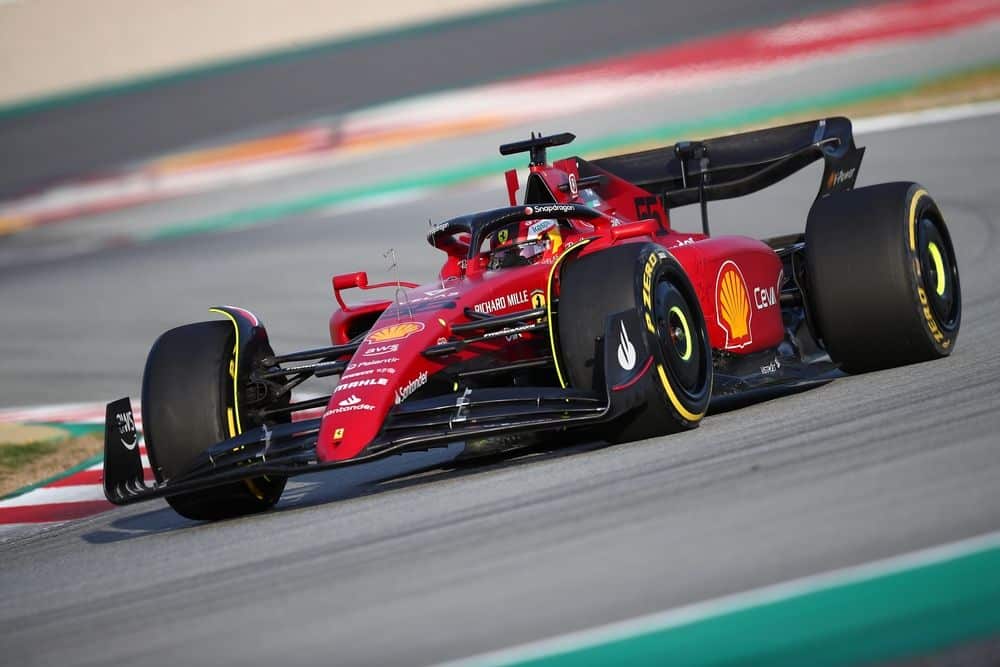
Ferrari returns to the track at the Circuit de Barcelona-Catalunya for a series of strategic tests aimed at shaping the team’s performance in upcoming seasons. With a focus on technical improvement and adaptation to future regulations, the team is conducting Previous Car Tests (TPC) with the SF-23 model. These tests, taking place from January 28 to 30, 2025, feature the presence of lead drivers Lewis Hamilton and Charles Leclerc, marking a crucial step in preparation for the 2025 season.
During the initial phase of testing, Hamilton has already completed 89 kilometers under varied conditions at the Fiorano circuit, while Leclerc faced weather challenges in his first session, covering 42 kilometers in heavy rain. Now, both drivers have the opportunity to optimize their performances in more stable weather conditions in Barcelona, where sunny and partly cloudy skies are expected for most of the days.
In addition to leveraging TPCs, Ferrari is also collaborating with Pirelli to develop tires for the 2026 season. An adapted SF-24, known as a “mule car,” will be used to simulate the conditions dictated by new regulations, which will feature shorter and narrower cars with reduced aerodynamic load. These tests underscore Ferrari’s commitment to aligning with future technical requirements while striving to enhance its competitiveness.
Testing goals set by the team
The tests in Barcelona represent a critical opportunity to evaluate and fine-tune the performance of the SF-23 model, especially with the regulatory changes taking effect in 2026. Over the three days of work, the drivers will push the car to its limits, focusing on areas such as aerodynamics, on-track behavior, and data collection for development purposes.
The team’s priorities include:
- Driver adaptation: Hamilton’s integration into the Scuderia and Leclerc’s accumulated experience will be fundamental to establishing technical balance within the team.
- Tire evaluation: Collaboration with Pirelli aims to test new compounds and constructions to meet regulatory changes.
- Extreme condition simulations: Part of the tests will focus on gathering data under conditions simulating accelerated wear and various track surfaces.
Impact of the 2026 regulations
The 2026 regulations introduce significant changes that will directly impact car design. With more compact dimensions, teams face additional challenges in finding the ideal balance between performance and efficiency. These alterations also directly influence the tests conducted by teams and technical partners like Pirelli, who work to develop tires that align with the new specifications.
To meet these demands, Ferrari has adapted the SF-24, creating a hybrid model that allows the team to test aerodynamic and structural concepts expected for the coming years. This approach provides valuable insights, enabling the team to anticipate technical adjustments and identify critical areas for evolution.
Initial results and driver impressions
The initial tests at Fiorano highlighted Hamilton’s ability to quickly adapt to Ferrari’s working style. The British driver, a seven-time world champion, expressed enthusiasm for the team’s receptivity and the experience of driving for the Scuderia. Despite his veteran status in Formula 1, Hamilton faces the challenge of adjusting his driving style to the new environment and the technical nuances of the SF-23.
Leclerc, on the other hand, emphasized the importance of these tests in solidifying communication with engineers and aligning expectations for the 2025 season. The Monegasque driver believes that the data collected in adverse weather conditions provide valuable insights for future strategies.
Technical collaboration between teams and Pirelli
The partnership between Ferrari and Pirelli is not only a strategy to improve individual performance but also contributes to the sport’s overall development. Joint tests of slick and wet tires are conducted under various conditions and circuits, ensuring a comprehensive database for Pirelli to refine its compounds for the new requirements.
McLaren, another team involved in these tests, is also participating with a focus on developing wet-weather tires, using the artificially wet Paul Ricard track. Collaboration between teams allows complementary data to be collected, enhancing the precision and efficiency of the development process.
Key milestones of the tests
The upcoming days in Barcelona also mark the first time Hamilton will actively participate in Pirelli’s tests for Ferrari, a strategic move that reinforces the mutual confidence between the team and its new driver. This participation is essential to ensure that technical changes are implemented without compromising on-track performance.
- Key dates: The tests in Barcelona take place from January 28 to 30, with additional sessions scheduled for February 4 and 5.
- Models used: The SF-23 is the main focus of the TPCs, while the adapted SF-24 is reserved for Pirelli’s tests.
- Mileage accumulated: So far, Hamilton has completed 89 kilometers, while Leclerc has covered 42 kilometers, both ready to extend their efforts in the coming days.
Challenges and expectations for 2025
With the 2025 season approaching, Ferrari faces the pressure of returning to the top of the grid after finishing second in the 2024 championship. The team secured five victories last year, a solid performance but still short of the Scuderia’s ambitions.
The current tests are seen as an opportunity to address deficiencies and strengthen critical areas such as mechanical reliability and race strategies. Hamilton’s experience, combined with Leclerc’s talent and persistence, provides Ferrari with a strong foundation to tackle future challenges.
Ferrari’s historical approach to preseason testing
Preseason testing has always been an essential part of Ferrari’s strategy, providing a platform for innovation and adjustments. Historically, the team has used these periods to implement pioneering technologies and test bold solutions, often serving as a reference point for the rest of the grid.
Hamilton’s return to the spotlight and Ferrari’s commitment to working with future regulations demonstrate a clear and ambitious approach. The team seeks to balance tradition with innovation, ensuring that technical challenges are addressed creatively and precisely.
A promising future for Ferrari
Ferrari’s efforts to prepare for regulatory changes and improve its technical performance are evident in its testing initiatives. The integration of new talents and technologies, combined with years of experience, places the team in a prominent position to compete at a high level.
As the 2025 season approaches, all eyes are on the Scuderia and its ability to translate hard work into tangible results. With a combination of talent, innovation, and resources, Ferrari continues to write its story as one of Formula 1’s most iconic teams.