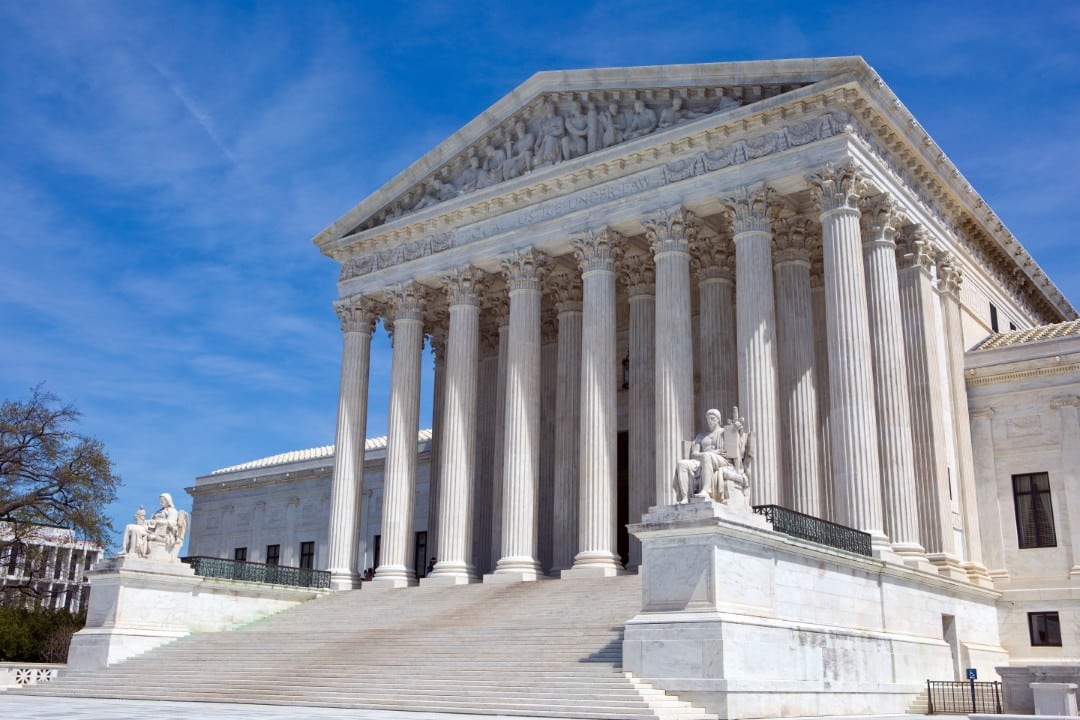
Former U.S. Supreme Court Justice David Souter passed away at his home in New Hampshire on Thursday, leaving behind a legacy of nearly two decades on the nation’s highest court. Appointed by President George H.W. Bush in 1990, Souter served until his retirement in 2009, earning respect for his thoughtful and independent judicial approach. The Supreme Court announced his death on Friday, noting that the 85-year-old jurist died peacefully. Chief Justice John Roberts praised Souter’s wisdom and kindness, highlighting his profound contributions to American jurisprudence.
Souter’s tenure was marked by his evolution from a relatively conservative nominee to a key vote in landmark liberal decisions, shaping debates on issues like abortion and affirmative action. His unexpected shift surprised many, as he became a pivotal figure in cases that defined modern constitutional law. Born in Massachusetts and rooted in New England, Souter’s quiet demeanor and commitment to precedent earned him admiration across the judiciary.
- Tenure: Served on the Supreme Court from 1990 to 2009.
- Appointed by: President George H.W. Bush.
- Legacy: Known for wisdom, kindness, and independent judicial rulings.
The news of Souter’s passing prompted tributes from legal scholars, former colleagues, and public officials, who recalled his dedication to fairness and his unassuming lifestyle. His death marks the loss of a jurist whose influence continues to resonate in courtrooms nationwide.
Early life and judicial beginnings
David Hackett Souter was born on September 17, 1939, in Melrose, Massachusetts, and raised in Weare, New Hampshire, where he developed a deep connection to the region. After graduating from Harvard College in 1961 and studying at Oxford as a Rhodes Scholar, he earned his law degree from Harvard Law School in 1966. His early career included private practice and a stint as a prosecutor, before he rose to prominence as New Hampshire’s Attorney General from 1976 to 1978.
Appointed to the New Hampshire Supreme Court in 1983, Souter gained a reputation for meticulous legal reasoning. His judicial record caught the attention of federal officials, leading to his nomination to the U.S. Court of Appeals for the First Circuit in 1990. Just months later, President Bush selected him to replace retiring Justice William Brennan on the Supreme Court, a move that introduced Souter to a national stage.
Appointment to the Supreme Court
Souter’s nomination in 1990 came at a time of intense political scrutiny over the Supreme Court’s ideological balance. President Bush, seeking a reliable conservative, chose Souter based on his limited but solid judicial record. At 51, Souter was relatively unknown, with little public commentary on divisive issues, earning him the nickname “stealth nominee.” His confirmation hearings were smooth, with the Senate approving him 90-9, reflecting bipartisan support.
Upon joining the court, Souter faced immediate pressure to align with conservative justices like William Rehnquist and Antonin Scalia. However, his rulings soon revealed an independent streak, as he prioritized precedent and judicial restraint over ideological loyalty. This shift surprised Republican leaders, who had expected a more predictable conservative vote.
- Nomination year: 1990, by President George H.W. Bush.
- Confirmation vote: Senate approved 90-9.
- Nickname: Known as the “stealth nominee” due to his low profile.
Landmark rulings and judicial evolution
Souter’s 19-year tenure saw him play a pivotal role in several landmark cases. In 1992, he joined Justices Sandra Day O’Connor and Anthony Kennedy in Planned Parenthood v. Casey, upholding Roe v. Wade’s core protections for abortion rights while allowing certain state regulations. This decision cemented his reputation as a swing vote, balancing competing constitutional principles.
In 2000, Souter dissented in Bush v. Gore, the case that resolved the presidential election by halting Florida’s recount. His dissent argued that the court’s intervention undermined democratic processes, showcasing his commitment to judicial restraint. Other notable rulings included his support for affirmative action in Grutter v. Bollinger (2003) and his defense of federal power in cases like Gonzales v. Raich (2005).
Souter’s approach often emphasized stare decisis, the principle of adhering to precedent, which guided his votes in cases involving civil liberties and individual rights. Legal scholars noted his ability to craft nuanced opinions that bridged ideological divides, earning him respect even from those who disagreed with his outcomes.
BREAKING: Retired Supreme Court Justice David H. Souter, an H.W. Bush nominee, died Thursday at the age of 85, the court announced. He served on the court for more than 19 years. #SCOTUS pic.twitter.com/0oRVb89hql
— Katie Buehler (@bykatiebuehler) May 9, 2025
Retirement and life after the court
In 2009, at age 69, Souter retired from the Supreme Court, citing a desire to return to New Hampshire and live a quieter life. His departure came as a surprise, given his relatively young age for a retiring justice. President Barack Obama nominated Sonia Sotomayor to replace him, maintaining the court’s liberal-leaning bloc. Souter’s retirement letter expressed gratitude for his service but underscored his preference for privacy.
After retiring, Souter returned to his home in Hopkinton, New Hampshire, where he lived modestly, avoiding the public spotlight. He occasionally sat on federal appeals courts by designation, contributing to cases in the First Circuit. His post-retirement life reflected his lifelong aversion to pomp, as he remained active in his community and pursued intellectual interests like reading and hiking.
- Retirement year: 2009, at age 69.
- Replacement: Justice Sonia Sotomayor, appointed by President Obama.
- Post-retirement: Sat on First Circuit appeals and lived quietly in New Hampshire.
Tributes from the legal community
Chief Justice John Roberts led tributes to Souter, describing him as a jurist of “uncommon wisdom and kindness.” Justice Elena Kagan, who served alongside Souter briefly, recalled his mentorship and ability to distill complex legal issues. Former Justice Anthony Kennedy praised Souter’s integrity, noting his refusal to let personal beliefs sway his rulings.
Legal organizations, including the American Bar Association, issued statements honoring Souter’s contributions to constitutional law. Harvard Law School, where Souter studied and later served as a visiting lecturer, announced plans for a memorial lecture in his honor. Scholars highlighted his role in shaping debates on privacy, free speech, and equal protection.
Political reactions to his passing
Public officials across the political spectrum mourned Souter’s death. President Joe Biden issued a statement calling him a “guardian of justice” whose legacy would endure in American law. Former President George W. Bush, who appointed Souter, expressed pride in his service, noting his fairness and humility. New Hampshire Governor Chris Sununu described Souter as a “son of New Hampshire” whose intellect elevated the state’s reputation.
Senate Judiciary Committee members, including Chairman Dick Durbin and Ranking Member Lindsey Graham, issued bipartisan condolences, emphasizing Souter’s role in fostering civility on the court. The outpouring of praise underscored Souter’s ability to earn respect from both liberals and conservatives despite his evolving judicial philosophy.
Influence on abortion rights
Souter’s role in Planned Parenthood v. Casey remains one of his most enduring contributions. The 1992 decision, co-authored with O’Connor and Kennedy, reaffirmed Roe v. Wade’s essential holding while introducing the “undue burden” standard for evaluating abortion restrictions. This framework shaped abortion law for decades, balancing state interests with individual rights.
His vote in Casey surprised conservatives, who had expected a Bush appointee to support overturning Roe. Souter’s opinion emphasized the importance of precedent, arguing that reversing Roe would undermine public trust in the court. The ruling’s legacy persisted until 2022, when Dobbs v. Jackson Women’s Health Organization overturned Roe, prompting renewed discussion of Souter’s cautious approach.
- Key case: Planned Parenthood v. Casey (1992).
- Role: Co-authored opinion upholding Roe v. Wade’s core protections.
- Legacy: Introduced “undue burden” standard, influential until 2022.
Contributions to civil liberties
Souter’s jurisprudence extended to civil liberties, where he often sided with protections for individual rights. In 1995, he wrote the majority opinion in Hurley v. Irish-American Gay, Lesbian, and Bisexual Group of Boston, upholding free speech rights for parade organizers. His opinion balanced competing claims of inclusion and expression, reflecting his nuanced approach.
In 2003, Souter supported the University of Michigan’s affirmative action policy in Grutter v. Bollinger, affirming the value of diversity in education. His votes in cases like Hamdi v. Rumsfeld (2004) also protected due process for detainees, reinforcing his commitment to constitutional safeguards during national security debates.
New Hampshire’s pride
Souter’s deep ties to New Hampshire shaped his identity and judicial philosophy. Raised in a small town, he valued community and simplicity, traits that influenced his unpretentious demeanor on the court. He often returned to Weare and Hopkinton, where he maintained a modest home filled with books and family heirlooms.
The state honored Souter’s legacy with tributes from local leaders. New Hampshire’s congressional delegation, including Senators Jeanne Shaheen and Maggie Hassan, praised his service, noting his embodiment of Granite State values. Local schools and libraries planned events to commemorate his contributions, emphasizing his role as a hometown hero.
- Hometown: Weare and Hopkinton, New Hampshire.
- Values: Embodied simplicity and community, reflected in his judicial approach.
- Local tributes: Schools and libraries planned commemorative events.
Souter’s judicial philosophy
Souter’s approach to judging was rooted in pragmatism and respect for precedent. Unlike some colleagues, he avoided rigid ideologies, preferring case-by-case analysis. His opinions often explored historical context, drawing on English common law and early American legal traditions to ground his reasoning.
Legal analysts noted Souter’s ability to write clear, accessible opinions that resonated with judges and the public alike. His dissents, such as in Bush v. Gore, were particularly sharp, warning of long-term consequences for judicial legitimacy. This commitment to principle over politics defined his tenure and earned him a reputation as a “justice’s justice.”
Public response and memorials
News of Souter’s death prompted an outpouring of grief from legal professionals and ordinary citizens. In Washington, D.C., flags at the Supreme Court were lowered to half-staff, a rare honor for a retired justice. Law students at Georgetown and Yale organized vigils, reading excerpts from Souter’s opinions on liberty and equality.
Social media platforms saw tributes using hashtags like #JusticeSouter and #SCOTUSLegacy, with users sharing quotes from his rulings and anecdotes about his humility. In New Hampshire, residents left flowers outside his Hopkinton home, a testament to his enduring connection to the community.
- Court tribute: Flags lowered to half-staff at the Supreme Court.
- Public vigils: Law students read Souter’s opinions in D.C. and New Haven.
- Community response: Flowers placed outside Souter’s New Hampshire home.
Legacy in American law
Souter’s influence persists in the legal principles he championed, from reproductive rights to free speech. His emphasis on precedent and judicial restraint continues to inform debates over the court’s role in a polarized society. Law professors cited his opinions as teaching tools, noting their clarity and intellectual rigor.
The Supreme Court’s current justices, including those appointed after Souter’s retirement, acknowledged his impact. Justice Brett Kavanaugh, who clerked for Kennedy during Souter’s tenure, called him a model of civility. Souter’s death prompted renewed discussion of his role in bridging ideological divides during a transformative era for the court.