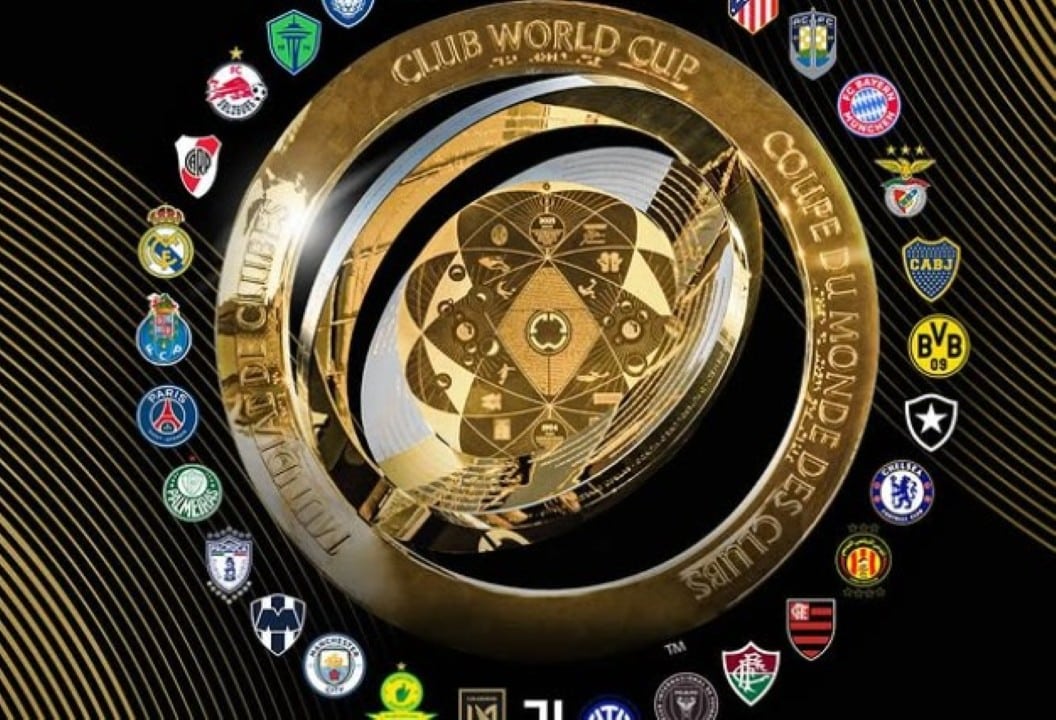
The FIFA Club World Cup 2025, scheduled from June 14 to July 13 in the United States, promises to be a landmark in global football with its expanded 32-team format. Organized into eight groups of four teams, the tournament features a group stage followed by single-elimination knockout rounds, culminating in the final at MetLife Stadium, New Jersey. European giants like Real Madrid, PSG, and Manchester City emerge as favorites, while South American teams, such as Palmeiras and Flamengo, aim to surprise. Replacing the annual format, this quadrennial event brings unprecedented matchups and fierce competition. This guide details the groups, evaluates the teams, and highlights who might shine or falter.
The tournament gathers elite clubs, with 12 European representatives, six from South America, four from Asia, four from Africa, four from North America, and one from Oceania. Stars like Lionel Messi, Kylian Mbappé, and Harry Kane heighten anticipation. In Brazil, the event will be broadcast for free on CazéTV and DAZN, with Globo and SporTV covering all matches. Below are the team evaluation criteria:
- Squad: Assesses the technical quality of the starting lineup, bench options, and the coach’s impact.
- Form: Evaluates recent performance, club pressure, and early 2025 results.
- Group: Analyzes the difficulty of group-stage opponents, with tougher groups earning fewer points.
- Tradition: Considers the club’s international experience and past World Cup performances.
The detailed analysis of the 32 teams, categorized as title contenders, potential surprises, outsiders, or long shots, provides a clear view of what to expect on American pitches.
European favoritism in the spotlight
Real Madrid, PSG, and Manchester City lead title predictions, boasting star-studded squads and storied histories. Real Madrid, the competition’s most decorated club, arrives with players like Vinícius Júnior, Mbappé, and Rodrygo, despite an uneven La Liga season. Under Xabi Alonso, who replaced Carlo Ancelotti, the Merengues aim to reassert dominance. PSG, riding high from their 2024/25 Champions League triumph, relies on Luis Enrique’s leadership and a potent attack. Manchester City, led by Pep Guardiola, remains versatile despite a title-less year, with Erling Haaland as their key weapon.
Bayern Munich and Chelsea also rank among the favorites. Bayern, coached by Vincent Kompany, blends defensive solidity with Harry Kane’s offensive prowess, who netted 38 goals in 2024/25. Chelsea, winners of the Conference League, bets on tactical consistency and a mix of youth and experience. These European clubs dominate betting odds, reflecting their technical strength and international pedigree.
South Americans in the fight
Brazil fields four teams: Palmeiras, Flamengo, Fluminense, and Botafogo, all qualified via Copa Libertadores titles from 2021 to 2024. Palmeiras, in Group A, faces Porto, Al Ahly, and Inter Miami. Bolstered by strategic signings, the Verdão is poised to reach the round of 16 but must overcome Porto’s European experience. Flamengo, in Group D, takes on Chelsea, Los Angeles FC, and Esperánce Tunis. Coached by Filipe Luís, the Rubro-Negro leans on defensive solidity and the flair of Pedro and Bruno Henrique to surprise.
Botafogo, the current Libertadores champion, faces a tough challenge in Group B, dubbed the “group of death,” alongside PSG, Atlético de Madrid, and Seattle Sounders. Their defensive organization and quick counterattacks are key assets, potentially causing upsets. Fluminense, in Group F, meets Borussia Dortmund, Mamelodi Sundowns, and Ulsan HD. Riding an unbeaten streak in the Brasileirão, the Tricolor, led by Renato Gaúcho, banks on Thiago Silva’s experience and Germán Cano’s goal-scoring instinct.
- Palmeiras: Heavy investments and a robust squad, but faces stiff European competition.
- Flamengo: Solid playing style and passionate fanbase as a differential.
- Botafogo: Tactical discipline could shine in tight matches.
- Fluminense: Strong form and a manageable group boost qualification chances.
Argentina’s River Plate and Boca Juniors complete South America’s contingent. River, in Group E, faces Inter Milan, Monterrey, and Urawa Reds, while Boca, in Group C, takes on Bayern, Benfica, and Auckland City. Both boast international pedigree but need to overcome European might to advance.
Groups and opening matches
The group stage was set in a December 5, 2024, draw, ensuring competitive balance and geographic diversity. Each team plays three group matches, with the top two advancing to the round of 16. Below are the opening fixtures for each group:
- Group A: Palmeiras vs. Porto, Inter Miami vs. Al Ahly.
- Group B: PSG vs. Atlético de Madrid, Botafogo vs. Seattle Sounders.
- Group C: Bayern vs. Auckland City, Boca Juniors vs. Benfica.
- Group D: Flamengo vs. Esperánce, Chelsea vs. Los Angeles FC.
- Group E: River Plate vs. Urawa Reds, Inter Milan vs. Monterrey.
- Group F: Fluminense vs. Borussia Dortmund, Mamelodi Sundowns vs. Ulsan HD.
- Group G: Manchester City vs. Wydad Casablanca, Juventus vs. Al-Ain.
- Group H: Real Madrid vs. Al-Hilal, Pachuca vs. RB Salzburg.
Group B stands out as the most competitive, with PSG and Atlético de Madrid favored, but Botafogo could disrupt with tactical discipline. Group F, conversely, appears more accessible, giving Fluminense a clear path to advance.
Potential tournament surprises
Beyond the Brazilians, other teams could upset expectations. Inter Miami, led by Lionel Messi, is a major draw in Group A. Despite longer odds, Messi’s presence, especially on home soil, fuels optimism. Saudi Arabia’s Al-Hilal, in Group H, has invested heavily and could challenge giants like Real Madrid, thanks to a largely foreign roster ensuring rotation and quality.
Portugal’s Benfica and Porto also enter as potential dark horses. Benfica, in Group C, faces Bayern but could earn points with their intense, collective style. Porto, in Group A, relies on Sérgio Conceição’s experience and Pepe’s leadership to compete with Palmeiras. Teams like South Africa’s Mamelodi Sundowns and Japan’s Urawa Reds, though ranked as outsiders, have a history of upsetting in short tournaments.
Factors defining success
The single-elimination knockout format from the round of 16 heightens unpredictability. Adaptation to the American climate, physical fatigue, and tactical decisions will be crucial. Teams with deep squads, like Bayern and PSG, hold an edge in prolonged tournaments, but a single mistake in a knockout game can alter any campaign. Psychological pressure will also play a role, especially for South American clubs carrying hopes of ending Europe’s dominance, last broken by Corinthians in 2012.
Squads and individual standouts
The tournament’s top players draw significant attention. Real Madrid’s Kylian Mbappé, the club’s leading scorer in 2025, is a prime contender. Bayern’s Harry Kane and Manchester City’s Erling Haaland vie for the top scorer title, with competitive odds on platforms like Betsul. On the South American side, Flamengo’s Pedro and Fluminense’s Germán Cano are players to watch, capable of deciding matches. Inter Miami’s Messi remains the main hope, despite a less robust squad.
Host factor and adaptation
Held across 12 U.S. stadiums, the tournament demands quick adaptation to weather conditions and long travel between cities. Modern stadiums and high-quality pitches favor technical play, but June and July heat may wear down less-prepared teams. European clubs, used to grueling seasons, are likely to adapt better, though South Americans, mid-season, arrive in competitive rhythm.
Broadcast and engagement
Brazil’s tournament coverage will be extensive, with live broadcasts on Globo, SporTV, CazéTV, and DAZN. DAZN’s free streaming of all matches broadens access. CazéTV’s casual style aims to attract younger fans, while Globo secures traditional viewership. The final, set for July 13 at MetLife Stadium, is expected to draw a massive global audience.
What to expect from the groups
Each group presents unique dynamics. Group H, with Real Madrid and Al-Hilal, promises high-level clashes, while Group G, featuring Manchester City and Juventus, will see intense tactical battles. Teams like Auckland City and Ulsan HD face near-insurmountable challenges but could trouble favorites in isolated matches. Talent, strategy, and moments of brilliance will determine the qualifiers.