

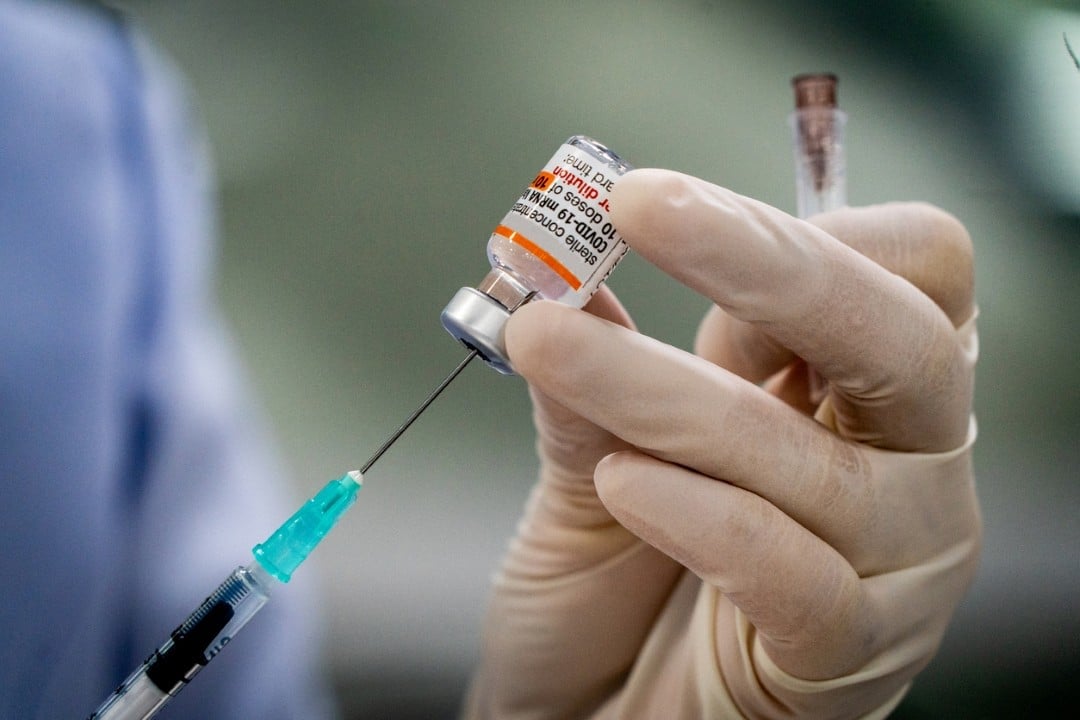
Covid-19 is gaining momentum in the United States, with cases rising in 26 states, particularly in the South and Midwest, as the Trump administration plans to restrict access to vaccine booster doses, raising concerns among experts. Recent data from wastewater, test positivity, and emergency room visits confirm the surge in infections, coinciding with children returning to school. The current wave, still in its early stages, is driven by variants with immune evasion capabilities, making it challenging to predict its severity. The proposed restrictions limit boosters to seniors and individuals with specific health conditions, excluding children and pregnant women, despite evidence of vaccines’ protection against severe cases. The situation reignites debates about immunity, long Covid, and preventive measures like masks and air purifiers in a context of uncertainty and low vaccination uptake.
The surge in cases comes at a critical time, with only 23% of American adults vaccinated with updated boosters as of April, according to the Centers for Disease Control and Prevention (CDC). Among children, coverage is even lower: 5.6% of those aged six months to four years and 15% of those aged five to 17 are vaccinated. Experts warn that low immunity, combined with new variants, could worsen hospitalizations, especially in vulnerable populations. The decision to limit boosters, according to the government, aims to prioritize high-risk groups, but critics argue it may increase virus transmission.
- Indicators of the new wave:
- Case increases in 26 states, notably in the South and Midwest.
- Wastewater data shows higher viral circulation.
- Rising test positivity and emergency room visits.
- Immune-evading variants dominate.
The impact on children is a major concern. Despite less severe cases compared to adults, pediatric hospitalizations remain steady compared to previous years, reflecting low vaccination rates and limited prior immunity in this group.
New restrictions and vaccine controversies
U.S. authorities under the Trump administration have announced changes to vaccination guidelines, limiting booster access to people over 65 or with specific health conditions like asthma, diabetes, or depression. The Food and Drug Administration (FDA) also recommended that manufacturers update vaccines for newer variants, but the exclusion of children and pregnant women from official recommendations has drawn criticism. Experts like Andrew Pekosz, a virologist at Johns Hopkins University, argue that widespread vaccination reduces transmission and protects against severe outcomes.
The decision to restrict boosters is seen as a barrier to reaching vulnerable populations. Pekosz emphasizes that children, due to lower immunity, are significant vectors for transmission, and vaccinating them could curb community spread. Additionally, the proposal for placebo-controlled trials to assess benefits in healthy individuals has been deemed unethical by experts, further complicating the landscape.
- Changes in vaccination guidelines:
- Boosters limited to seniors and those with comorbidities.
- Children and pregnant women excluded from official recommendations.
- New Moderna and Novavax vaccines approved only for specific groups.
- Placebo trial proposals face ethical resistance.
Moderna and Novavax have developed updated vaccines, but their restricted availability raises questions about access and costs, especially for those needing to pay out of pocket.
Impact on children and hospitalizations
Pediatric hospitalization rates for Covid-19 remain concerning, with numbers similar to previous waves. Low vaccination uptake among children, combined with the return to in-person schooling, creates a conducive environment for outbreaks. Experts note that while the disease is less deadly in children, severe cases still lead to significant impacts, including prolonged hospitalizations.
The lack of clear vaccination recommendations for children worries pediatricians, who may prescribe vaccines off-label but face logistical and public acceptance challenges. Immunity from prior infections or earlier vaccines also wanes over time, leaving children more exposed.

Long Covid and underestimated risks
Another critical aspect of the new wave is the impact of long Covid, affecting about 5.3% of U.S. adults, according to September estimates. The lack of updated data under the Trump administration hinders understanding of the issue, but reports indicate persistent symptoms like fatigue and cognitive difficulties continue to burden the healthcare system. Children can also develop long Covid, though to a lesser extent, reinforcing the need for preventive measures.
- Common long Covid symptoms:
- Chronic fatigue.
- Difficulty concentrating.
- Joint and muscle pain.
- Persistent respiratory issues.
- Psychological impacts, such as anxiety and depression.
The absence of educational campaigns about long Covid exacerbates misinformation, with many Americans underestimating the risks of repeated infections.
Preventive measures under scrutiny
Despite rising cases, recommendations for preventive measures like mask-wearing and air purifiers face resistance. Experts stress that these measures, combined with vaccination and antivirals like Paxlovid, are effective in reducing transmission and disease severity. Paxlovid, still effective against current variants, may see expanded access, but the end of a free distribution program in December raises concerns.
Pekosz emphasizes that antivirals are a critical tool, especially for high-risk groups, but unclear public health policies create confusion. Resistance to adopting preventive measures, coupled with vaccine restrictions, could prolong the current wave and increase its impact on vulnerable communities.
- Recommended precautions:
- Mask-wearing in indoor settings.
- Air purifiers in schools and offices.
- Isolation for symptomatic or positive cases.
- Access to antivirals like Paxlovid for confirmed cases.
Uncertain outlook for the fall
The future of the Covid-19 wave in the U.S. remains uncertain, with experts monitoring indicators to predict its peak. The possibility of double peaks or prolonged seasons, as seen with other respiratory viruses, keeps authorities on alert. Vaccine limitations and low immunization rates could worsen the situation, especially with the arrival of fall, when cooler temperatures and indoor interactions increase.
The decision to prioritize specific groups for boosters reflects a shift in public health strategy, but experts warn that excluding children and pregnant women could have long-term consequences. The virus’s continuous circulation, even during low-transmission periods, underscores the need for constant vigilance.
- Factors influencing the wave:
- Low vaccination coverage in children and adults.
- Circulation of immune-evading variants.
- Reduced preventive measures in public spaces.
- End of antiviral access programs.
The new Covid-19 wave in the U.S. demands a coordinated response, but vaccine restrictions and a lack of political consensus complicate efforts. Experts call for greater transparency and investment in prevention to avoid more severe peaks in the future.