STF upholds Filipe Martins’ preventive detention following custody review over social media use in 2025 Por Luís Pereira
4 min de leitura
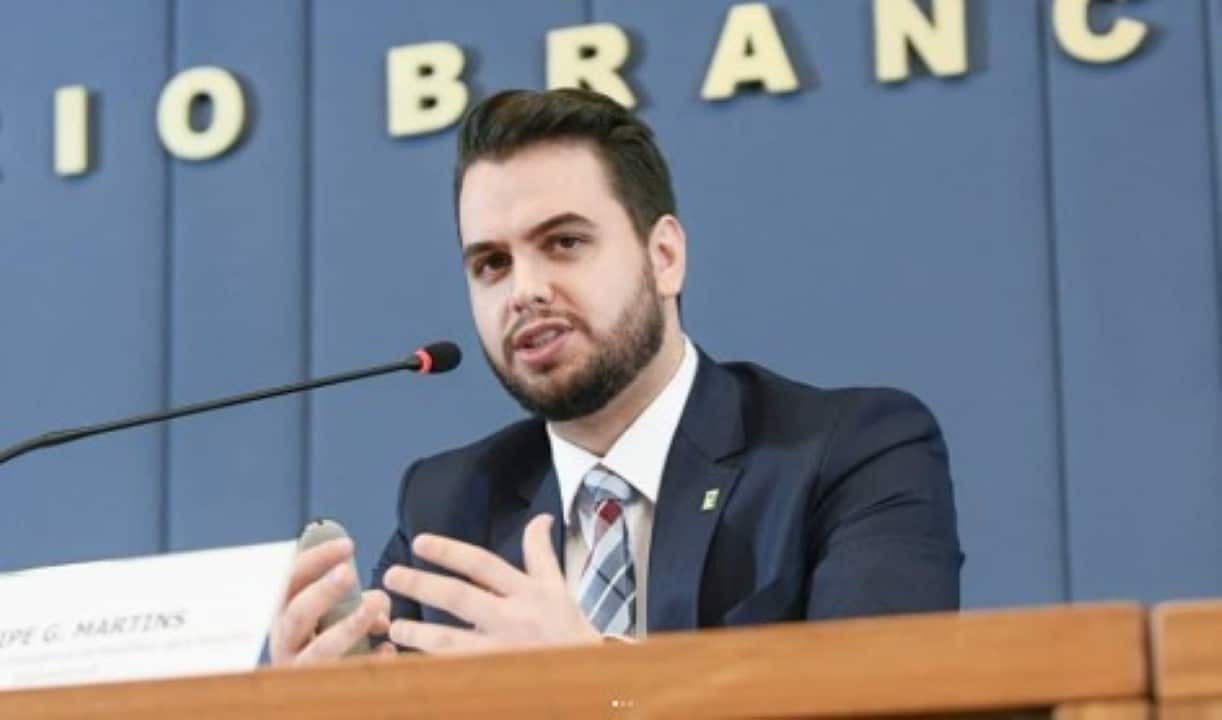 |
The Brazilian Supreme Court (STF) confirmed the preventive detention of Filipe Martins on Friday, June 2, 2025, after a custody hearing. Martins, a former international relations advisor to Jair Bolsonaro, was arrested by Federal Police for allegedly violating a court order prohibiting social media use. This decision, following a standard review, found the police action lawful, moving him from house arrest to a closed regime. It highlights legal repercussions for those implicated in the alleged coup plot, for which Martins faces a significant, though not yet final, conviction.
The custody hearing was conducted via videoconference, overseen by Judge Flávia Martins de Carvalho, an auxiliary judge in Justice Alexandre de Moraes’ cabinet. This mandatory step verifies the legality of an arrest and ensures police protocols are diligently followed.
Martins’ legal team criticized the decision. Attorney Jeffrey Chiquini asserted it was “another baseless arrest” and part of an alleged campaign of persecution. He confirmed intentions to appeal the ruling, challenging the grounds for Martins’ continued imprisonment.
Grounds for preventive detention
Justice Alexandre de Moraes’ order for Martins’ preventive detention stemmed from alleged breaches of court-imposed precautionary measures. Martins was accused of using LinkedIn, despite a prior judicial determination explicitly forbidding him from accessing any social media. This violation warranted stricter custody.
The original court order, a condition of his house arrest, aimed to prevent interference or flight risk. The STF concluded Martins’ LinkedIn use directly challenged these safeguards, leading to federal police action.
Transition from house arrest to closed regime
Before his recent arrest, Filipe Martins was under house arrest to mitigate flight risk while facing serious accusations. His transition to a closed regime, effective immediately, marks a significant escalation in his custodial status.
This change reflects the judiciary’s increasing concern regarding compliance. Martins will now be confined to a correctional facility, removing limited freedoms and ensuring stricter surveillance until legal processes conclude.
Legal challenges and defense strategy
Martins’ legal team, led by attorney Jeffrey Chiquini, strongly contested the decision, characterizing it as arbitrary. Chiquini publicly stated “this is another arrest without motive,” suggesting undue targeting against his client.
The defense maintains no explicit prohibition prevented Martins from accessing LinkedIn. This questions the detention order’s premise, aiming to demonstrate misinterpretation or overreach in the social media ban.
An appeal against the STF’s decision is expected. Martins’ lawyers intend to challenge the legal basis for his arrest and detention, seeking to reinstate house arrest or secure release.
Broader context of the alleged coup plot
Filipe Martins was previously handed a 21-year prison sentence for his alleged involvement in a conspiracy to undermine democratic institutions. This “golpista plot” conviction highlights judicial commitment to accountability for actions against the state.
However, Martins’ judicial process has not concluded, as the case has not “transited in res judicata.” This means appeals are ongoing, and the sentence has not yet become final or begun to be served.
The charges against Martins are part of a broader investigation into attempts to subvert the outcome of the 2022 general elections and incite actions against governmental power. Many high-profile individuals, including former government officials, are implicated in this inquiry, which continues in 2025.
These investigations reflect a critical moment for Brazil’s democratic institutions. Authorities address alleged challenges to the constitutional order, underscoring the judiciary’s role in safeguarding the rule of law.
The role of custody hearings in legal procedure
Custody hearings, essential in the Brazilian legal system, fundamentally safeguard individuals’ rights immediately after arrest. Their primary purpose is to ensure detention was carried out strictly by legal standards, verifying no abuses or illegalities occurred during apprehension. This includes reviewing proper warrant issuance, informing detainees of rights, and checking for coercion. Judges also consider immediate circumstances and personal situations, influencing decisions on continued custody, alternative measures, or provisional release. For Filipe Martins, the videoconference hearing on June 2, 2025, confirmed his arrest’s initial legality for alleged social media violation, leading to the STF’s decision to maintain preventive detention.
Implications for future legal proceedings
The STF’s decision to uphold Filipe Martins’ preventive detention signals a potentially stricter judicial stance on compliance with precautionary measures. This is relevant in high-profile cases involving alleged threats to democratic institutions in Brazil.