Supreme court upholds Filipe Martins’ preventive prison after custody hearing review on Friday Por Luís Pereira
5 min de leitura
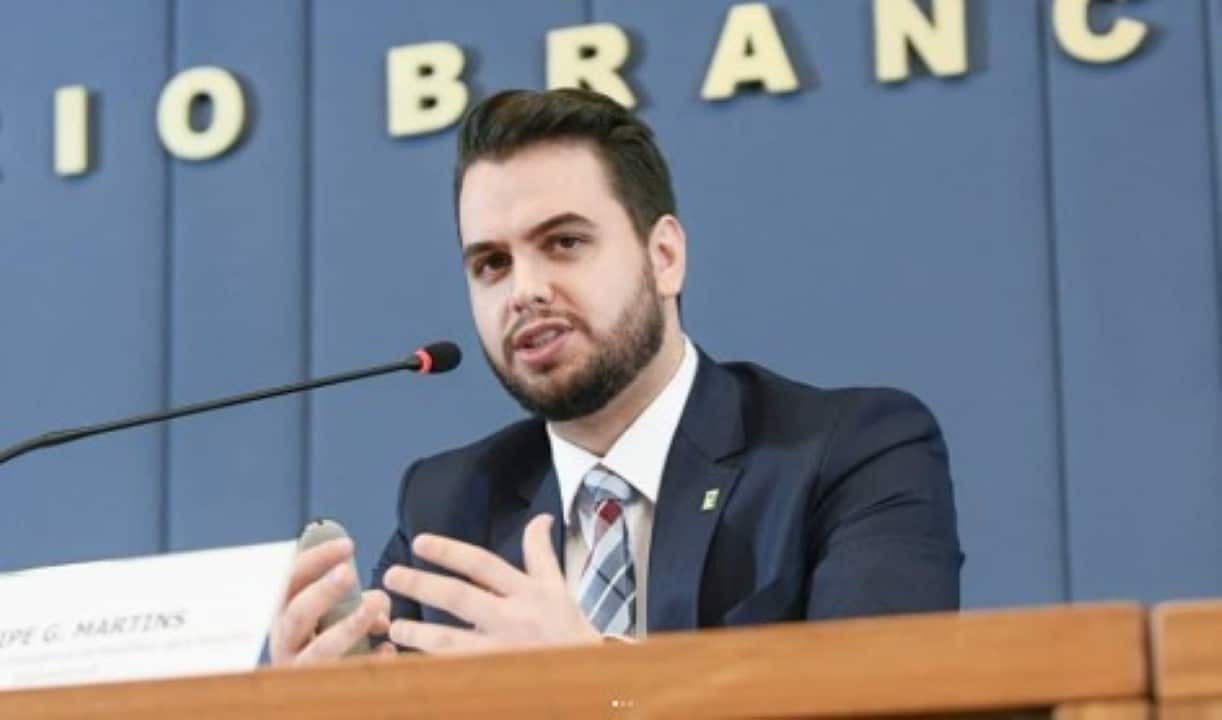 |
Brazil’s Supreme Court (STF) confirmed on Friday, February 2, 2025, the preventive detention of Filipe Martins, a former international relations advisor during Jair Bolsonaro’s presidency. The decision came after Martins underwent a custody hearing, a standard procedure designed to ensure the legality of a police arrest and the proper fulfillment of legal norms by officers. This development marks a significant turn in Martins’ legal battle, moving him from house arrest back into a closed prison regime, a situation his defense team vehemently contests.
The ruling follows Martins’ preventive arrest by the Federal Police (PF) earlier the same day, citing his non-compliance with existing precautionary measures. Specifically, a court order from Justice Alexandre de Moraes had previously prohibited Martins from using any social media platforms. However, investigations revealed Martins had continued to use LinkedIn, leading to the decision for his immediate detention.
Custody hearing procedures
The custody hearing for Filipe Martins was conducted via videoconference, a common practice for such proceedings. The session was overseen by Judge Flávia Martins de Carvalho, an auxiliary judge within Justice Moraes’ cabinet, who assessed the circumstances of his recent arrest. This judicial review is crucial to ascertain whether the individual’s rights were respected during the apprehension and initial processing.
Such hearings are a fundamental component of the Brazilian legal system, serving as an initial check on the legality and necessity of an arrest. They aim to prevent arbitrary detentions and ensure due process, allowing a judge to evaluate the facts and potentially convert the arrest into preventive detention, impose alternative measures, or release the individual. In Martins’ case, the assessment led to the maintenance of his incarceration.
Non-compliance and new detention
Filipe Martins was taken into preventive custody specifically for violating court-imposed precautionary measures. A previous judicial determination by Justice Alexandre de Moraes had explicitly barred Martins from engaging with any social media, a restriction he reportedly disregarded by actively using LinkedIn. This act of non-compliance triggered the order for his re-arrest.
The decision to transition Martins from house arrest to a closed prison regime underscores the judiciary’s firm stance on adherence to court orders. His previous condition of house arrest was intended to mitigate the risk of flight while awaiting further legal developments. The documented use of LinkedIn, contrary to a clear prohibition, was identified as a direct challenge to the authority of the court.
Justice Moraes’ order highlighted that the continued use of LinkedIn constituted a breach of trust and a direct violation of the court’s directives. This breach transformed his legal status, moving him from a more lenient confinement back into a standard correctional facility. The immediate shift emphasizes the seriousness with which judicial orders, especially those pertaining to individuals under investigation or condemnation, are enforced.
The move to preventive prison also illustrates the potential consequences of defying judicial mandates, particularly in high-profile cases. The legal system allows for a progressive tightening of restrictions when initial, less severe measures are not respected. This ensures the integrity of ongoing investigations and the enforcement of justice.
Defense arguments and ongoing appeals
Jeffrey Chiquini, Filipe Martins’ attorney, has publicly criticized the recent arrest, labeling it “yet another unjustified imprisonment” and asserting that his client is a victim of persecution. The defense plans to appeal the decision, arguing against the necessity and legality of the preventive detention. This legal strategy typically involves challenging the basis of the arrest and the alleged non-compliance.
The legal team maintains that Martins was not explicitly prohibited from accessing certain professional networking sites, a nuance they intend to explore in their appeal. They seek to demonstrate that the use of LinkedIn does not constitute a violation of the precautionary measures as broadly interpreted by the court. Such appeals can often lead to lengthy legal battles through various judicial instances.
Martins has been previously convicted to 21 years in prison for his involvement in the alleged coup plot following the 2022 general elections. However, this conviction has not yet reached its final and unappealable stage (transitada em julgado), meaning the sentence is not currently being served. The defense’s ongoing efforts are aimed at challenging both the underlying conviction and the recent preventive detention.
Filipe Martins’ background and current status
Filipe Martins served as an influential international relations advisor during Jair Bolsonaro’s administration, a role that placed him at the center of several key policy decisions and diplomatic engagements. His trajectory in government was marked by strong ideological alignment with Bolsonaro’s political agenda, often attracting both fervent support and considerable scrutiny. Before his recent re-arrest, Martins was under house arrest, a measure initially implemented to mitigate flight risk and ensure his availability for judicial proceedings.
Currently, Martins remains in preventive detention, a measure distinct from serving a final sentence. This type of imprisonment is ordered when there is a perceived risk of the accused obstructing justice, fleeing, or reoffending, among other criteria. His conviction for participation in the alleged coup plot is still subject to appeals, which means the 21-year sentence is pending final judicial confirmation. This legal limbo maintains his status as an accused, not yet a convicted individual serving a definitive sentence, despite the prior judgment.