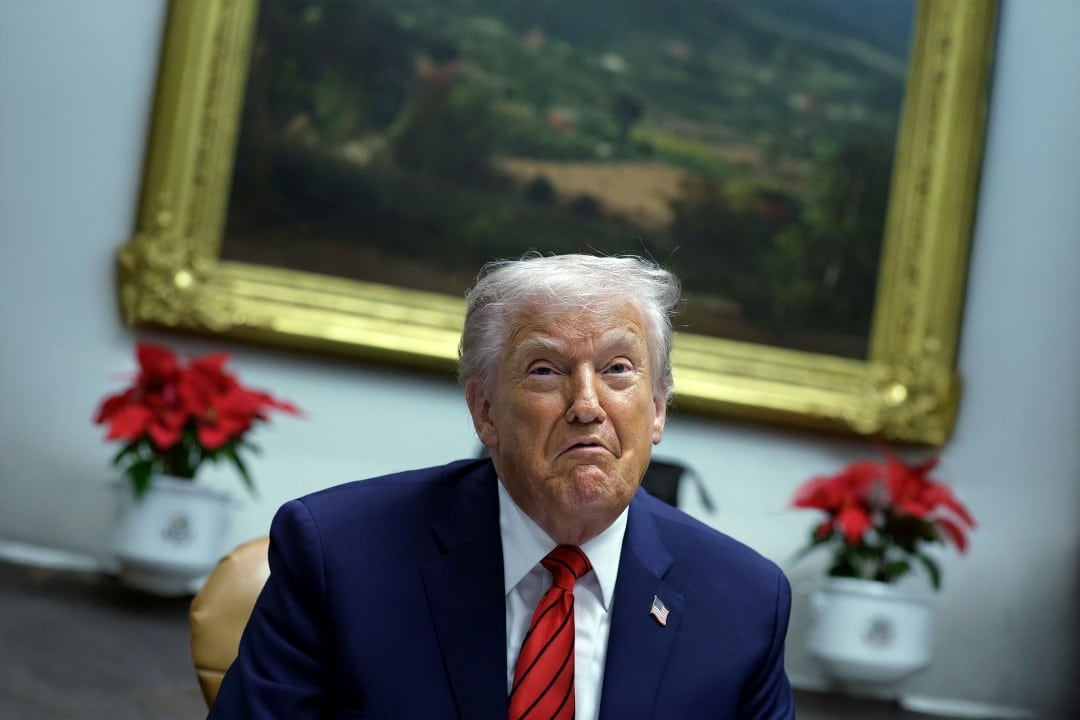
Iranian voices across the spectrum continue to accuse the United States, particularly recalling the rhetoric and actions of former President Donald Trump, of employing “psychological warfare” through military threats. This assertion, frequently resurfacing in the ongoing complex relationship between Tehran and Washington, underscores a deep-seated suspicion regarding American military deployments in the region. The perception in Iran is that these actions are designed to exert pressure and sow discord rather than serving purely defensive purposes.
The deployment of substantial naval assets, such as aircraft carrier strike groups, by the U.S. has historically been met with apprehension in Tehran. While American officials often frame these movements as deterrents or responses to perceived threats, many Iranians interpret them as deliberate provocations aimed at destabilizing the Islamic Republic. This continuous cycle of military posturing and counter-accusations defines a significant aspect of the geopolitical landscape in the Middle East heading into 2025.
These accusations are not monolithic; they reflect a range of opinions within Iran, from those who see direct military action as an imminent threat to those who dismiss the possibility. Nevertheless, the underlying sentiment that external military might is used to manipulate internal and regional dynamics remains a pervasive theme.
Iranian voices label military moves ‘psychological warfare’
Erfan A’rabi, an Iranian citizen, articulated a widely held belief that significant military mobilizations serve as direct precursors to aggression. He views the dispatch of large naval contingents, reminiscent of past U.S. “flotilla” announcements, as an unequivocal act of preparation for potential conflict. This perspective highlights a national sensitivity to foreign military presence, particularly when it appears to be concentrated on Iran’s doorstep.
A’rabi emphasized the scale of such deployments, stating that “the movement of the Armada is definitely a preparatory act for an attack, it is a threat of attack.” He further elaborated, “Because they never send a warship, especially when it comes to a fleet and not just one vessel, but at least 10 to 20 ships,” suggesting that the sheer volume of military assets signals aggressive intent beyond mere deterrence.
Tehran issues stern warnings amid renewed US alerts
Despite the concerns voiced by some, other local residents expressed skepticism that the United States would use its naval flotilla for a direct military assault on Iran. Their views acknowledge the strategic nature of such deployments but temper the fear of immediate invasion with an understanding of geopolitical complexities and the high cost of open conflict. This nuanced local perspective reveals a community grappling with the psychological impact of constant external pressure.
The renewed warnings from the U.S. against the killing of protesters within Iran or any resumption of its nuclear program by Tehran further exacerbate tensions. These explicit cautions, often accompanying military posturing, are seen by some as an attempt to dictate Iran’s internal and strategic policies under the guise of security concerns. They underscore the multifaceted nature of the U.S. pressure campaign, extending beyond purely military threats.
Responding to these dynamics, a high-ranking Iranian official stated unequivocally in late 2024 that Iran would consider any attack “as a total war against us.” This resolute declaration, made ahead of the anticipated arrival of a U.S. aircraft carrier strike group and other assets in the Middle East, serves as a clear red line. It communicates Tehran’s readiness to escalate any military confrontation into a full-scale conflict, reinforcing its stance on national sovereignty and defense.
US deployments: A historical pattern of military posture
Historically, the U.S. armed forces have intermittently dispatched military reinforcements to the Middle East during periods of heightened tension. These actions were often characterized as defensive measures, intended to protect U.S. interests and personnel or to deter potential adversaries. Such deployments are a standard tool in international relations, used to project power and signal resolve without necessarily initiating conflict.
However, a significant U.S. military reinforcement in the preceding year, notably before attacks against the Iranian nuclear program, introduced a different perception. This particular buildup was viewed by many as pre-emptive or overtly aggressive, rather than purely defensive. It illustrated how military movements, even if officially framed as defensive, can be interpreted by the receiving party as a prelude to offensive operations, contributing to the cycle of mistrust.
Iran’s internal perspective on defensive strategies
From an Iranian citizen’s viewpoint, the deployment of foreign naval vessels into regional waters is often perceived as a reaction to Iran’s own defensive capabilities and its stated intentions. One citizen articulated that the sending of ships for a possible war was “due to their own sense of danger,” acknowledging Iran’s consistent warnings of striking U.S. interests in the Middle East should it be threatened. This suggests a belief that U.S. actions are not unprovoked but rather a response to Iran’s established defense posture.
The citizen further clarified their personal neutrality on the specifics of Iranian policy but strongly affirmed the country’s fundamental right to self-defense. This sentiment resonates widely within Iran, where national sovereignty and the right to protect vital interests are paramount. It frames Iran’s military capabilities and rhetoric as legitimate defensive measures in a hostile geopolitical environment, rather than purely aggressive stances.
Unpacking US objectives: The question of regime change
The persistent question of why the United States frequently appears to seek “regime change” in Iran underpins much of the ongoing tension and fuels accusations of psychological warfare. This perception is rooted in decades of complex relations, including the 1953 coup supported by the U.S. and U.K., and subsequent U.S. policies that have been interpreted as attempts to undermine the current government. From Tehran’s perspective, U.S. military posturing and economic sanctions are not merely about nuclear proliferation or human rights, but rather strategic tools deployed to destabilize the regime and facilitate a leadership transition more amenable to Western interests.
This long-standing suspicion deeply influences how Iranian officials and citizens interpret U.S. actions, including military threats and diplomatic rhetoric. It suggests that every move by Washington, particularly those involving displays of force, is viewed through the lens of a broader, enduring strategy to alter the political landscape of Iran. This historical context and perceived overarching goal contribute significantly to the narrative that U.S. actions constitute psychological warfare, designed to erode confidence and encourage internal dissent.
Ongoing tensions and their regional impact in 2025
The broader context involves Iran consistently asserting its sovereignty against perceived foreign intervention, a stance deeply ingrained in its national identity. This assertion often manifests in regional proxy conflicts and naval drills, further contributing to a complex security environment that impacts stability throughout the Middle East. The interplay of these actions on both sides creates a continuous state of heightened alert, with significant implications for international shipping and energy markets.
The cycle of threats and accusations between the U.S. and Iran continues to define their bilateral relationship into 2025, shaping regional alliances and global energy security. Every military maneuver, every diplomatic statement, and every economic sanction contributes to this intricate dance of power. The persistence of these dynamics means that both sides remain poised, with little indication of a de-escalation in the near future. This precarious balance maintains the region in a state of flux, where any miscalculation could lead to unforeseen consequences.
Persistent accusations of psychological warfare
Ultimately, the core accusation that former President Trump, and by extension the U.S. government, engages in “psychological warfare” through military threats remains a potent narrative in Iran. It encapsulates the belief that military might is employed as a tool for political manipulation rather than solely for defense, profoundly affecting the discourse surrounding U.S.-Iran relations.