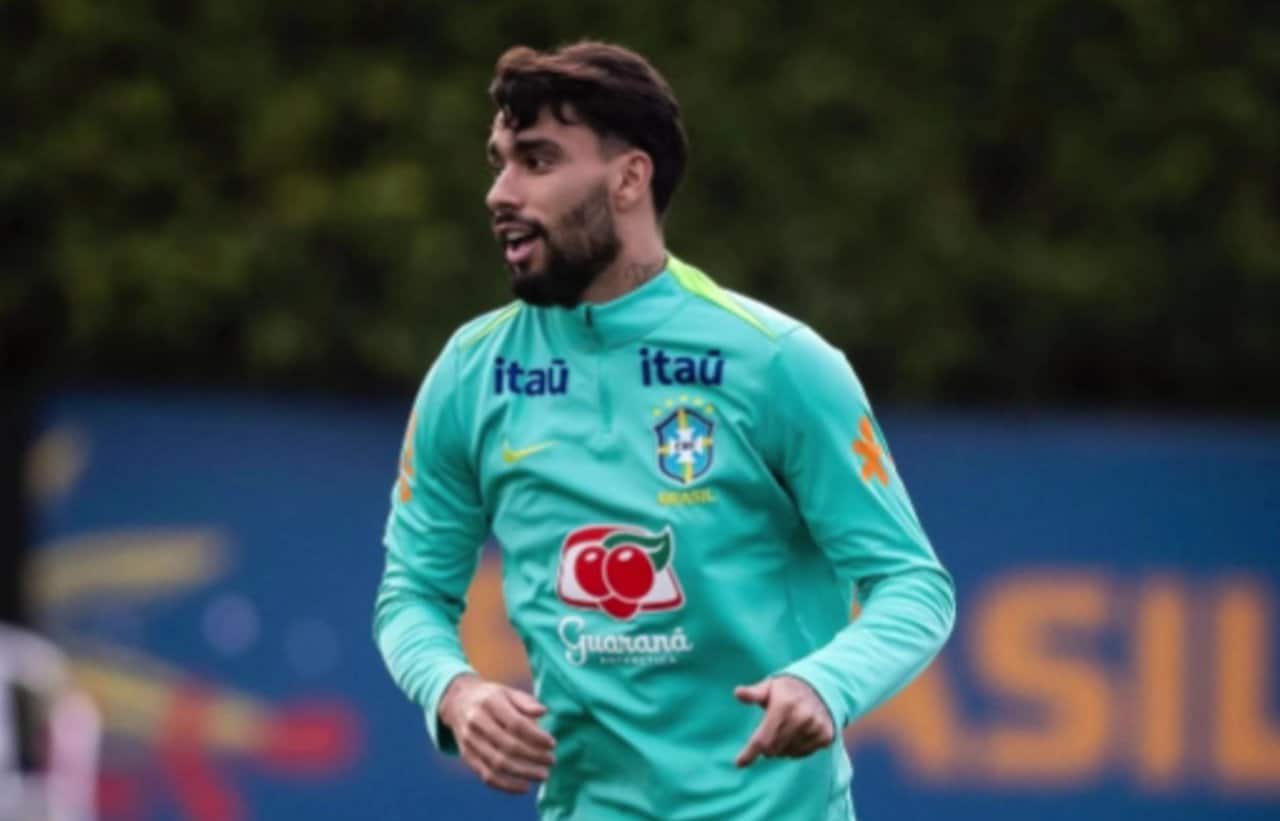
Flamengo has significantly reshaped the landscape of Brazilian football transfers with the record-breaking acquisition of Lucas Paquetá, securing his return from English Premier League club West Ham United for an astonishing €42 million. This monumental investment, equivalent to approximately R$260 million, immediately establishes the 28-year-old attacking midfielder as the most expensive player ever signed by a Brazilian club, marking a pivotal moment for the Rio de Janeiro giants and the league as a whole. Paquetá, a product of Flamengo’s esteemed youth academy, returns to the club that launched his illustrious career, bringing with him a wealth of international experience gained at top European clubs. The move underscores Flamengo’s aggressive strategy to bolster its squad with world-class talent, signaling strong domestic and continental ambitions for the upcoming 2025 season.
The financial magnitude of this transaction far surpasses previous benchmarks, setting a new precedent for player valuations within the South American football market.
* Paquetá’s fee is a significant increase over the previous record.
* The deal highlights Flamengo’s enhanced economic power.
The club’s bold move has not only captured national attention but has also resonated across international sporting circles, prompting discussions about the financial capabilities of leading Brazilian teams.
A Historic Investment
The R$260 million deal for Lucas Paquetá comprehensively eclipses the previous record held by Gerson, who transferred from Zenit St. Petersburg to Cruzeiro earlier in 2025 for R$168.8 million. This considerable difference of over R$90 million demonstrates a new level of financial commitment by Brazilian clubs, particularly Flamengo, in attracting and repatriating top-tier talent. The transaction underscores a growing trend where clubs in Brazil are increasingly willing and able to compete with European counterparts for high-value players.
This substantial outlay solidifies Flamengo’s reputation as a financial powerhouse within South American football, capable of executing complex and costly transfers to enhance its competitive edge. The move represents more than just a player acquisition; it signifies a strategic statement about the club’s ambition and its capacity to invest heavily in its sporting project. It marks a clear departure from the traditional role of Brazilian clubs primarily as exporters of talent, showcasing a burgeoning ability to also be significant importers.
Global Recognition of Flamengo’s Financial Power
The Flamengo’s audacious bid for Lucas Paquetá has garnered considerable attention from the international sports media, with analysts expressing awe at the club’s financial might. London’s talkSPORT International program extensively covered the negotiation between the Rubro-Negro and West Ham, highlighting the sheer scale of the investment.
One commentator on the program emphatically stated support for Flamengo, noting that they are the champions of Brazil and South America, classifying them among the world’s largest clubs. The program also observed that Flamengo’s revenue increased by 25% last year, leading to the conclusion that the club possesses financial resources comparable to some Premier League teams.
The Evolving Dynamics of Brazilian Transfers
The current transfer window has illuminated a remarkable shift in the financial landscape of Brazilian football, with clubs demonstrating an unprecedented capacity for investment. This new era sees Brazilian teams not just retaining their star players but actively pursuing high-profile international transfers, often competing with European clubs. The influx of significant capital into the league is enabling this aggressive market strategy.
This heightened financial activity is indicative of a broader economic strengthening within Brazilian football, fueled by factors such as lucrative broadcast deals, increased commercial sponsorships, and a growing global fanbase. Clubs are strategically leveraging these revenue streams to build more competitive rosters. Such investments are changing perceptions, portraying Brazilian football as a viable and attractive destination for players who might traditionally have remained in Europe.
The impact of these large-scale transfers extends beyond individual club success, elevating the overall prestige and competitive level of the Campeonato Brasileiro. With more world-class talent returning or being acquired, the league is becoming increasingly compelling, drawing greater viewership and commercial interest both domestically and internationally. This cycle of investment and growth suggests a promising future for Brazilian football’s economic vitality.
Paquetá’s Anticipated Impact on Sporting Ambitions
Lucas Paquetá’s return is expected to inject a significant boost into Flamengo’s midfield, bringing a unique blend of creativity, vision, and goal-scoring prowess that has matured during his tenure in European leagues. His experience at the highest level, particularly in the demanding Premier League, will be invaluable as Flamengo aims to defend its national titles and contend for the Copa Libertadores once again. The club’s management clearly views Paquetá not just as a player, but as a crucial strategic piece capable of elevating the team’s performance in critical moments. His leadership qualities and familiarity with the club’s ethos, having come through its academy, will also play a pivotal role in integrating new talent and maintaining squad cohesion, vital elements for sustained success across multiple competitions throughout the rigorous 2025 season.
Brazil’s Top 10 Most Expensive Signings (2025)
The transfer of Lucas Paquetá has not only set a new benchmark but has also redefined the top tier of historical acquisitions in Brazilian football, reflecting a market that continues to push valuation boundaries. The following ranking highlights the most significant investments made by Brazilian clubs to secure top talent as of 2025:
* Lucas Paquetá (From West Ham-ENG to Flamengo): R$260 million (€42 million)
* Gerson (From Zenit-RUS to Cruzeiro): R$ 168.8 million
* Vitor Roque (From Barcelona-ESP to Palmeiras): R$ 162.1 million
* Samuel Lino (From Atlético de Madrid-ESP to Flamengo): R$ 150.7 million
* Danilo (From Nottingham Forest-ING to Botafogo): R$ 143.3 million
* Pedro (From Fiorentina-ITA to Flamengo): R$ 138 million
* Carlos Tévez (From Boca Juniors-ARG to Corinthians): R$ 136.5 million
* Thiago Almada (From Atlanta United-EUA to Botafogo): R$ 130.8 million
* Edmundo (From Fiorentina-ITA to Vasco): R$ 128.1 million
* Gabigol (From Internazionale-ITA to Flamengo): R$ 126 million
A Strategic Homecoming for the Midfielder
Lucas Paquetá’s decision to return to Flamengo represents a significant personal and professional choice, driven by a desire to reconnect with his roots and play for the club that shaped him. This homecoming allows him to re-establish himself in a familiar environment while taking on a leading role in one of the most ambitious projects in South American football.
Economic Trends Fueling Record Investments
The surge in transfer fees seen in Brazilian football, exemplified by Paquetá’s record-breaking move, is underpinned by several robust economic trends. A key factor is the increasing professionalization of club management, leading to more sustainable financial practices and improved revenue generation. Clubs are optimizing commercial agreements and diversifying income streams beyond traditional matchday and broadcast revenues.
Furthermore, the strength of the Brazilian real against other currencies, particularly the Euro at certain times, can influence the perceived value and feasibility of such large international transfers. While Paquetá’s fee is in Euros, the ability of Brazilian clubs to convert local currency into a competitive offer is crucial. The strategic timing of these investments often aligns with favorable economic conditions.
Another contributing element is the growing appeal of Brazilian football to external investors and wealthy patrons. Several clubs have attracted significant foreign capital or local entrepreneurial support, providing the financial muscle necessary for high-stakes market operations. This external confidence signals a belief in the long-term growth potential and profitability of the league.
Finally, the increasing global visibility of Brazilian football through international broadcasts and digital platforms has boosted its marketability. This expanded reach translates into more lucrative sponsorship deals and merchandising opportunities, creating a virtuous cycle where increased revenue enables further investment in player talent, which in turn enhances the league’s attractiveness.