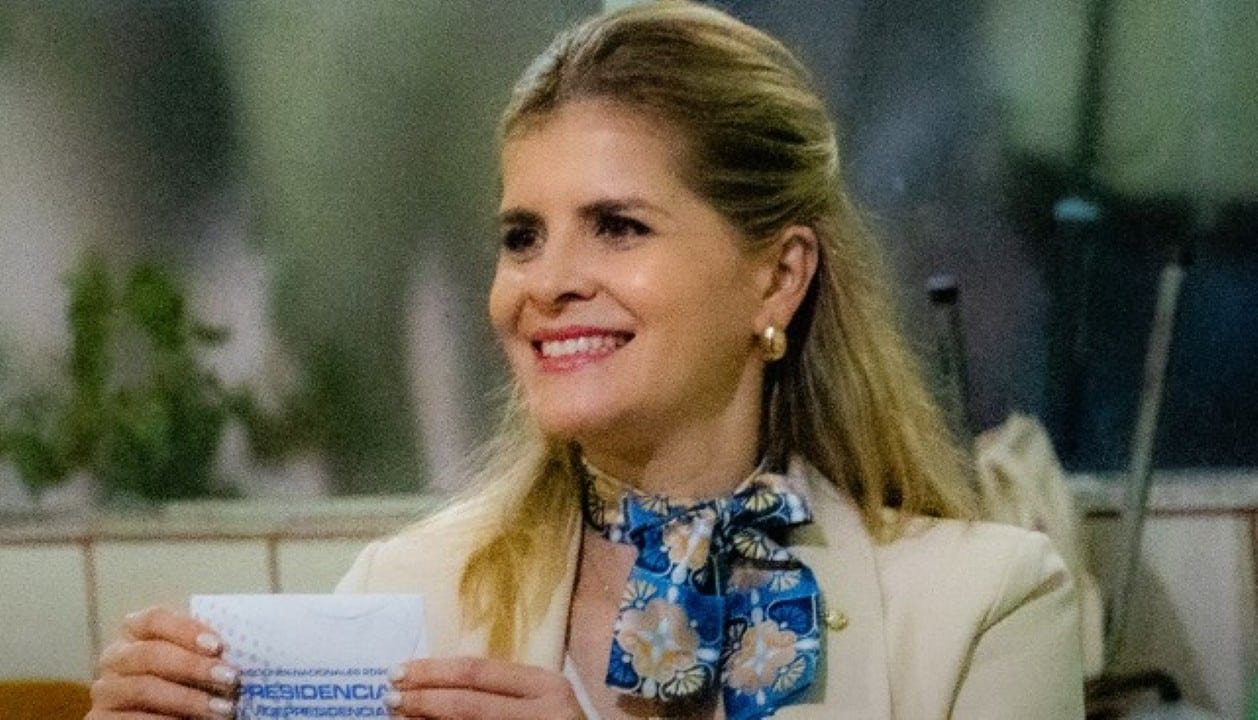
Laura Fernández has been elected president of Costa Rica, preparing to assume office on May 8th. The right-wing candidate from the People’s Sovereign Party won Sunday’s election, becoming only the second woman to lead the Central American nation.
Her campaign focused on continuing the policies of outgoing President Rodrigo Chaves, promising stability and progress. Fernández’s win underscores a public mandate for her vision of governance, particularly in public safety and economic continuity.
The political scientist’s victory signals a period of consolidating current governmental projects while addressing national challenges. Her speech emphasized institutional reform and prosperity, echoing a “political revolution” through the ballot box.
Fernández’s decisive electoral triumph
Laura Fernández clinched the presidency by winning the first round of elections. Preliminary results from the Supreme Electoral Tribunal showed her securing 48.5% of the votes after 88.43% of ballots were counted, defeating Álvaro Ramos of the National Liberation Party, who garnered 32.12%. This decisive outcome places her among a select group of female leaders in the region and marks a significant political chapter for Costa Rica, one of Central America’s most stable democracies.
Public service and strategic leadership development
Before her presidential bid, Fernández built an extensive career in Costa Rican public service as a political advisor and dedicated official. She held significant roles within the Ministry of National Planning and Economic Policy, where she honed expertise in policy development and strategic implementation. This background provided deep understanding of the country’s administrative machinery and developmental needs.
A pivotal moment arrived when President Rodrigo Chaves appointed her minister in 2022, recognizing her capabilities and commitment. The 39-year-old political scientist, who also served as Minister of the Presidency and Planning, used this experience to articulate a clear vision for her government, emphasizing continuity and the refinement of existing national projects.
Combating organized crime and drug trafficking
A cornerstone of Fernández’s upcoming administration is her robust stance against organized crime and drug trafficking. These issues deeply trouble many Costa Ricans, prompting her vow for stringent measures to reclaim the nation’s safety, a pressing concern in a country once renowned for its tranquility.
Her proposals include actions like the temporary suspension of individual rights in specific areas. This aims to more effectively capture criminals linked to narcotics, reflecting a commitment to drastic action despite drawing criticism from the opposition.
Fernández also plans to strengthen sanctions against organized crime and continue developing a high-security prison. This project, inspired by international models and initiated under President Chaves, forms part of the “Costa Rica Segura Plus 2023-2030” strategy, aiming to combat crime through various approaches.
Economic stability and future growth priorities
Fernández’s government plan prominently features the economic achievements of the current administration. She aims to build upon these foundations for her mandate stretching until 2030. Key priorities include sustaining economic growth, further reducing unemployment rates, and continuing to decrease the national public debt.
Costa Rica has demonstrated a remarkable economic recovery between 2024 and the first half of 2025, according to the “Estado de la Nación 2025” report. This positions the country as a top economic performer among Organization for Economic Cooperation and Development (OECD) members. Challenges in income redistribution and long-term sustainability remain pertinent.
Citizens’ mounting concerns on safety
Despite economic strides, rising insecurity and organized crime consistently rank among the primary concerns for Costa Rican citizens. The perceived erosion of safety in communities, once peaceful, has become a palpable source of fear and anxiety nationwide.
Residents like María Isabel Hernández from San José describe a stark shift. “The entire routine of being a quiet neighborhood changed. We went from a neighborhood where people thought twice before going to the corner store, because they didn’t know if they would come home after leaving.”
Official data confirms this grave reality. The Judicial Investigation Agency (OIJ) reported 2025 as the third most violent year on record for Costa Rica. The homicide rate reached 16.7 per 100,000 inhabitants.
This alarming trend, largely attributed to drug trafficking and gang conflicts, contrasts sharply with Costa Rica’s past reputation as the “Switzerland of Central America.” It compels Fernández to prioritize public safety as a central pillar of her presidential agenda, aiming to restore public confidence.
Broader vision for national development
Beyond security and economic stability, Fernández’s comprehensive platform outlines several other critical objectives for the country. These include a commitment to rebuilding public trust in Costa Rica’s judicial system, a fundamental component of a functional democracy.
Her administration also seeks a more efficient state, fostering greater social inclusion and security for all citizens. Modernizing education and ensuring long-term environmental sustainability are key pillars, reflecting a holistic approach to national development.
Inauguration and national expectations
Laura Fernández will officially assume the presidency on May 8th. She steps into office as the second woman to lead Costa Rica, following Laura Chinchilla’s tenure from 2010 to 2014. Her mandate will be closely watched as she navigates the nation’s complex challenges.
Strengthening democratic participation
The high voter turnout, reaching 69.5%, significantly surpassed the 56.8% recorded in the 2022 elections. This increased participation underscores robust public engagement in the democratic process. It also highlights a clear popular mandate for the elected leadership.
Fernández reiterated her commitment to strengthening democratic institutions during her victory speech. She emphasized returning institutions to the “sovereign people” to create greater well-being and prosperity, fostering a true political revolution through peaceful means.