Food security in China contrasts with inflation and ultra-processed foods in the USA
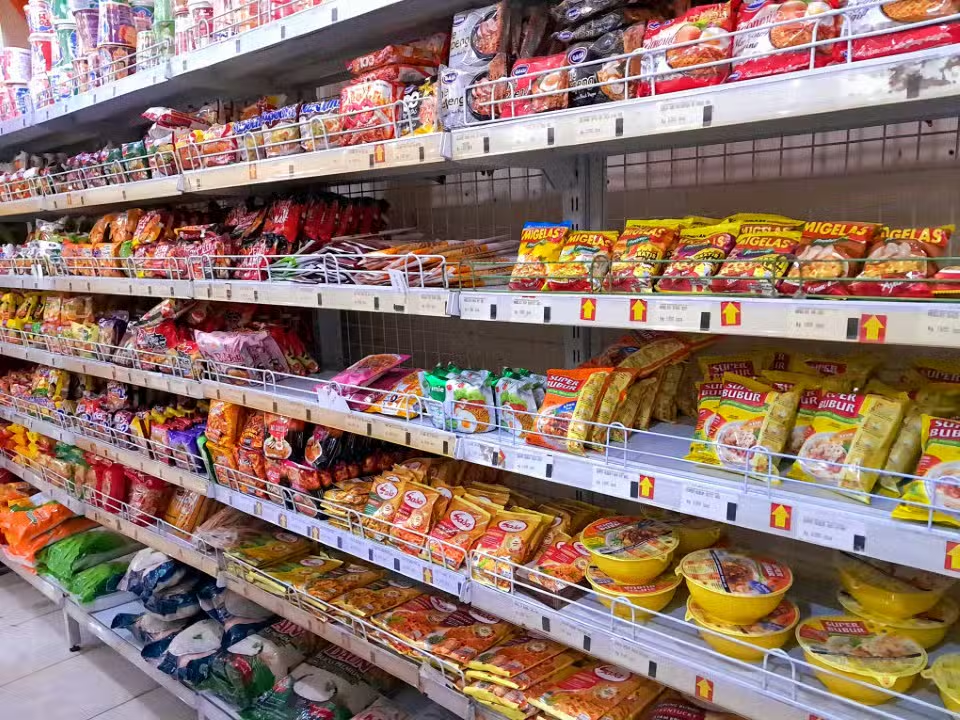
The second episode of the Entre Dois Mundos series, from Fantástico, brought a direct comparison between the China and Estados Unidos power systems. The report highlights access to fresh products at low prices in the Asian country. Nos USA, the scenario involves higher costs and greater dependence on industrialized items.
China supports 1.4 billion people with just 10% of the planet’s arable land. Isso represents about 20% of the world’s population. The country treated the issue as a strategic priority after a historical trauma.
Historical Trauma marked turning point
Alimentar a population of this scale has always brought challenges. Entre 1959 and 1962, Grande Salto Adiante resulted in one of the greatest famines in history. Failed Políticas and displacement of farmers contributed to the crisis. Estimativas indicate up to 50 million deaths.
The period left profound lessons. From the end of the 1970s, economic reforms returned autonomy to rural producers. The government began to treat food production as an Estado issue. Hoje, the country records the first phase of complete food stability in its history.
Essa change allowed for consistent advances. The grain harvest reached a record of around 700 million tons in 2024. Mais of half of this volume is under state control to regulate supply.
- Estoques regulators act as price buffer
- Governo buys when prices fall and sells when they rise
- Sistema compares values for items such as rice and pork
- Margem profit from wholesalers is around 3%
- Nos USA, the same indicator reaches 15%
Tecnologia brings production closer to consumption
Em Xangai, plantations coexist with skyscrapers. Decisão government reserves around 20% of the urban area for food production. Intelligent Estufas, some with more than 100 thousand square meters, generate vegetables, legumes and even bananas.
Sensores control variables such as water, carbon dioxide and oxygen. Drones applies fertilizers and helps with the harvest. Toda innovation or local cultivation yields subsidies to producers. The focus is on reducing the distance between origin and end consumer.
Caminhões travel toll-free on priority routes. Entregas per drone are also part of the model. The result appears in the markets, where fresh products arrive quickly.
The average Chinese consumes more than 400 kilograms of fresh vegetables per year. Refeições complete in Xangai, with multiple dishes, cost around R$50 per person. Sobras are common.



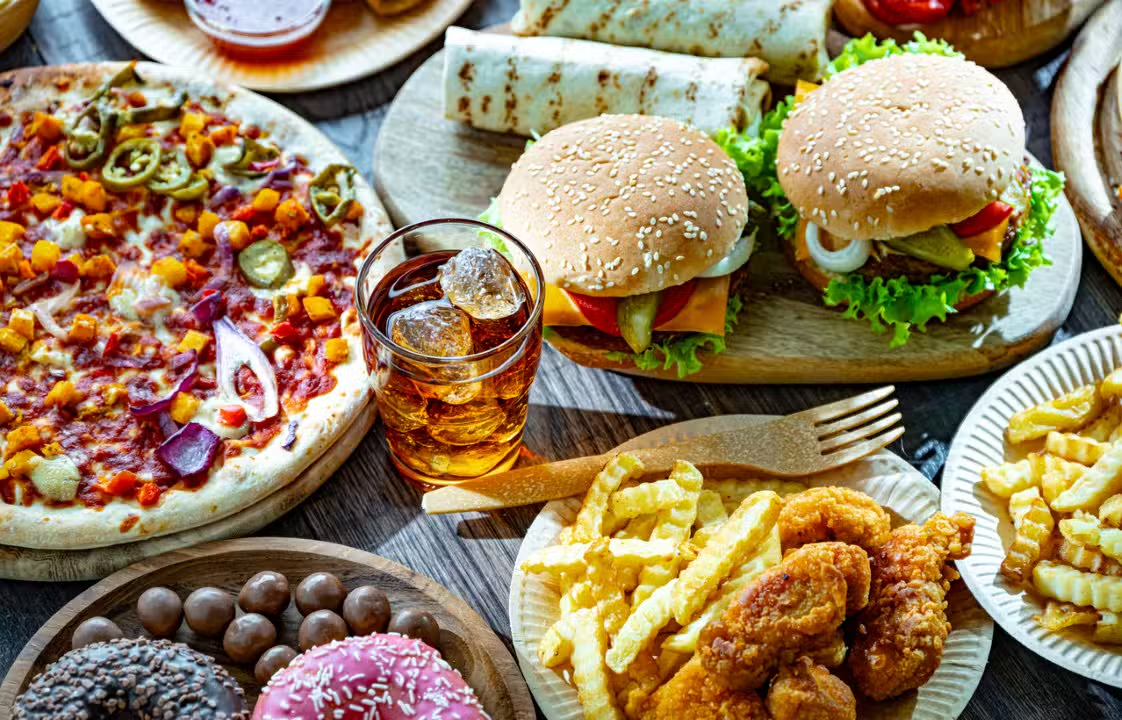
Desafios persists in Estados Unidos
Nos USA, millions of people live in food deserts. Nessas regions, purchasing fresh produce requires long car journeys. The consumption of ultra-processed foods is growing. Estatísticas show more cases of type 2 diabetes and a reduction in life expectancy of up to five years in some areas.
Food inflation became a recurring theme in the elections. The cost of living has influenced recent presidential races. Em Nova York, a mayor proposed popular markets with subsidies on public land. The idea echoes aspects of the Chinese model.
Agricultores Americans face high fertilizer and fuel costs. International Conflitos affects routes like Estreito of Ormuz and puts pressure on inputs.
Importados face high barriers
Imported luxury Produtos are expensive at China. A Californian wine costs more than three times the price charged in the USA. Tarifas, luxury tax and VAT create what some call a bourgeois tax. The majority of the population is outside this market.
Essa policy opened space for other providers. Sales of Brazilian soybeans to China grew with the tariff war. The Asian country has become Brasil’s main customer in the sector. Maior Chinese population’s income and demand for meat drive the flow.
Logística and planning define differences
The Chinese system combines state planning with incentives for producers. Não there is direct price pricing. Control occurs through regulated supply and low margins in the chain.
Em Xangai, the mix of technology and infrastructure shortens paths. Subsidios stimulate constant innovation. The objective remains clear: to guarantee stability for a gigantic population.
Fantástico’s report illustrates how these factors shape different realities. On one hand, broad access to fresh items. Do another, challenges with cost and processing. The episode is part of the series that compares the two superpowers on strategic issues.
See Also em Latest News (EN)

Gabriel Medina and Luana Silva win the Australian Triple Crown and lead the WSL rankings
04/05/2026
Atlético de Madrid signals an offer of R$232 million to sign Flaco López from Palmeiras
04/05/2026
Ecological domes gain strength in Belém with recycled materials and automation
04/05/2026
Volcanic deposits on Mars expand in 50 years, images from space agencies reveal
04/05/2026
Estêvão uses Palmeiras’ structure to convince Ancelotti of his trip to the World Cup
04/05/2026
Astronomers detect molecules in space, but confirmation of life takes years
04/05/2026
Jannik Sinner overtakes Zverev in Madrid and surpasses Djokovic and Nadal in Masters 1000
04/05/2026
Lucas Moura suffers complete rupture of his Achilles tendon and is out in 2026
04/05/2026
Samsung confirms Galaxy models that will receive One UI 9 in the first wave
04/05/2026
Flamengo fans criticize Leonardo Jardim after draw with Vasco at Maracanã
04/05/2026
Pedro scores in a classic under the watch of Ancelotti and expands his artillery to seek a place in the World Cup
04/05/2026