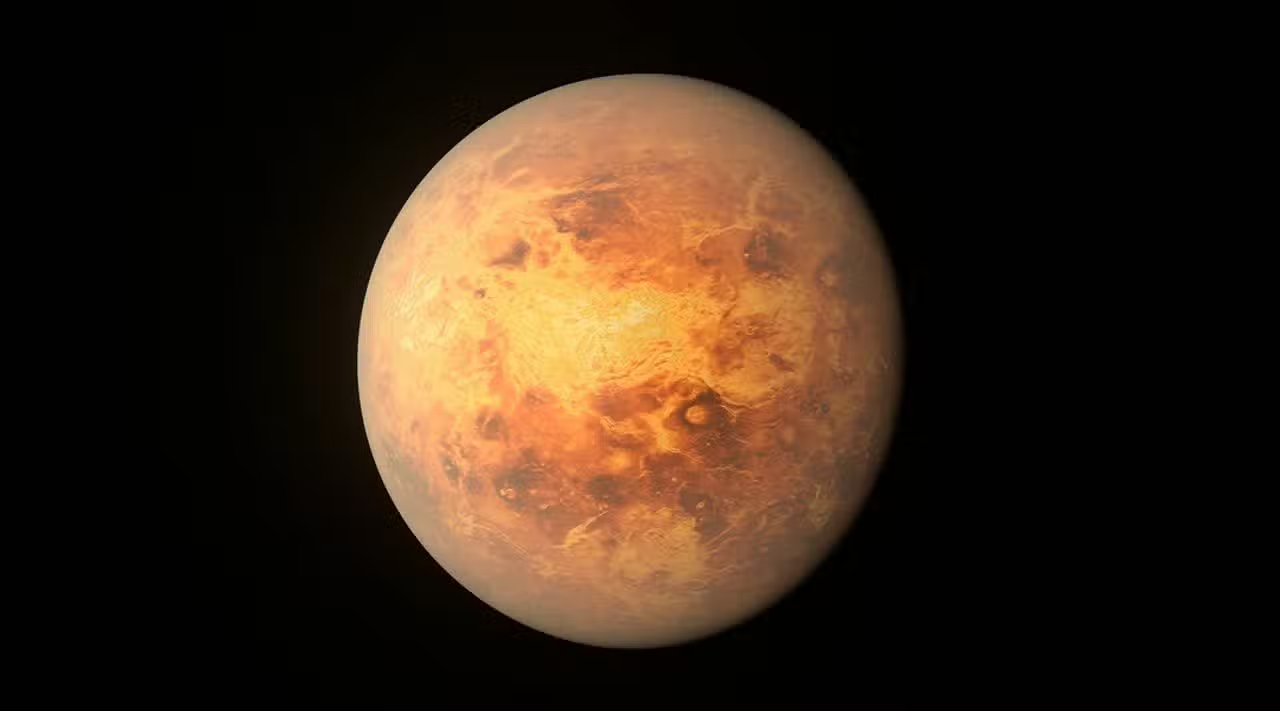
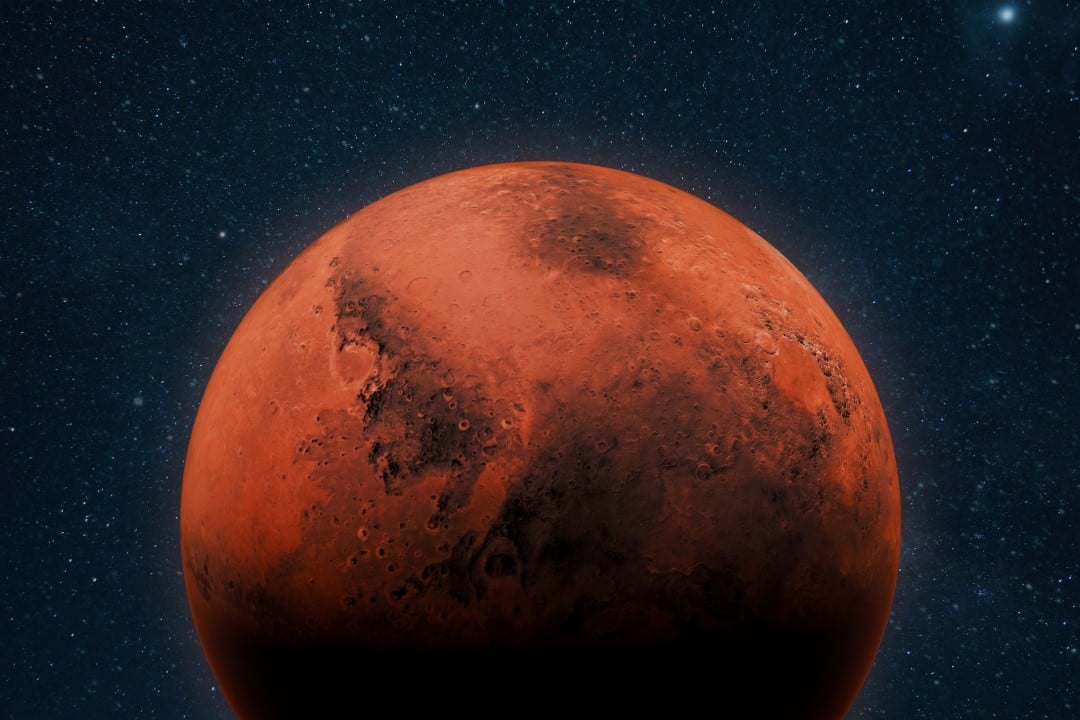
Imagens captured by Agência Espacial Europeia (ESA) and Nasa document a significant expansion of volcanic ash deposits on the Martian surface. The comparison between photographs from 1976, obtained by the Viking orbiters, and images from 2024 reveals that the dark spots have advanced considerably over the planet’s light, yellowish sands. Cientistas point to the change as a rare phenomenon to observe in less than five decades rather than millions of years.
The visual contrast between the two eras is evident in the images released by the agencies. In 1976, volcanic deposits occupied a much smaller and more concentrated area. Atualmente, the ash covers a substantially larger region of the red planet. Dentro from this expansion area, a crater approximately 15 kilometers wide is detected, surrounded by a lighter “ejection blanket”. Linhas visible within this formation suggests the presence of frozen material in the process of detachment from the surface.
Hipóteses about the scatter mechanism
Pesquisadores is still investigating the factors that caused this accelerated increase in volcanic ash. Duas main hypotheses guide the analyses:
- Dispersão by the Martian wind, which would have spread the ash over a wider area of the surface
- Remoção of surface dust, where the winds would have removed a light layer of dust that covered the pre-existing ash, making it more visible
- Possível recent volcanic activity on the planet
Não there is consensus among scientists about which mechanism predominated in this transformation. Ongoing analysis of the images and spectroscopic data is ongoing to clarify the exact origin of the observed change.
Relevância for planetary studies
The ability to document significant geological changes in such a short period of time represents a rare opportunity for the scientific community. Mudanças on scales of decades, rather than millions of years, allows researchers to study dynamic processes more directly. Esse type of observation contributes to better understanding how planetary environments evolve and how atmospheric factors influence the Martian surface.
The volcanic deposits in question serve as natural markers to monitor wind activity and geomorphological processes in Marte. Systematically comparing images over time provides fundamental data for Martian climate simulation models and predictions about future changes on the planet.
Space Observation Tecnologia
The 1976 images were taken by the Viking orbiters during the first successful Mars exploration missions. Current Câmeras, installed on modern Nasa and ESA orbiters, offer significantly higher resolution, allowing you to detect smaller details and track transformations with greater precision. Esse technological advancement allows comparative analyzes that would be impossible with equipment from the 1970s.
The continuity of orbital observation missions ensures that future comparisons can be carried out, consolidating a historical series of data on the evolution of the Martian surface. Essa methodology has already proven effective for monitoring changes in other regions of the planet and other celestial bodies in the solar system.
Implicações for future exploration
Detailed study of regions like this, where visible changes occur within observable time frames, can inform future exploration strategies. Compreender dynamics of material dispersion and behavior of Martian sands is relevant for planning rover landings and the safety of future manned missions. The location and characteristics of these deposits can influence selection of sites for intensive scientific research.