Brooke Shields reveals how she overcame the sex symbol label in her youth By Maria
4 min read
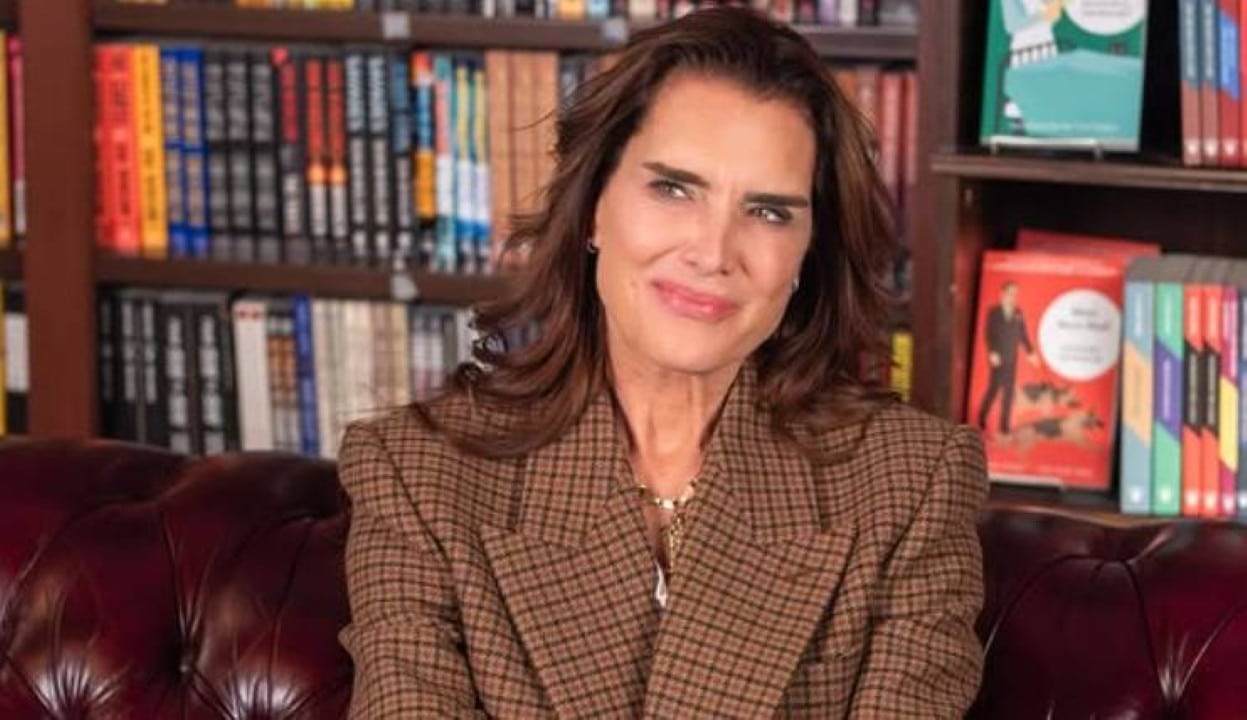 |
Actress Brooke Shields opened up about the challenges she faced after becoming a “sex symbol” as a child, revealing how she managed to give a new meaning to her career decades later. Durante recent interview, she explained that she found in comedy the freedom that the world of cinema never allowed her to explore when she was young.
Da child nudity to the label that pursued her
Shields rose to fame at the age of 11 when she played a child prostitute in the film “Pretty Baby”, which contained nude scenes of the actress. Aos 10 years old, posed nude for Playboy’s Sugar’n’Spice magazine. Esses initial milestones profoundly marked his professional and personal trajectory.
“I was at the center of everything and I was promoting it and making it happen,” Shields said during a panel at Festival South by Southwest in 2024. The context was controlled by the industry, not by it. The actress grew up surrounded by a strong mother and never moved to Hollywood, attending a normal school. Essa’s family structure offered protection from the predatory statistics that Hollywood created for so many young artists.
Refusal of the label through comedy
Shields is currently promoting his Acorn TV mystery-comedy series titled “You’re Killing Me.” Foi in conversation with AARP she discussed her memorable participation in “Friends”, where she played the stalker of the character Joey, played by Matt LeBlanc.
“Believe me, I would have done this a few decades earlier,” Shields stated. “But that’s not what people wanted from me. Elas wanted me to be a sex symbol… and that’s okay.” The actress made it clear that acceptance was accompanied by resignation. What really made her happy was different: “Doing sketch comedy has always been what made me happiest.”
Essa’s transition from sex symbol to comedian marked a turning point. The industry had defined its boundaries, but she found creative freedom beyond those limits. The comedy on “Friends” not only validated her as a multi-talented actress, but also repositioned her public narrative.
Proteção familiar as shield
Shields credited his family as a crucial factor in preventing him from becoming another victim of the predatory Hollywood system. “I had this kind of community around me that protected me, supported me. Assim didn’t become the kind of statistic that Hollywood created,” he highlighted.
Ela attended regular school and maintained links with the world beyond the film industry. Essas Seemingly simple choices generated a profound protective effect. Enquanto many young stars succumbed to the pressure of the toxic environment, Shields preserved their mental and emotional health.
The actress’ reflection resonates with an uncomfortable truth: “Hollywood is based on devouring its young people.” Essa’s finding is not just a criticism, but a recognition of a system that has historically exploited children and adolescents in search of profit.
The challenge of aging in Hollywood
In his panel on South by Southwest, Shields also addressed the ageism that continues to mark his career. “At 58, you’re already too old to be the ingénue, but you’re still not quite grandma,” she described.
Instead of allowing himself to be paralyzed by frustration, Shields took an active stance. Ela started looking for filmmakers who value actresses over 40 and appreciate their accumulated life experience. Esses professionals understand that women in this age group bring rich stories: marriages, children, businesses, careers that they built and reinvented.
“My entire career has been built around beauty. Conforme as I get older, I want my message to be one of appreciation, but also beauty as well-being,” Shields explained. Ela rejects the limiting narrative of superficial anti-aging: “We’re not just an anti-wrinkle cream.”
Mudança narrative for mature women
Shields’s current mission goes beyond his personal career. Ela works to transform how Hollywood, and the culture at large, views women as they age. Existem producers and filmmakers who target their programming specifically at women in this age group, recognizing their power as audiences and as creatives.
“We need to change the narrative and say there is beauty in this time,” concluded Shields. The statement carries the weight of someone who has experienced multiple transformations — from an exploited child to an unwanted sex symbol, from a rejuvenated actress to a mature woman reclaiming her space.
Sua’s trajectory illustrates how resilience, family support and refusal of prefabricated labels can give new meaning to an entire career.