

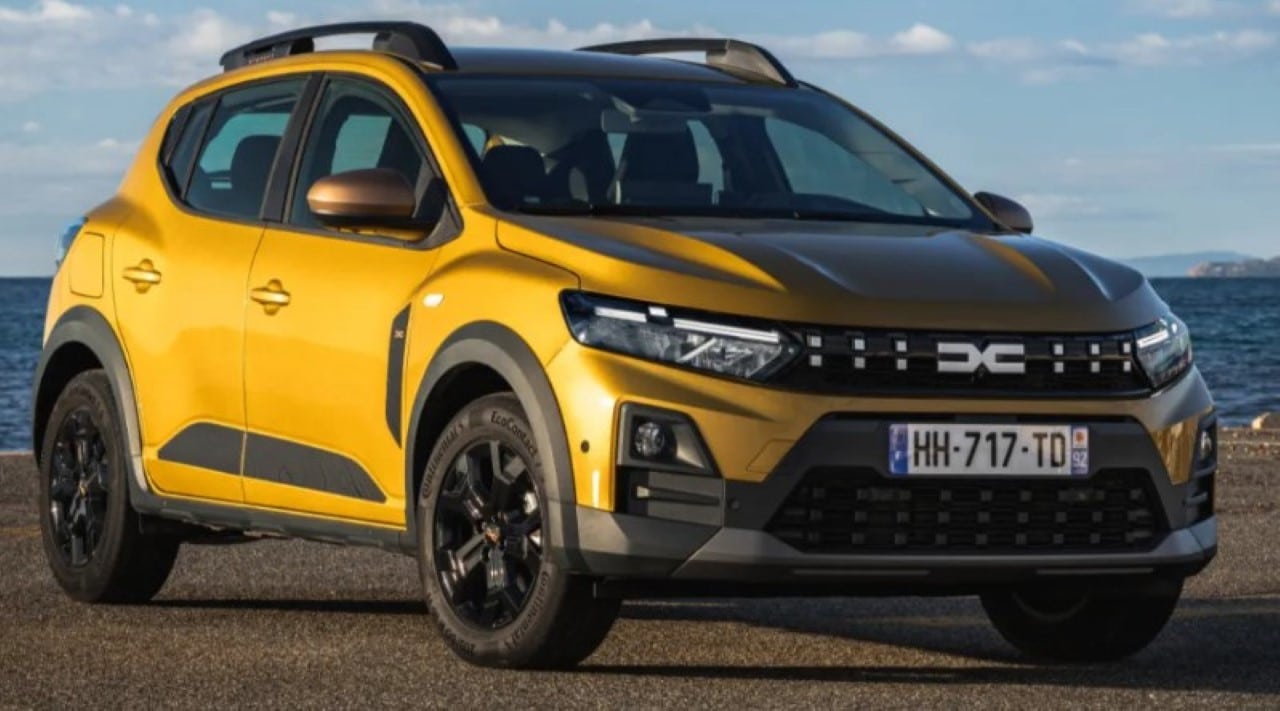
The Dacia Sandero consolidated its position as the most sought after vehicle by consumers on Espanha during the month of May. The entry model registered the sale of exactly 3,215 units in the period. The expressive volume guaranteed isolated leadership in a scenario of stability for the European automotive sector. Spanish families remained focused on searching for options that deliver a balanced relationship between initial cost and maintenance expenses. The compact hatchback’s performance reflects a clear preference for cars that do not burden the domestic budget.
The Spanish market registered 111,894 new cars during the fifth month of the year. The result points to a discreet retraction of 0.8% when compared to the same interval in 2025. Apesar of this slight negative one-off oscillation, the accumulated balance of 2026 remains in the positive field. The sector has already delivered 519,531 vehicles to customers since January. The volume represents a consolidated growth of 5.9% compared to the numbers recorded in the previous year.
Conventional Híbridos and environmental label set the pace of the market
Hybrid technology that does not require the use of sockets has assumed absolute prominence in the country’s dealerships. Models equipped with this system accounted for a significant 46% of total sales in May. The category has established itself as the preferred alternative for drivers looking to travel on urban roads with greater energy efficiency. Vehicles classified with the coveted ECO label have gained considerable space in Spanish garages. The environmental seal facilitates access to low emission zones in large urban centers.
The commercial success of Dacia Sandero has a direct link to this demand for efficiency and daily savings. The automaker offers the ECO-G version, which leaves the factory adapted to run on liquefied petroleum gas. Alternative fuel has a considerably lower value than conventional gasoline at European pumps. Consumers are also showing interest in variants equipped with the TCe turbocharged gasoline engine. The combination of modern engines with a light body guarantees satisfactory consumption figures.
Purchasing behavior shows a marked rationality on the part of customers when closing a deal. Segments B and C, which include compact and medium-sized cars, account for the largest share of registrations. Small SUVs are also among the public’s favorites. The versatility for daily use in cities and the adequate space for short trips justify choosing these categories. Strict control over the final price of the product defines the success or failure of a launch.
May Ranking consolidates strength of compacts and sports utility vehicles
The list of the ten best-selling cars on Espanha presented a configuration dominated by traditional manufacturers from Europa and Ásia. The monthly survey confirmed the strength of hatchbacks and compact SUVs among national preferences. The presence of just one brand of Chinese origin at the top of the ranking demonstrates that established automakers still dictate the rules. The local market values the history of companies and the reach of technical assistance networks.
- Dacia Sandero: 3,215 units
- Hyundai Tucson: 2,561 units
- SEAT Ibiza: 2,451 units
- Toyota Corolla: 2,230 units
- MG ZS: 2,183 units
- Toyota Yaris: 2,069 units
- Opel Corsa: 1,975 units
- Renault Clio: 1,928 units
- Toyota C-HR: 1,919 units
- MG 3: 1,846 units
Dacia Sandero’s advantage in first place occurred with a very comfortable margin in relation to its direct competitors. The Hyundai Tucson secured the silver medal and reaffirmed the high demand for family SUVs. The SEAT Ibiza, a classic from the Spanish market, secured third place on the monthly podium. The simultaneous presence of the Toyota Corolla and Toyota Yaris on the list proves the massive acceptance of self-charging hybrid technology. The MG ZS surprised by breaking into the top 5, showing the competitiveness of the new Asian entrants.
Toyota maintains leadership in the year to date among automakers
The overall balance of the first five months of 2026 places Toyota at the highest place on the corporate podium. The Japanese manufacturer has built a solid customer base in the Iberian country through a portfolio focused on gradual electrification. The Volkswagen appears next, supporting the tradition of German engineering. The Renault, Kia, SEAT and Hyundai complete the elite squad of the most successful brands of the period. The diversity of origins of these automakers illustrates a highly competitive business environment.
The strategy adopted by the market leader is fully in line with the current needs of European drivers. The offer of vehicles that combine combustion engines with small electric drives reduces the cost per kilometer driven. Spanish consumers carefully analyze fuel expenses before signing a financing contract. The mechanical reliability associated with the Asian brand also weighs favorably in the final decision. The company’s models can deliver savings without requiring drastic changes in driving habits.
MG’s rise deserves a special highlight when analyzing the behavior of the automotive sector in May. The brand of British origin, currently under the control of a gigantic Chinese group, has two models among the ten best sellers. The MG ZS and MG 3 attract buyers through an aggressive pricing policy and generous standard equipment packages. The strategy demonstrates that there is space for Asian products in the entry-level segment. The other Chinese manufacturers, however, still face the challenge of increasing their participation at the top of the table.
Transição energetics advances cautiously among Spanish consumers
The electrification process of the national fleet is progressing at a moderate and pragmatic pace. Fully electric vehicles and plug-in hybrid versions showed positive percentage growth in the month. The sum of these categories helped to sustain the total volume of registrations at a time of market accommodation. Cars that rely exclusively on batteries still face obstacles such as high purchase prices. Public charging infrastructure on highways also raises doubts among potential buyers.
The market share corresponding to electrified models reached 23.1% in May. The indicator signals continued progress towards cleaner mobility. The number reveals that the complete transition to electricity will still require time and government incentives. The vast majority of drivers prefer to opt for conventional hybrids and micro-hybrid systems. Essas technologies offer the benefits of environmental labeling without the need to change the fueling routine.
The current scenario favors the strategic positioning adopted by vehicles like Dacia Sandero. The model delivers proven engineering, predictable maintenance costs and a stable resale value. Mechanical simplicity attracts a public that does not wish to bear the complexity and costs inherent in purely electric cars. The Spanish automotive market demonstrates that the energy transition needs to be aligned with the financial reality of families. The search for accessible mobility continues to be the determining factor in dealerships across the country.