

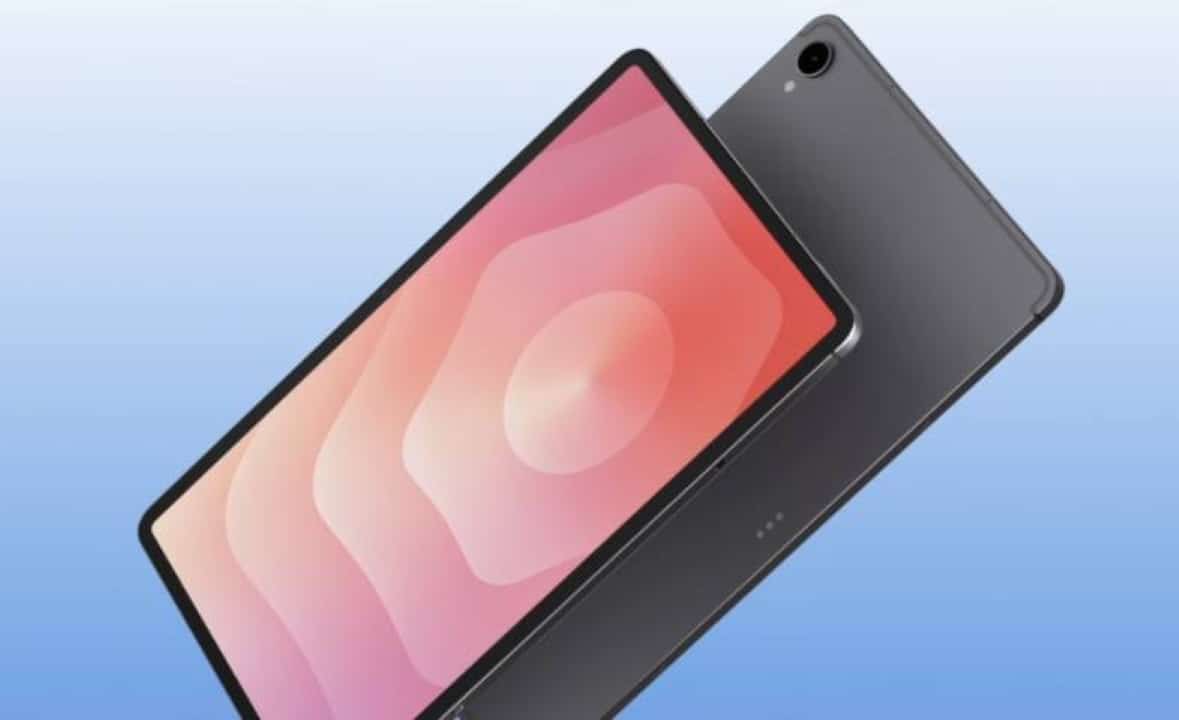
The Galaxy Tab S11 Ultra positions itself as the most advanced tablet in Samsung’s catalog, bringing together cutting-edge performance and premium features in a single device. Launched in September 2025 with a suggested price of R$9,999, the model can now be found for prices starting at R$7,199 at retailers such as Casas Bahia, which represents a significant reduction for those looking to invest in high-level equipment.
Among its main attractions is the large 14.6-inch screen, which combines a 120 Hz refresh rate with a maximum brightness of 1,600 nits, providing a fluid, clear and comfortable visual experience for productivity and entertainment. Still, the size remains a point that may bother some users, exactly as it happened with the Galaxy Tab S10 Ultra. And although Samsung has refined some aspects of the experience, the feeling is that few things have changed from one generation to the next. Next, check out the complete review of the premium tablet.
Technical sheet of the Galaxy Tab S11 Ultra
- Screen size: 14.6 inches
- Screen resolution: WQXGA+ (2,960 x 1,848 pixels)
- Display Panel: 2X Dynamic AMOLED
- Main camera: 13 MP + 8 MP
- Front camera: 12 MP
- System: Android 16
- Processor: Dimensity 9400+
- RAM memory: 12 GB
- Storage: 512GB
- Memory card: yes (up to 2TB)
- Battery capacity: 11,600 mAh
- Colors: gray
- Launch: September 2025
- Launch price: R$9,999
Design
Despite its generous dimensions, the Galaxy Tab S11 Ultra stands out for its sophisticated design and carefully refined construction, balancing elegance and functionality. With measurements of 326.3 x 208.5 x 5.1 mm and a weight that varies between 692 and 695 grams, the device has an extremely thin profile and a relatively adequate weight for a tablet of this size.
Even with its reduced thickness, the tablet does not compromise on its structural robustness, with a unified aluminum body that reinforces the feeling of durability and premium finish. The solid construction is complemented by the IP68 certification, which ensures resistance to dust and immersion in water of up to 1.5 meters for up to 30 minutes. On the other hand, an aspect that can be seen as a limitation is the restricted availability of gray.
Upon initial contact, however, the feeling is one of familiarity. Although the Galaxy Tab S11 Ultra appears slightly thinner in the hands, the visual changes compared to the previous generation are quite discreet, maintaining practically the same aesthetic proposal as the Tab S10 Ultra. The rear, camera module and aluminum construction follow a very similar line, which reinforces the impression of continuity between generations.
The main noticeable difference is precisely in the magnetic area dedicated to the S Pen. In this generation, Samsung repositioned the pen fitting, changing the way the accessory is accommodated in the device. This is a small change, but it ends up being one of the most immediately noticeable details in everyday use.
Another point that deserves attention is the accessories and the experience with the magnetic cover. Compared to the previous generation, the feeling is that the manufacturer has simplified the design. The new support system offers less tilting possibilities, which may limit comfort in certain usage scenarios.
Watching videos and using the tablet on the table were challenging tasks for me, precisely because of the limited adjustment angles. My chair is low, but if you have a high seat, this won’t be a concern. It all depends on the height of the surface and its position.
The change also impacted the experience with the S Pen. On the Galaxy Tab S10 Ultra, the pen was more protected and integrated into the set when stored next to the cover. On the Tab S11 Ultra, the magnetic docking seems less functional in everyday use, leaving the S Pen more exposed and reducing practicality for transportation.
Screen
When it comes to the main screen featured on any tablet, Samsung maintains the high standard in the Galaxy Tab S11 Ultra. The model has a 14.6-inch Dynamic AMOLED 2X panel, WQXGA+ resolution (2,960 x 1,848 pixels) and 120 Hz refresh rate, delivering extremely sharp images, vibrant colors and excellent fluidity. The presence of adaptive mode increases efficiency even further, as it reduces the rate to up to 1 Hz in static content and dynamically adjusts up to 120 Hz during navigation.
Furthermore, the tablet reaches a maximum brightness of 1,600 nits, which guarantees excellent visibility even outdoors or in bright light. Another important difference is the anti-reflection technology, which minimizes light interference and preserves the clarity of images at different viewing angles.
In practice, the visual experience remains one of the strengths of the Tab S11 Ultra. The giant screen favors the consumption of films, series and games, delivering a level of immersion that would be difficult to achieve on smaller devices. For those who prioritize entertainment, the size can be a big difference, even if it also makes the tablet less portable on a daily basis.
On the other hand, I repeat: the feeling is of continuity in relation to the previous generation. Although the technical sheet brings specific improvements, mainly in brightness, the changes do not seem so noticeable during everyday use. The experience remains extremely premium, but without conveying a truly significant evolution compared to the previous model.
Camera
Although cameras are rarely the main attraction in tablets, the Galaxy Tab S11 Ultra preserves its premium proposition by investing in a competent and well-designed optical set. Check out how the lenses are distributed:
- 13 MP main camera with f/2.0 aperture;
- 8 MP ultrawide camera with f/2.2 aperture;
- 12 MP front camera with f/2.4 aperture.
On the back, the Galaxy Tab S11 Ultra features a 13 MP main sensor with f/2.0 aperture and autofocus, accompanied by an 8 MP ultrawide lens. The system also has an LED flash and HDR support, which contributes to better results in different scenarios.
In practice, however, the photographic experience remains limited, with results similar to those of the S10 Ultra. The images work well in bright environments, but still have that typical appearance of cameras on entry-level tablets and smartphones, falling behind Samsung’s own premium models.
The main problems appear precisely in low light scenarios, in which there is a loss of sharpness. The zoom is also not impressive: as the magnification increases, the photos quickly become more grainy, pixelated and out of focus, compromising the final quality of the images.
On the other hand, the front portrait mode deserves praise. During testing, the bokeh effect drew attention due to its precision in cropping and the consistent separation between background and face, something that even some smartphones still perform inconsistently.