

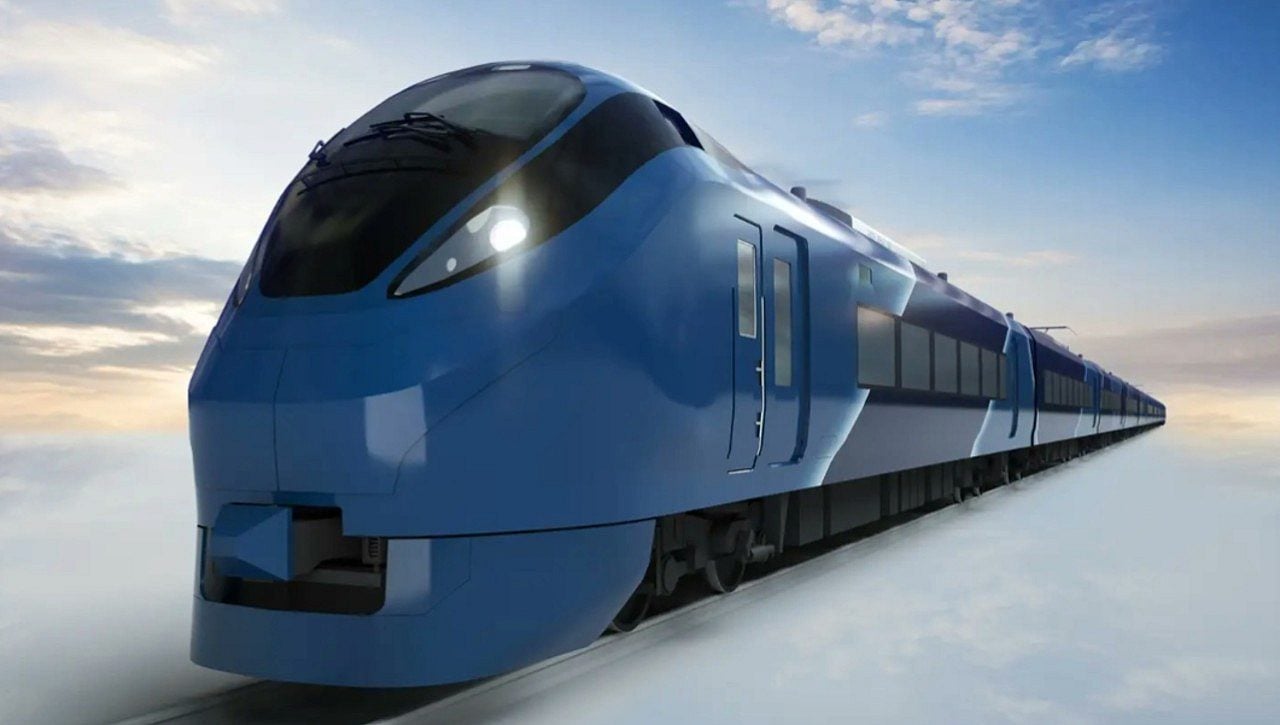
Japanese rail operator JR East has confirmed the launch of its newest overnight express train, officially named Luna Azul. The train is expected to begin commercial operations in April 2027, connecting Shinagawa station, in Tokyo, to Aomori prefecture, located in the northern region of the country. The project marks the return of regular long-distance night trips on the company’s network.
The initiative seeks to combine the nostalgia of old railway travel with the modernity demanded by today’s passengers. The chosen name, which means blue moon in Spanish, reflects the intention of offering a welcoming and high-quality atmosphere during the early hours of the morning. The operator plans to attract both the domestic public and international tourists interested in exploring the local landscapes and culture in an immersive and continuous way.
The concept behind the new night train and the heritage of Blue Trains
Luna Azul’s design and proposal function as a direct homage to the historic Japanese night trains, popularly known as Blue Trains. These vehicles dominated long-distance transportation in Japan for decades, long before the massive expansion of the high-speed network. JR East decided to reuse and modernize the E657 series wagons, which currently operate on the Joban Line. This rigorous structural adaptation allows conventional seats to be transformed into rest spaces suitable for extended trips.
Engineers and designers work on the complete redesign of the interior of the trains to guarantee the required standard. The color blue will be predominant in the external and internal visual identity, reinforcing the connection with the night sky and the country’s railway heritage. The central objective is to provide a travel experience where the journey itself becomes a fundamental part of the passenger’s vacation. The company wants to overcome the simple function of transport between two different geographic points.
Internal structure focuses on private cabins and accessibility
The configuration of the cars prioritizes the absolute comfort and privacy of customers throughout the night journey. The train will abandon the open seating format in favor of closed compartments, ensuring a silent and exclusive environment. Technical modifications include the installation of flat beds, adjustable lighting systems and large windows for viewing the landscape at dawn.
- Maximum capacity of 125 passengers per trip in standard configuration.
- Private cabins designed to accommodate one to four people.
- Exclusive lounge car dedicated to food and beverage service.
- Rooms fully adapted for wheelchair users.
The lounge car will function as the main gathering point for the composition during waking hours. In this space, travelers will be able to purchase meals prepared with regional ingredients and a variety of drinks. The inclusion of completely barrier-free infrastructure demonstrates the company’s alignment with contemporary accessibility standards. People with reduced mobility will be able to complete the journey in complete autonomy, safety and comfort.
Planned routes include long trips and short winter itineraries
Luna Azul’s operational schedule varies according to the seasons and the specific tourist demand of each period. During spring and autumn, the train will run the entire route between Shinagawa and Aomori, traveling along the coast and mountainous areas. The estimated total travel time varies between 12 and 15 hours. Departures take place at night, arriving at the final destination in the morning of the following day. The initial frequency will be one to two round trips per week.
Planning undergoes significant changes during the harsh winter months. To avoid the impacts of heavy snowfall in the north and focus on hot spring destinations, the route will be strategically shortened. The train will depart from Shinagawa towards tourist areas in Gunma Prefecture, operating with a reduced formation of seven cars. In this specific seasonal configuration, capacity increases to 150 passengers. Travel frequency can reach up to six weekly departures.
Corporate strategy aims to boost tourism in the Tohoku region
The development of this service is part of JR East’s Transformation 2027 strategic plan. The corporate document sets out clear guidelines to diversify the company’s revenue sources and revitalize regional rail lines facing population decline. The introduction of an attractive night train serves as a primary tool to decentralize tourist flow. The company seeks to take visitors from the densely populated capital to provinces that depend economically on the service and hospitality sector.
The Tohoku region, located in the northeast of the main island of Honshu, has great untapped potential for mass tourism. The area is nationally recognized for its rich cuisine, traditional festivals, preserved nature and centuries-old hot spring resorts. The train operator is betting that the ease of boarding in Tokyo at night and waking up directly in the tourist center will encourage longer leisure trips. The local economic impact is one of the project’s priorities.
Cost forecast and ticket sales model
Luna Azul’s tariff structure is still undergoing final definitions, but the board has already indicated the expected price level for the public. The ticket price should be close to the sum of a bullet train ticket in Green Car class with additional bed fees. As a current commercial reference, a Shinkansen trip between Shinagawa and Shin-Aomori costs approximately 24,180 yen. The new night service will require a similar or slightly greater financial investment from the passenger.
Unlike common urban trains, tickets will not be sold mainly through automatic machines at stations. JR East plans to sell tickets primarily through packages organized by partner travel agencies. This business model facilitates the joint sale of accommodation, local tours and rail transport. The tactic guarantees a more stable occupancy rate throughout the year. The company will conduct rigorous operational testing over the next few months before opening the booking system to the general public.