

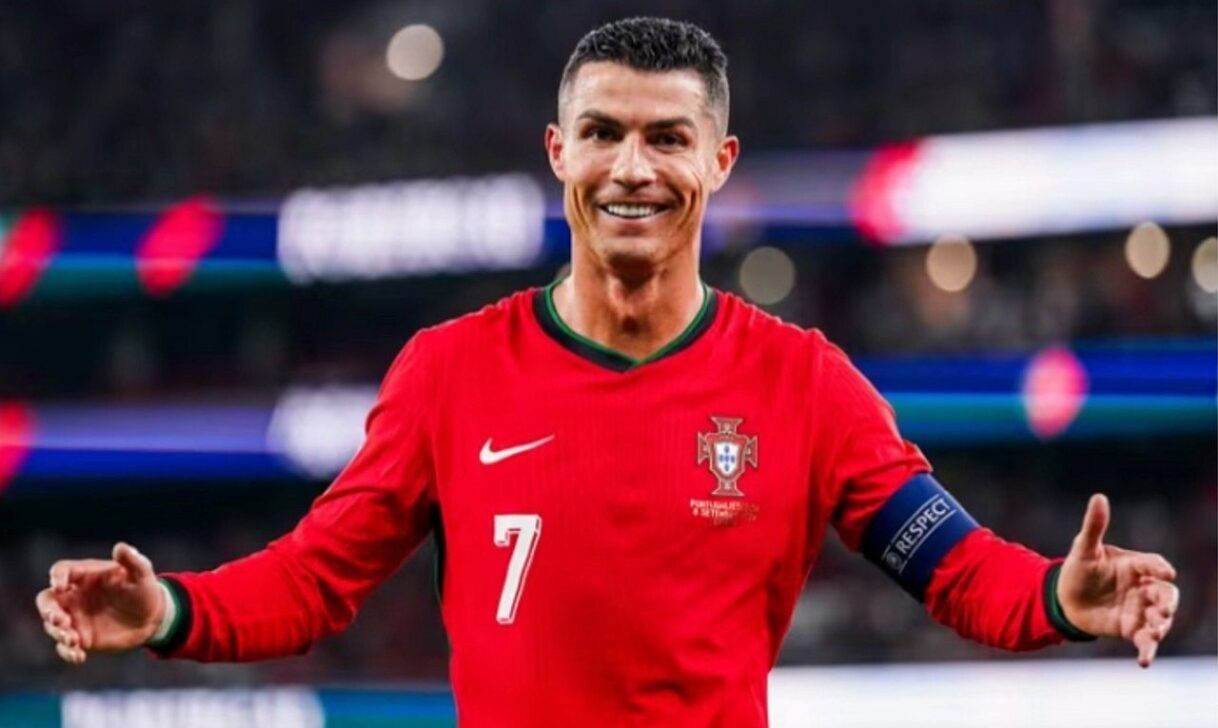
Striker Cristiano Ronaldo took to the field last Wednesday, June 17, 2026, in Portugal’s debut against the Democratic Republic of Congo for the 2026 World Cup, reaching a new milestone in his career. The event marked his sixth participation in the World Cup, equaling the records of Argentine Lionel Messi and Mexican Guillermo Ochoa as the players with the most appearances in the tournament.
However, this is not the Portuguese’s only notable achievement. The previous year, Cristiano Ronaldo also consolidated an unprecedented feat for a football athlete: he became a billionaire. According to Bloomberg index projections, his net worth reaches an estimated US$1.4 billion.
Currently 41 years old, Ronaldo remains active on the professional football scene and maintains his position as one of the most influential personalities in global sport. His financial peak was boosted significantly following his transfer to Saudi Arabia’s Al-Nassr in 2023, a contract which reportedly exceeded $200 million annually.
However, to understand the trajectory of a young man born on the Island of Madeira, in Portugal, until he reached such a level, it is necessary to revisit his origins: a youth marked by deprivation and a career shaped by rigorous discipline and a singular ambition.
The challenges of Cristiano Ronaldo’s humble childhood
Born in 1985 on Madeira Island, a Portuguese territory located in the Atlantic Ocean, Cristiano Ronaldo dos Santos Aveiro is the youngest of four brothers. His mother, Dolores Aveiro, worked as a cook and cleaner, while his father, Dinis Aveiro, was a gardener at the city hall. For much of his life, Dinis faced problems such as depression and alcoholism.
Ronaldo spent his childhood in a modest house, sharing a room with his brothers, in a period of financial hardship. In several interviews, he reported that he and his brothers often waited outside a McDonald’s in the city, hoping to receive the hamburgers left over at the end of the day.
Years later, his mother would reveal that she had considered terminating Cristiano Ronaldo’s pregnancy, worried about the lack of financial means to raise another child.
His contact with football began early. His father, who worked part-time as a wardrobe manager for Andorinha, a local club, was where Ronaldo began his journey in sport at the age of seven. His talent quickly stood out.
In less than a year, he won his first individual trophy in a children’s championship, being named the best player. Despite his ability, he had difficulty controlling his emotions on the field.
According to his mother, Dolores, Ronaldo became easily irritated and cried when his teammates did not pass the ball to him or did not play the way he wanted, which earned him the nickname “Chorão”.
At the age of nine, the Portuguese left the island’s children’s competitions and transferred to Nacional, the biggest club in Madeira. The transaction was carried out with the delivery of 20 balls and equipment for the children’s team.
At the age of 12, he took a decisive step in his life. After passing tests at Sporting, in Lisbon, he moved alone to the Portuguese capital. Missing his family and teasing his colleagues due to his Madeiran accent made this period “one of the most arduous of his youth”, according to the player himself.
Two years later, Ronaldo was expelled from school for throwing a chair at a teacher. According to his report, the teacher had made a comment about his family’s financial condition. The incident marked the end of his school life, and with the support of his mother, he decided to abandon his studies to dedicate himself full time to football.
The following year, Ronaldo was diagnosed with a heart problem that almost ended his career: his heart beat irregularly and accelerated even at rest. To save his career, he underwent surgery. Days after the procedure, I was back to training.
This episode highlighted a characteristic that would define his career: an almost obsessive discipline in relation to football.
Ronaldo’s discipline and rise in football
In 2002, at the age of 17, Cristiano Ronaldo rose from the youth ranks to Sporting’s main team. His talent soon attracted the attention of clubs in England. Liverpool and Arsenal had scouts in Portugal, following Ronaldo’s games weekly.
Arsène Wenger, then Arsenal coach, even took the player and his mother to London, in an attempt to convince him to sign with the English capital club. However, the agreement did not materialize.
In August 2003, the Portuguese signed with Manchester United, in a deal worth £12 million (equivalent to around R$56 million at the time), making him the most expensive teenager in the history of English football.
The signing came a week after a friendly between Sporting and Manchester United, in which Ronaldo gave such an impressive performance that United’s players asked Alex Ferguson to sign him.
The Portuguese signed a five-year contract with Manchester United, with an annual salary of more than £1.5 million (R$7 million at the exchange rate at the time). There began Cristiano Ronaldo’s transformation from a promise into a global star.
Upon arriving at Manchester United, Cristiano Ronaldo was far from the physical image that would establish him as one of the most recognized athletes globally. He had acne, wore braces and was seen as a talented young man, but still in the process of development.
It was during this period that he began to develop the almost obsessive training routine that would mark his career. He started training with the club’s physical trainer, to whom he confided, in the first few weeks, that his goal was “to become the best player in the world”.
His teammates remember that Ronaldo was the first to arrive at training and the last to leave. He also never missed training sessions, even when faced with unforeseen circumstances.
In 2009, Ronaldo was involved in a car accident, crashing a Ferrari he was driving on his way to training. The vehicle, just two days old, was completely destroyed, but the player emerged unharmed.
According to reports, he abandoned the Ferrari at the scene and took a ride, as he needed to be at training in less than an hour and “didn’t have time” to wait.
In addition to working on his physique, Ronaldo also began to develop his mind, learning not to be easily provoked by opponents.
At Manchester, he quickly became the most dominant player in the Premier League. In the 2007–2008 season, he scored 42 goals for the club, contributing to victories in the Premier League and Champions League, achieving the “European double”.
At 23, he received his first Ballon d’Or, an award given to the best player in the world. His salary began to reflect his status: he began to receive more than £6 million per year (around R$18 million), which corresponded to around £120,000 (R$360,000) per week.
However, not everyone around him witnessed this phase of ascension. His father passed away in 2005, victim of liver disease related to alcoholism. During this period, Ronaldo found support in Manchester United manager Alex Ferguson, whom he still refers to as a “football father”.
In his autobiography, Ferguson described Cristiano Ronaldo as the most talented player he ever coached, surpassing all other great Manchester United athletes.
Real Madrid’s peak period and financial expansion
At this stage of his career, salary no longer represented Cristiano Ronaldo’s main source of income. His sponsorship contracts grew quickly and began to compete with the gains made on the field.
Nike, for example, began sponsorship in 2003, shortly after his arrival at Manchester United. The first deal yielded a few hundred thousand pounds a year, but six years later, this amount had already reached around £9 million annually (R$25.6 million).
At the same time, Ronaldo accumulated agreements with brands such as Coca-Cola, Suzuki, the FIFA franchise games, Xerox and an Indonesian energy drink manufacturer.
The enhancement of his public image accompanied his evolution within the four lines, and the Portuguese striker began looking for a new club where he could stand out even more.
In 2009, after six seasons at Manchester United, Cristiano Ronaldo was sold to Real Madrid for €93 million (R$236 million at the time). At that time, this was the largest amount ever paid for a player transfer. Real Madrid agreed to pay Ronaldo a salary of €11 million (R$28 million at the time) per year, as reported.
It was in Madrid that Ronaldo reached his sporting peak. He won four Ballon d’Ors between 2013 and 2017, became one of the greatest scorers in the history of football and starred in one of the sport’s biggest rivalries with Argentine Lionel Messi, then a Barcelona player.
In 2016, he was named the highest-paid athlete in the world, according to Forbes. His contract with Real Madrid paid him approximately €15 million per year (R$52.6 million) between salaries and bonuses, while his commercial agreements were already estimated at around €30 million (R$105 million) per year.
In addition to Nike, sponsors such as TAG Heuer, dietary supplement companies and poker platforms associated their brands with the Portuguese image.
It was during this period that Cristiano Ronaldo understood that he had built something much more than a sporting career. His name had become a global brand, capable of generating revenue that went beyond the pitch and paved the way for the ventures that he would expand in the following years.
Consolidation of the CR7 brand and the business empire
In 2013, Cristiano Ronaldo launched his own brand, CR7, which combines the initials of his name and the number 7 on his shirt. The project had a modest start, selling men’s underwear for around US$30 (R$70), but quickly expanded to footwear, clothing, perfumes and other licensed products. In the same year, the Portuguese opened a museum on his home island, Madeira, dedicated to his career and the trophies he won.
In subsequent years, the brand entered new sectors. Ronaldo invested in hotels and a chain of gyms, almost always through partnerships and licensing agreements. Unlike traditional companies, a large part of the value of the CR7 brand is directly linked to the player’s public image. The greater your global relevance, the greater your sales potential and attraction of commercial partners.
At the end of 2016, Cristiano Ronaldo secured a real “gold mine” by signing a lifetime contract with Nike. Before him, only Michael Jordan and LeBron James had received similar deals from the company. Although the values have never been officially disclosed, sports market experts estimate that contracts of this type can generate more than US$1 billion over their lifetime.
The partnership also included performance bonuses. Ronaldo received millionaire awards after winning the Ballon d’Or in 2016 and repeating the feat in 2017. For Nike, the investment was justifiable: the Portuguese was becoming one of the biggest phenomena on social media.
In 2018, he surpassed Selena Gomez and became the most followed person on the planet on Instagram, currently having 666 million followers, further expanding his commercial power. He was also the first person to reach half a billion followers on the platform.
Return to Manchester United and the phase in Saudi Arabia
Ronaldo’s lifetime deal with Nike, however, was structured through a specific ten-year contract that, among other conditions, required the player to continue playing for a top-level club. On average, professional football players retire around age 35. With that contract, he still had years ahead of him on the field.
So, in 2018, at the age of 33, he left Real Madrid and transferred to Juventus. The Italian club paid €112 million for the deal (R$500 million), the largest amount ever paid for a player over 30 years old. His new contract guaranteed the Portuguese an annual salary of around €30 million (R$134 million at the exchange rate at the time).
The economic impact of the contract was immediate. In less than 24 hours after the announcement, Juventus gained approximately five million new followers on social media. In Ronaldo’s first season, the club’s revenue increased by around €58 million (R$260 million), and t-shirt sales practically doubled.
However, on the field, his time in Italy did not live up to expectations. After three seasons, Ronaldo returned to Manchester United in 2021. The English club paid around €15 million (R$91 million) for the transfer, an amount considerably lower than that paid by Juventus three years earlier.
At 36 years old, Ronaldo still performed at a high level, but he no longer dominated matches with the same frequency as in his glory years. At the same time, internal conflicts intensified.
At the end of 2022, the Portuguese gave an interview in which he publicly criticized coach Erik ten Hag, former teammates and the club’s board. A few days later, Manchester United announced the termination of his contract, by mutual agreement.
In December 2022, during the World Cup in Qatar, Ronaldo was no longer the team’s main star. Research in Portuguese newspapers even suggested that the national team coach should leave him on the bench. In Portugal’s last two games, he was a substitute and left the field crying after the elimination of the Portuguese team.
It seemed like the end of Cristiano Ronaldo’s career, but the player’s most lucrative contract was yet to come, establishing him as a billionaire.
Cristiano Ronaldo: the player becomes football’s first billionaire
In 2023, at the age of 37, Cristiano Ronaldo signed a contract worth more than US$200 million (R$991 million) per year with the Saudi club Al-Nassr and moved with his family to Riyadh, Saudi Arabia.
This change was part of the country’s broader strategy to attract big names in world sport, raising the visibility of its league, in a similar way to what the United States did with Lionel Messi, and expanding its international influence. The signing generated criticism, as Saudi Arabia is accused of violating several human rights, but this did not seem to influence the player.
In 2025, he renewed that contract with Al-Nassr, which, according to reports, is now worth US$400 million (R$2.2 billion). He also acquired a 15% stake in the club, solidifying him as football’s first billionaire, with an estimated fortune of $1.4 billion, according to Bloomberg.
A select group of athletes have achieved this milestone to date, but Cristiano Ronaldo stands out even among this elite for a specific reason: the majority of his fortune was built on what he accomplished on the field. Unlike many billionaire athletes who have accumulated wealth predominantly through sponsorships, stakes in companies or investments (such as Michael Jordan, whose partnership with Nike was the main driver of his fortune), in Ronaldo’s case, although his business and advertising contracts are huge, his salary as a player remains the basis of his wealth.
This does not mean that he has ignored the world of business. The Portuguese receives around US$18 million (R$101 million) annually from Nike, expanded his CR7 hotel chain and invested in a chain of hair transplant clinics. He exemplifies how fame gained in sport can be converted into brands, companies and new sources of income.
At some point, Ronaldo will say goodbye to the pitch — this may even be his last World Cup. However, his career already offers a valuable lesson: that of an athlete who managed to transform sporting performance into a financial empire with global reach.