Rare passage of an asteroid measuring more than 1 km close to Earth this Saturday offers a chance for observation
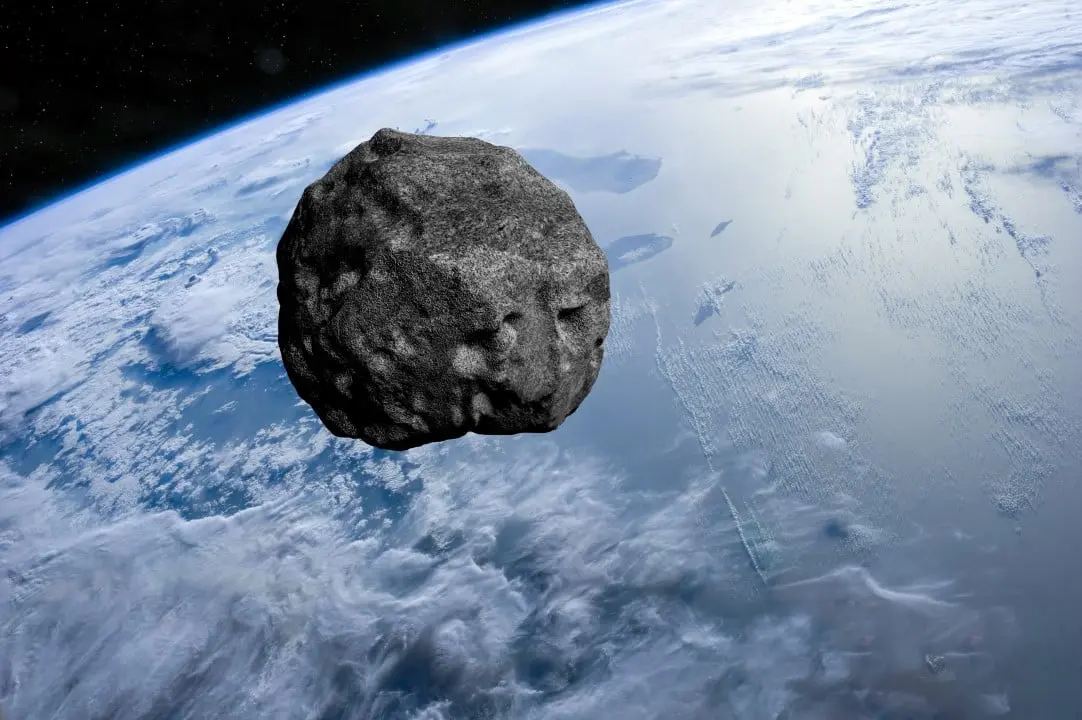
An asteroid of considerable dimensions will make a safe approach to Earth this Saturday (27), an event classified as rare by experts. Known as (152637) 1997 NC1, the celestial body, which can exceed 1 km in diameter, will reach a distance that will allow it to be viewed through amateur telescopes or high-power binoculars, according to information from the European Space Agency (ESA).
The proximity of the space object, although notable, does not pose any risk to the planet. The European Space Agency (ESA) ensures that the asteroid does not have a collision trajectory with Earth. At 8:14 am (Brasília time), at the closest point, the distance will be approximately 2.56 million kilometers, a measurement equivalent to approximately 6.66 times the distance between Earth and its natural satellite.
The (152637) 1997 NC1 travels at a speed of almost 9 kilometers per second. Although the exact dimensions remain imprecise, projections suggest that its diameter varies between 750 and 1,650 meters – the equivalent of stacking two to five Eiffel Towers, offering a comprehensible scale of its size.
Determining its size is based on the reflection of sunlight from its surface. The uncertainty regarding the asteroid’s lightness or darkness explains the margin of variation in estimates of its dimensions.
The discovery of 1997 NC1 occurred in 1997, through the NEAT (Near-Earth Asteroid Tracking) program, an initiative dedicated to identifying and monitoring objects that approach Earth’s orbit.
This celestial body is classified as a Near-Earth Object (NEO), a category that covers asteroids and comets whose trajectories come considerably closer to our planet.
More specifically, 1997 NC1 belongs to the Aten type, a group of asteroids that, most of the time, orbit the Sun within Earth’s orbit, and may occasionally cross the path of our planet.
Due to its size and orbital route, the asteroid also falls into the “potentially dangerous” category. This terminology, however, is more of a warning for constant monitoring than an indication of an imminent threat. It is used to identify large asteroids with orbits close to Earth, without implying a collision course.
The European Space Agency (ESA) reaffirms that, in the case of 1997 NC1, the probability of impact with Earth is categorically zero.
Guidelines for observing asteroid 1997 NC1
Observation of the asteroid will be viable both during the period of greatest proximity and after its removal, however, it will not be noticeable to the naked eye. For those who wish to follow the phenomenon, equipment such as small telescopes or powerful binoculars will be essential, in places with minimal light pollution, far from urban centers.
Viewability will depend on geographic location on the planet. ESA indicates that observers from the Northern Hemisphere will enjoy better conditions during the approach. In the Southern Hemisphere, viewing opportunities increase after the asteroid begins to move away from Earth.
However, the brightness of the Moon may make it difficult to observe the celestial object.
Leia Também

VAR decides to cancel Colombia’s goal against Portugal after a thorough analysis of the tip of the boot, impacting the classification in Group K of the 2026 World Cup

Lautaro Martínez simply scores a great penalty in Jordan x Argentina at the 2026 World Cup

Rota officer and family member of Eloá Pimentel is ambushed by gunfire at a traffic light in ABC Paulista
“The passage of a celestial body of these dimensions close to Earth happens every few years, but the presence of the bright and close Moon can hinder observation at the point of closest approach,” said Juan Luis Cano, member of ESA’s Planetary Defense Office, in a released statement.
Astrophysicist Gianluca Masi detailed that the asteroid should reach its peak brightness around 9pm on Saturday (27th), Brasília time, reaching a magnitude of 10.1.
In astronomical terms, magnitude is a metric that quantifies the luminous intensity of celestial bodies. Lower values indicate greater brightness. Although objects of magnitude 10 are not generally visible without instruments, they can be detected with good amateur telescopes.
For those who do not have the necessary equipment, one option is to track their ticket online. The Virtual Telescope Project plans to host live broadcasts on June 26th and 27th using images captured by its telescopes.
The frequency of asteroid approaches and the history of impacts
Although it can generate apprehension, the passage of asteroids close to Earth is a common event. The Solar System is abundantly filled with these rocky bodies, remnants of the planetary formation process that occurred approximately 4.6 billion years ago.
Most asteroids are found in the main belt, an area between the planets Mars and Jupiter. However, some of these celestial bodies deviate and follow routes that bring them closer to our planet.
What gives the 1997 NC1 particular interest is its remarkable size. According to ESA, an object with such dimensions only occurs every few years, making this Saturday’s passage a unique opportunity for researchers and astronomy enthusiasts to observe a large asteroid.
Large-scale impact events, however, are significantly rarer. The best known occurred around 66 million years ago, when an asteroid collided with the region that today corresponds to the Gulf of Mexico, contributing to the extinction of non-avian dinosaurs.
Another notable incident is the Tunguska Event, recorded in 1908. On that occasion, a space object exploded over a remote area of Siberia, Russia, devastating millions of trees over an area of approximately 2,000 square kilometers.
For this reason, space agencies maintain continuous monitoring of asteroids near Earth. The main objective is to identify potential risks well in advance, ensuring planetary security.