

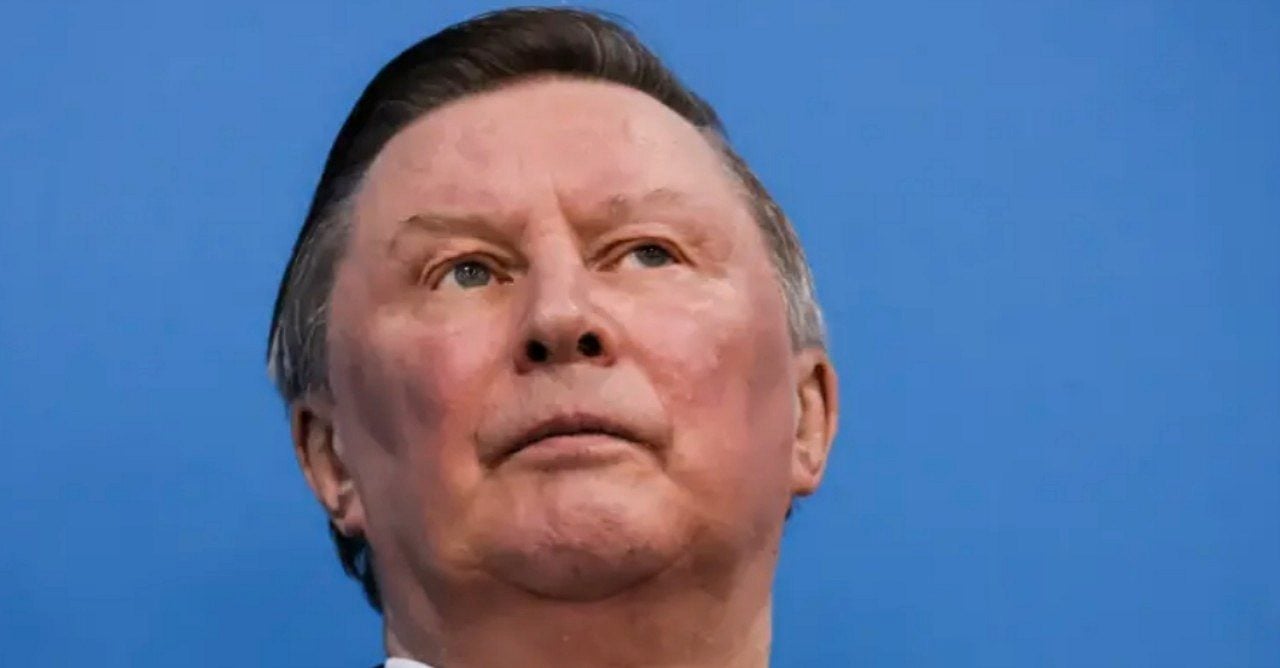
Moscow’s political scene lost one of its longest-serving strategists with the death of Sergei Ivanov, at the age of 73. The state news agency RIA Novosti confirmed the death of the former head of the Kremlin administration and former Defense Minister, ending a decades-long trajectory directly linked to the corridors of Russian power. The veteran’s departure marks the end of an era for the country’s national security brass, where he has served as a central player in formulating strategic policy since the collapse of the Soviet Union. The news has profound repercussions in diplomatic circles, considering the historical weight that his figure represented in the transition from the old Soviet guard to the current governance model established in the Russian Federation.
Political trajectory marked by influence in the governments of Boris Yeltsin and Vladimir Putin
Throughout his extensive public life, the officer held very high-ranking positions in the Russian state bureaucracy, demonstrating a remarkable capacity for political adaptation in times of crisis. During former president Boris Yeltsin’s turbulent administration, marked by economic instability and separatist challenges in the 1990s, he assumed the role of secretary of the Security Council. This post was vital for maintaining the nation’s internal order and for restructuring the security forces after the dismemberment of the communist bloc. This initial experience within the government’s hard core allowed him to consolidate his influence and build important bridges between different political factions, ensuring his stay in power even after changes of command in the country.
His definitive rise came under the tutelage of Vladimir Putin, who appointed him to head the Ministry of Defense in March 2001, a period in which Russia was desperately seeking to modernize its Armed Forces. The strategist remained in charge of the military portfolio until February 2007, dealing with the developments of internal conflicts and the need to update the country’s industrial-military complex in the face of technological advances from the West. He was later elevated to the position of deputy prime minister, establishing himself as one of the main architects of Moscow’s security doctrine. However, the power dynamics underwent a significant change in 2016, when the current Russian president removed him from the Security Council, signaling a transition in his level of protagonism within the government’s inner circle and opening space for a new generation of advisors.
Early career in intelligence services and historical ties with the KGB
Born in Leningrad, now Saint Petersburg, where he was born on January 31, 1953, the former minister built his professional base behind the scenes of Soviet espionage during the height of the Cold War. Joining the KGB, the Soviet Union’s feared security and intelligence agency, took place in 1975, placing him in an environment of extreme demand, discipline and absolute secrecy. Between 1976 and 1977, he served directly in the KGB Directorate responsible for Leningrad and its vast metropolitan region, acquiring counterintelligence operational skills that would shape his vision of the State for the rest of his life. His rigorous training in the secret services gave him a cold analytical perspective, a trait highly valued by Kremlin leaders.
It was exactly at this time of regional activity that the officer’s paths crossed with those of a young Vladimir Putin, who also served in the same intelligence unit in the former Leningrad. This initial contact forged a lasting personal and professional alliance, becoming the foundation of his future political climb in the Russian capital after the fall of the Berlin Wall. The mutual trust established in the corridors of the KGB proved to be the determining factor for him, decades later, to be chosen to lead the country’s armed forces in moments of critical restructuring. The loyalty built during his spying days ensured that he always had a direct channel of communication with the head of state, regardless of the formal position he held.
Main milestones and strategic functions assumed in the structure of the Russian State
To understand the extent of the veteran’s influence on the formulation of the contemporary Russian state, it is necessary to observe the variety of critical portfolios he administered over almost half a century of public service. Its activities were not limited to just the military field, extending to civil coordination, behind-the-scenes diplomacy and the Kremlin’s long-term strategic planning. His administrative versatility made him an indispensable figure in Moscow’s bureaucratic machine.
- Security Council management during the Russian democratic transition, helping to institutionally stabilize the country amid severe economic crises.
- Command of the Ministry of Defense, where he led billion-dollar initiatives to renew the military arsenal, improve troop conditions and restructure the post-Soviet military contingent.
- Acting as deputy prime minister, coordinating large-scale infrastructure policies and promoting industrial development at a national level.
- Head of the Presidential Administration, controlling the flow of sensitive information and the daily decisions of Vladimir Putin’s executive office.
Change of focus to environmental issues and voluntary removal from power
In the most recent years of his public life, the former head of Defense assumed responsibilities focused on civil areas and sustainable development, gradually distancing himself from the military and heavy security core. From 2016, he held the role of Special Representative of the President of Russia for Environmental Protection, Ecology and Transport, dealing with complex challenges of logistics infrastructure and preservation of vast natural territories. Before taking on this diplomatic and ecological mission, which many international analysts saw as an honorable way of maintaining a historic ally in government without the strain of daily politics, he had commanded the Office of the President for several years, a position of immense logistical and administrative power.
The definitive end of his journey in the public sector occurred very discreetly at the beginning of this year, marking the absolute end of his official obligations to the State. On February 4, 2024, a few weeks before his death was confirmed by the state press, the politician presented his voluntary resignation from his position as environmental representative. This final decision sealed the retirement of one of the most influential and enigmatic figures in Russia’s recent history, closing an important chapter in the security, intelligence and administration policy of the largest country in the world by territorial extension.