NASA scientists uncover the age of comet 3I/ATLAS, the oldest object found in the solar system
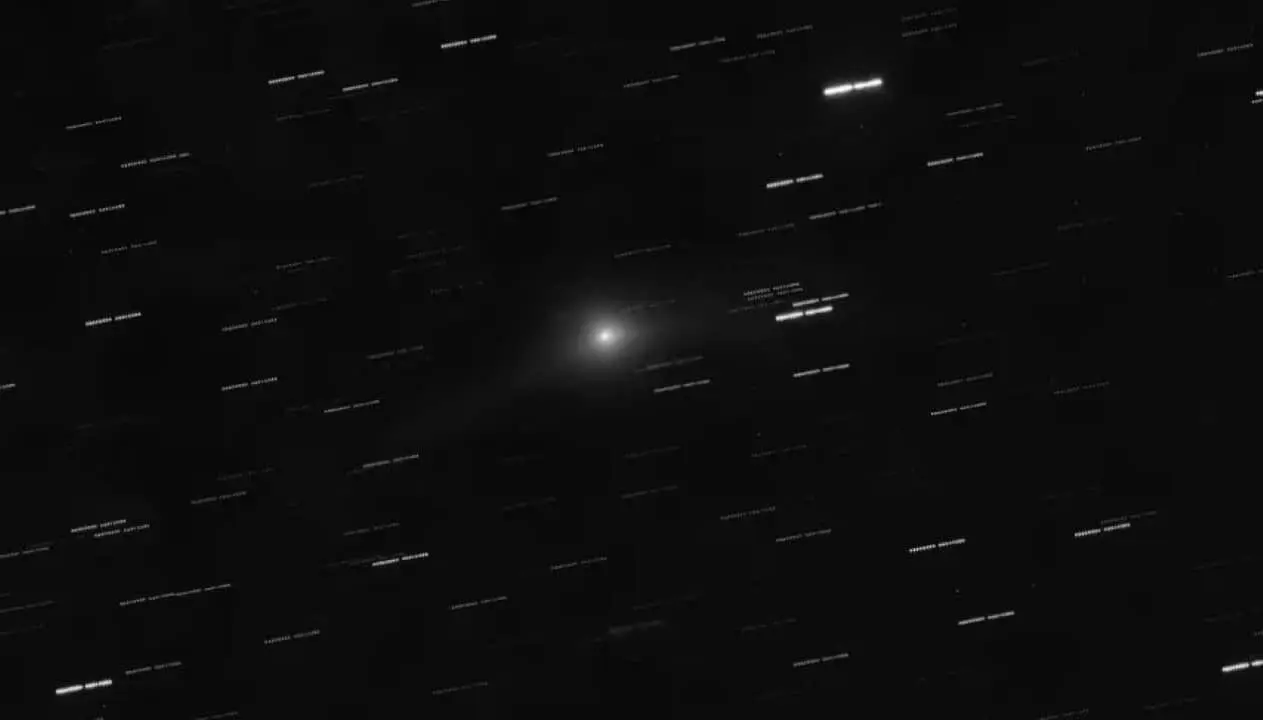
A team of researchers led by Martin Cordiner, an astrochemist and planetary scientist at NASA’s Goddard Space Flight Center, this week announced a pivotal discovery: the interstellar comet 3I/ATLAS is the oldest object ever identified in the solar system. Its formation is estimated to have occurred between 10 and 12 billion years ago, and its unique chemical composition offers new insights into the conditions existing in early planetary systems, as detailed in an article recently published in the journal Nature.
Cordiner explained that 3I/ATLAS, at approximately 2.6 kilometers in diameter, is probably the oldest space rock known to have traveled through our system. He also highlighted the rarity of the object, being only the third interstellar body to be detected in this space region.
Evidence suggests that the comet developed in an extremely cold environment, with temperatures around -243 degrees Celsius. This characteristic significantly differentiates it from the formation conditions of Earth and other planets in our system, which emerged around 4.5 billion years ago. “We have never observed an object like 3I/ATLAS before,” said Cordiner.
The analyzes were conducted using the James Webb Space Telescope, which allowed scientists to investigate the isotope ratio. These are variations of chemical elements such as hydrogen and carbon, and their measurements were crucial to understanding the origin of comet 3I/ATLAS.
The hydrogen isotopes collected provided essential information about the radiation and temperature of the environment where 3I/ATLAS took shape. At the same time, carbon isotopes served as indicators of the composition of the interstellar gas cloud that gave rise to both the comet and its original planetary system.
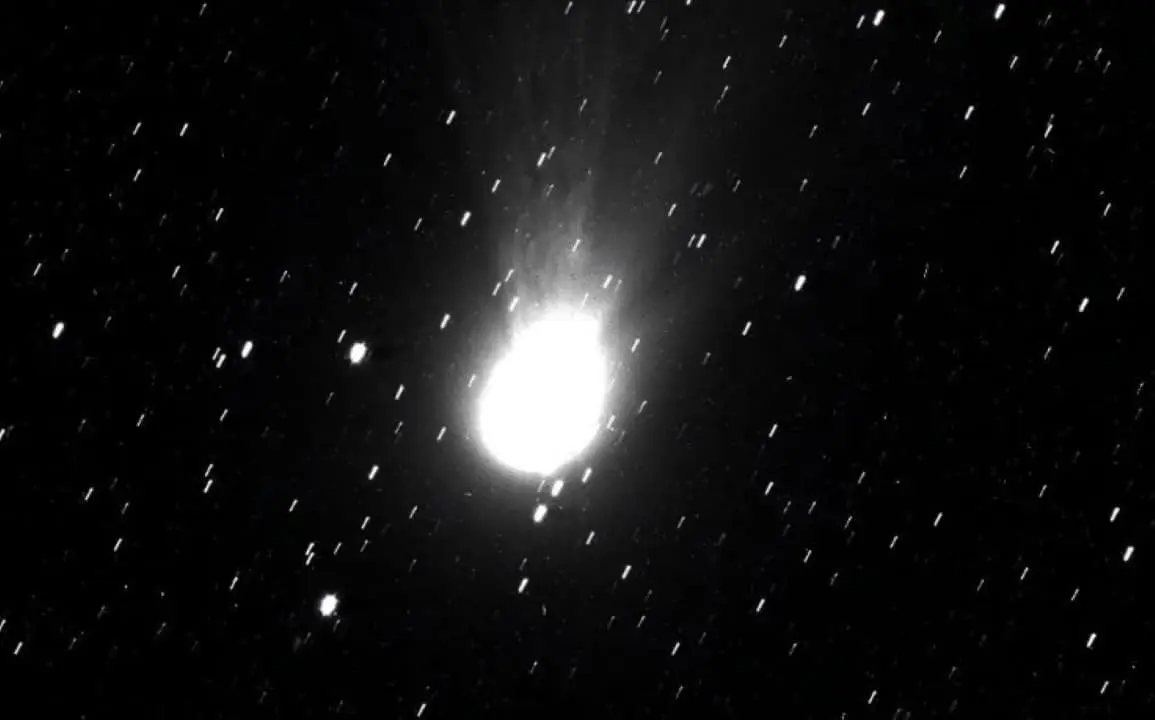
One of the most notable findings was the presence of about 30 times more deuterium, an isotope of hydrogen, in the comet’s water compared to other comets in our solar system. The proportions of carbon isotopes also showed marked differences in relation to those found in objects in our own system and in interstellar clouds.
For scientist Martin Cordiner, the most likely interpretation is that 3I/ATLAS is a remnant fragment of the planetary formation process that occurred around a star different from ours.
“Our observations with the James Webb Space Telescope reveal that the planet-forming environment of the 3I/ATLAS home system was remarkably distinct from our own solar system,” Cordiner said. He added that “it was probably colder, with a lower abundance of metals, and subject to more intense ultraviolet and cosmic radiation.”
Leia Também

VAR decides to cancel Colombia’s goal against Portugal after a thorough analysis of the tip of the boot, impacting the classification in Group K of the 2026 World Cup

Lautaro Martínez simply scores a great penalty in Jordan x Argentina at the 2026 World Cup

Rota officer and family member of Eloá Pimentel is ambushed by gunfire at a traffic light in ABC Paulista
Despite the icy conditions far from its origin, 3I/ATLAS is surprising for being rich in organic molecules. Among them are compounds that contain carbon, hydrogen, nitrogen, oxygen and sulfur. Cordiner emphasized that this discovery “demonstrates that, even with a cold and distant origin, the volatile elements essential for life as we know it were abundant in this distant planet-forming disk.”
Analysis of the carbon composition of 3I/ATLAS points to its formation approximately 12 billion years ago, during a period of intense stellar creation in its region. Considering that the universe emerged about 13.8 billion years ago with the Big Bang, the age of 3I/ATLAS places it at a time when the cosmos was only about 13% of its current age, offering a rare window into the study of the universe’s primordial conditions.
Researchers speculate that the comet formed in the Milky Way, but its age does not exclude the possibility of an origin in another galaxy. Cordiner reasoned that although intergalactic distances are vast, “a fast-moving interstellar object might only take a billion years to get here from our closest galactic neighbors, the Magellanic Clouds.”
The ejection of 3I/ATLAS from its original planetary system may have occurred due to gravitational interactions with other planets. However, scientists also consider the possibility that the event was the result of some type of collision.
Comet 3I/ATLAS is the third interstellar object detected by humanity, following 1I/’Oumuamua, observed in 2017, and 2I/Borisov, discovered in 2019. Its passage continues to be a fascinating object of study for scientists and astronomers around the world.
Currently, the trajectory of 3I/ATLAS takes it towards the orbit of Saturn. The expectation is that it will surpass the orbit of Pluto, the dwarf planet, around 2029, and begin to leave the outer border of the solar system around the year 2035.
Despite some speculation regarding a more unusual extraterrestrial nature, researchers remain convinced that 3I/ATLAS is an object of natural origin. Cordiner stated that “good scientists are always willing to update their knowledge, but we evaluate the evidence for each hypothesis with great rigor.” He concluded by saying that, “in this case, the evidence was clear from the beginning that we were observing a comet-like object, and over time this interpretation was confirmed by subsequent observations.”