Scientists identify tenth species of walking shark with unique characteristics in Papua New Guinea
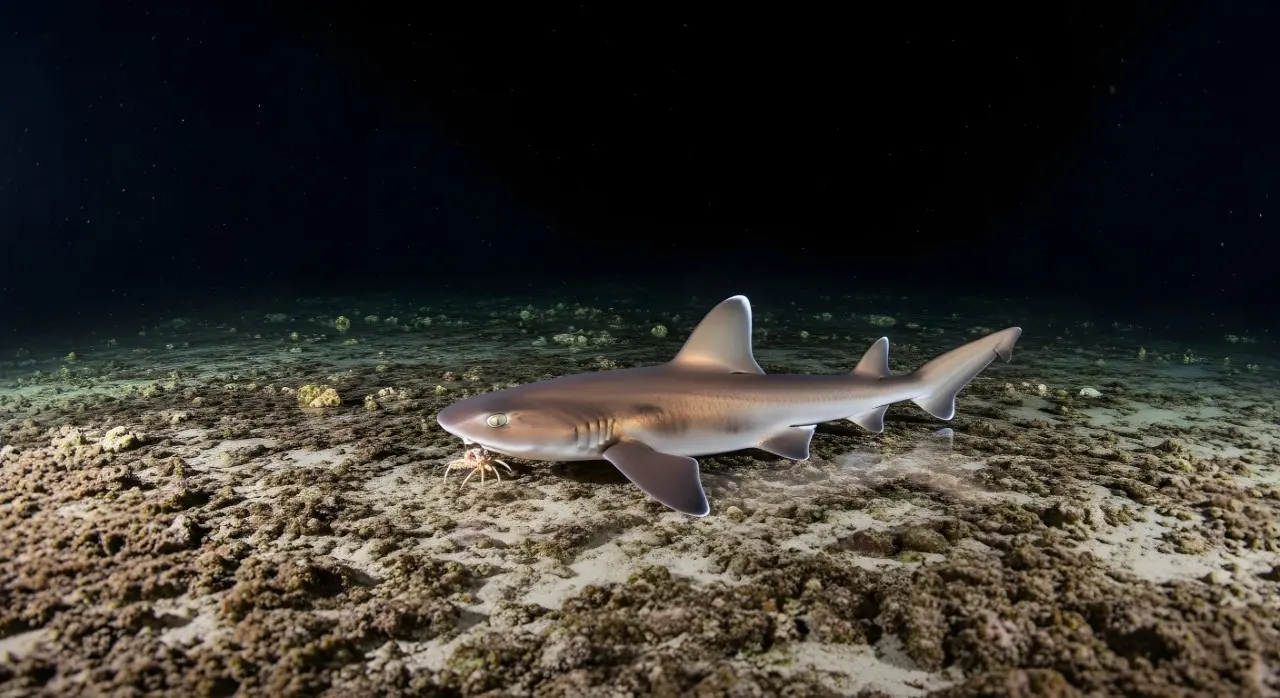
A new species of shark with the peculiar ability to “walk” has been identified in the waters of Papua New Guinea, now representing the tenth known species of this remarkable group of fish. The newly named Dudgeon’s walking shark stands out among its peers for a distinctive combination of physical and behavioral characteristics.
This unique specimen, which can reach up to one meter in length, was observed resting on colorful rocks on the seabed, displaying a pattern of dark brown spots and white dashes. His brown skin and thin, elongated build set him apart, especially due to the unique set of features and points that mark his body.
The idea of a shark moving on its fins may conjure up horror movie images for many, but the reality is quite different, as marine scientist Jessica-Ann Blakeway explains. She describes these animals as “the cutest sharks you’ve ever seen”, challenging the common perception about these sea creatures.
More on this story: Scientists reveal unprecedented shark with the ability to ‘walk’ found in the waters of Papua New Guinea
The discovery occurred during a night dive on a reef in Milne Bay, Papua New Guinea, when Blakeway and his team came across a walking shark with unusual markings. The specimen had “small white dashes along the body and many smaller brown dots,” a pattern distinct from the leopard-like spots seen on other species of walking sharks studied by the team.
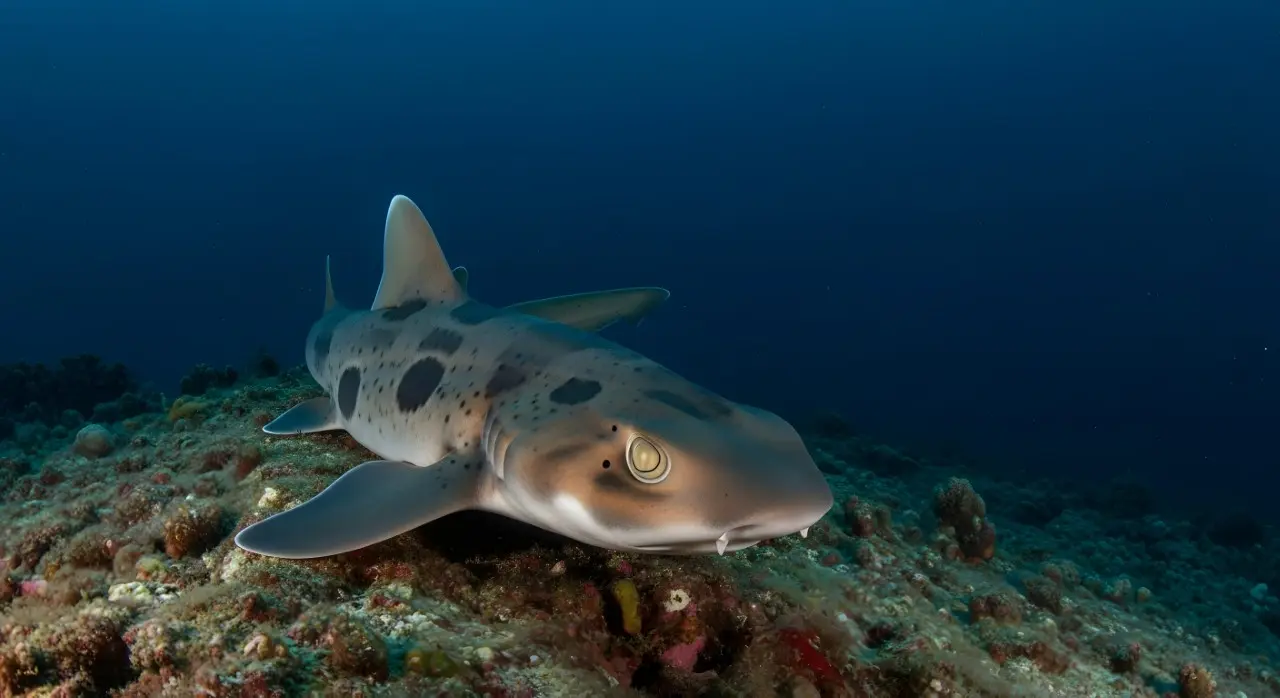
The name “walking shark” accurately describes the way these fish move along the seabed, propelled by their muscular fins. After the initial observation in March 2025, divers intensified their search on nearby reefs, finding 12 more specimens over two days. Subsequent genetic tests confirmed that the fish, named *Hemiscyllium dudgeonae*, represents a species new to science, being the tenth species of walking shark known and detailed on June 15 in the *Journal of the Ocean Science Foundation*. Interestingly, locals refer to this slow-moving shark as “kadedekedewa”, which can be translated as dog shark or lazy shark.
Despite the bad reputation sharks get, walking sharks are remarkably docile creatures that are easy to form a connection with, according to Blakeway. In addition to their peculiar form of locomotion using their pectoral and pelvic fins in a wave-like movement, these deep-sea inhabitants have an incredible adaptation: they are able to reduce their heartbeat and breathing to survive for hours out of the water. This ability allows them to hunt crustaceans, worms, and smaller fish that become trapped in shallow pools during low tide.
See Also

Learn how to identify intrusions on WhatsApp and avoid financial fraud

PlayStation 5 owners gain lifetime access to three great games

Russian Islam Makhachev dominates Ian Machado Garry and wins main fight at UFC 330
Learn more: Scientists discover seven new species of diamond frog in Madagascar after solving 12-year-old riddle
Marine scientist Christine Dudgeon of the University of the Sunshine Coast in Australia, a walking shark researcher for two decades, first spotted the fish with the unusual pattern during the expedition. In recognition of his contribution, the new species was named after him.
The discovery of *Hemiscyllium dudgeonae* occurred unexpectedly, during research aimed at mapping the distribution of two other species of walking sharks: the leopard walking shark (*H. michaeli*) and the papuan walking shark (*H. hallstromi*). Blakeway points out that, “as far as we know, and based on interviews with local communities, the species do not overlap”, indicating a distinct geographic distribution.
The research team suggests that tectonic activity in the region over millions of years was instrumental in isolating walking shark populations. However, due to their restricted distribution areas, these sharks are particularly vulnerable to the degradation of coral reefs and intense fishing pressure. Currently, five of the ten species of walking sharks are already classified as threatened with extinction on the International Union for Conservation of Nature (IUCN) Red List, an indication of the fragility of their ecosystems.
Jessica-Ann Blakeway warns that this vulnerability is not restricted to walking sharks. She emphasizes that “walking sharks are quite resilient, so if they are struggling… other marine species will be as well,” reinforcing the idea that the health of these species can serve as an important barometer for the overall condition of the oceans.