Researchers develop warning system to protect swimmers from the presence of sharks
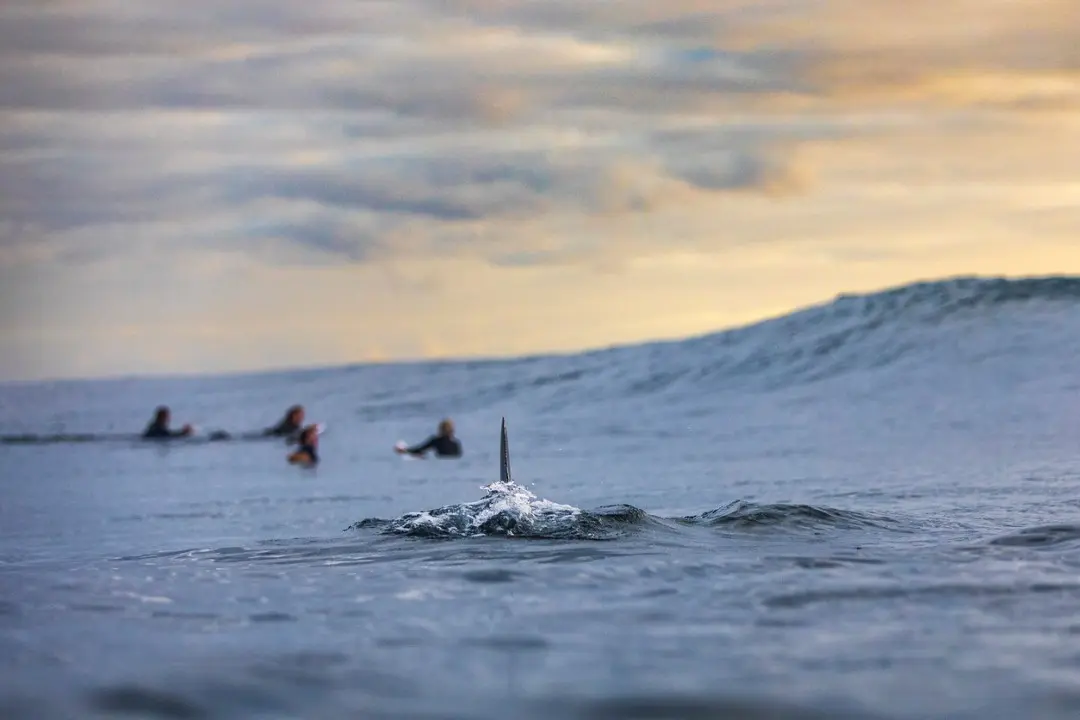
Scientists are working to develop a “shark prediction” system for the beach-going public. The initiative aims to provide information about the presence of these animals in the waters, similar to weather reports that warn about rain and temperature variations.
Off the coast of San Diego, California, leopard sharks are seen in abundance. The increasing occurrence of these animals is directly linked to the protection laws implemented in the 1990s and the warming of coastal waters, resulting in a greater number of encounters.
Growing up in Southern California, Douglas McCauley rarely encountered sharks during his water activities. According to him, the sighting of a single great white shark was such an unusual event that it made headlines on the local news.
However, decades later, the coastal scenario changed drastically with the arrival of new marine beings. Biologist Douglas McCauley, from the University of California at Santa Barbara, witnessed this transformation when he took his children to a surf camp near the institution, noticing fins of different sizes near the surf.
During the 20th century, shark populations faced serious environmental dangers and fought for their existence. The return of these animals generated mixed feelings in McCauley; While as a scientist he marveled at the evidence of a healthy marine ecosystem, as a father, the need to understand new water dynamics became urgent.
In 2020, McCauley instructed his laboratory team to begin a survey and categorization of white sharks seen off the coast. The goal was to develop a “sharkcast”, or “shark forecast”, to alert parents who take their children to the sea daily via text. Currently, the SharkEye research program sends emails and messages to those interested in shark conditions at Padaro Beach in Santa Barbara.
On the same topic: NGO reveals mutilation of live sharks by fishermen for fin trade
Douglas McCauley, a biologist at the University of California at Santa Barbara, is among several North American scientists who are dedicating efforts to developing methods to predict and notify swimmers about the presence of sharks.
McCauley and his team’s work represents one of the few research efforts in the United States focused on anticipating the location and timing of sharks’ likely appearance in coastal regions.
This ambition comes at a crucial time. Since the mid-1990s, shark populations around the world, in both the Pacific and Atlantic, have demonstrated a remarkable recovery. This resurgence is attributed to strict conservation legislation and, in part, to warming ocean temperatures, which create new challenges for human coexistence. At the same time, there is an increase in demand for recreational activities in coastal areas. The forecast of a super El Niño for this year also suggests a summer season with an even greater presence of these animals, making forecasting tools essential for safety and for reconciling the protection of marine life with leisure.
Learn more: Great white shark attack that killed Shirley Ann Durdin has repercussions
“The unknown is what makes us most afraid,” says McCauley. He highlights that access to more data allows a constructive approach to the fear of sharks and, fundamentally, helps with planning, in the same way that a weather report guides the organization of a trip to the beach.
Technologies used to prepare shark forecasts
McCauley’s team employs autonomous drones that fly one-mile routes along the coast at fixed times to identify and estimate the size of sharks with the help of artificial intelligence. Alerts are sent via text message to campgrounds, lifeguard crews and local businesses, all of whom are eager for information about the aquatic environment. Although the system is effective for sharks near the surface or previously tagged in the monitored area, it may have limitations in detection in deeper or rougher waters.
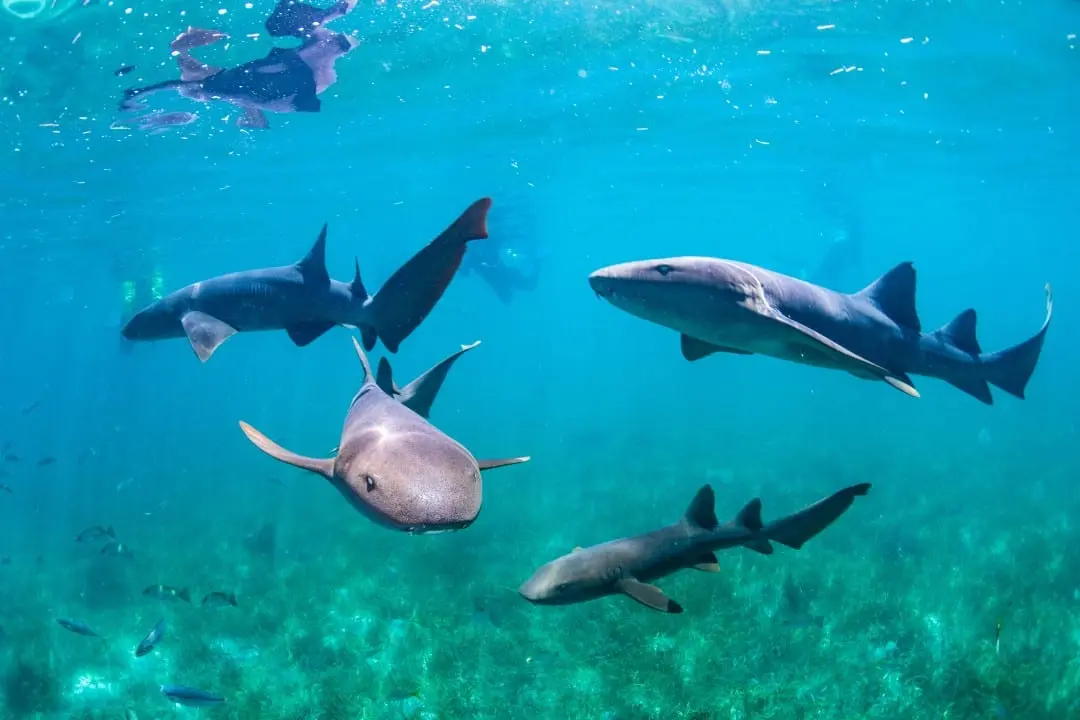
Other research centers choose to monitor sharks with acoustic transmitters, which emit detectable signals, comparable to vehicles crossing a tollbooth. Projects dedicated to tracking juvenile white sharks have been underway for decades, using markers, buoys and drones to follow the trajectory of these animals along the Californian coast, from their nursery areas in Mexico.
Despite advances, replicating the accuracy of a weather forecast for the presence of sharks still proves to be a considerable challenge. Although certain biological phenomena, such as the changing color of leaves in autumn or the appearance of schools of kingfish, are predictable, the behavioral pattern of sharks is intricate. “These are not ordinary fish,” explains McCauley, emphasizing the complexity of their behavior and natural history.
Water temperature emerges as one of the main elements analyzed by scientists in an attempt to anticipate shark behavior. Baby sharks often congregate near the surface and shore, given their sensitivity to cold and difficulty maintaining body temperature. For white sharks on the west coast, for example, the preference is for waters ranging from 15°C to 27°C. Furthermore, these marine predators react to changes in salinity, the occurrence of storms and the movement of their prey.
Chris Lowe, director of the Shark Laboratory at California State University Long Beach and co-founder of SharkEye with McCauley, points out that while humanity has been developing weather forecasts for centuries, approaches to predicting the presence of sharks are still in their early stages. He reminds us that, even with vast resources of data and technology, weather forecasts can fail.
See Also

Learn how to identify intrusions on WhatsApp and avoid financial fraud

PlayStation 5 owners gain lifetime access to three great games

Russian Islam Makhachev dominates Ian Machado Garry and wins main fight at UFC 330
More on this story: Research identifies cocaine in Brazilian sharks for the first time in the world
Unlike weather phenomena such as air currents or cloud formations, sharks exhibit individual and unpredictable behaviors.
Understanding Individual Shark Behavior
Technological innovations are refining predictive capabilities, offering researchers more information about shark behavior patterns. Megan Winton, a scientist at the Atlantic White Shark Conservancy, employs bioelectronic cameras — which she describes as “handing a smartphone to a shark” — to monitor the animals’ focus of attention. His work was fundamental to the development of the Sharktivity application, from the same organization, which provides real-time data on shark appearances and movements.
Winton’s studies reveal that each shark exhibits unique characteristics and habits. She recorded cases of sharks being surprised by birds or the sudden appearance of seals. The tracking cameras also allowed her to document a shark feeding on a seal and then resting on the ocean floor, which she likens to a “food coma.” Winton notes that “each shark has a distinct energy. Some are more reserved, while others demonstrate greater boldness, which is truly intriguing.”
Analysis of data collected over years on different coasts suggests where sharks tend to be located, but this does not guarantee the presence of a specific individual at any given time. “Sharks don’t differ that much from humans,” comments Lowe, explaining that “there is a considerable portion of the population that follows a pattern, but there are also those individuals that break the rule.”
“Each shark exhibits different behavior. Some are more cautious, while others are more bold, and this is genuinely captivating,” says Megan Winton, scientist at the Atlantic White Shark Conservancy.
The detection of sharks in a coastal strip does not clarify, however, whether they represent an imminent threat. Lowe’s laboratory, through years of monitoring with drones and acoustic signals, has accumulated records that demonstrate the frequent proximity between sharks and humans. Remarkably, the presence of people in the water does not seem to bother the sharks.
“We believed that humans would be a nuisance to sharks, but today we understand that we are irrelevant to them, in fact, we are just ‘debris'”, states Lowe. He adds that “we probably don’t have the scent of prey, we don’t make feeding noises and we don’t chase them, so we don’t pose a threat. They simply ignore us.”
Scientists suggest that rare interactions between sharks and humans most often occur due to a mistake: great white sharks can mistake a surfboard for the silhouette of a seal, their favorite prey.
Although great white sharks are possibly the most researched species globally, Lowe points out that scientists still do not know their mating and breeding sites. Megan Winton points out another big puzzle: “We still can’t clearly determine why sharks sometimes bite people.”
Learn more: From opening jars to solving problems: the secrets of octopus intelligence
Strategies for safe coexistence with marine predators
At Padaro Beach, near Santa Barbara, California, children’s camps benefit from McCauley’s alerts, allowing monitors to assess the days with the highest risk of shark presence. On certain days, drones record up to 15 sharks. “When there are a large number of sharks, especially large ones, children end up preferring to play beach volleyball instead of going into the water”, he reports.
Over the next ten years, the complexity of information and projections about the occurrence and timing of shark appearances should reach a significantly greater level of accuracy. McCauley envisions drones installed in lifeguard towers across the nation, dedicated to continuous surveillance of sharks. This measure would guarantee real-time data and allow the creation of a specific forecast for each beach.
“It would be possible to inform expectations about shark activity for the rest of the week and, perhaps, even for the following week”, projects the researcher.
Given the decreasing threats to sharks and the increase in their food sources, the chance of humans and these predators sharing the same coastal environment tends to increase.
McCauley emphasizes that forecasting tools are crucial elements in human learning about coexistence with the marine predators we seek to preserve. “The central goal of this line of research is to ensure that we can continue to enjoy these waters safely”, he concludes.