Can the senator who made racist comments about Mbappé respond in court? Understand the case
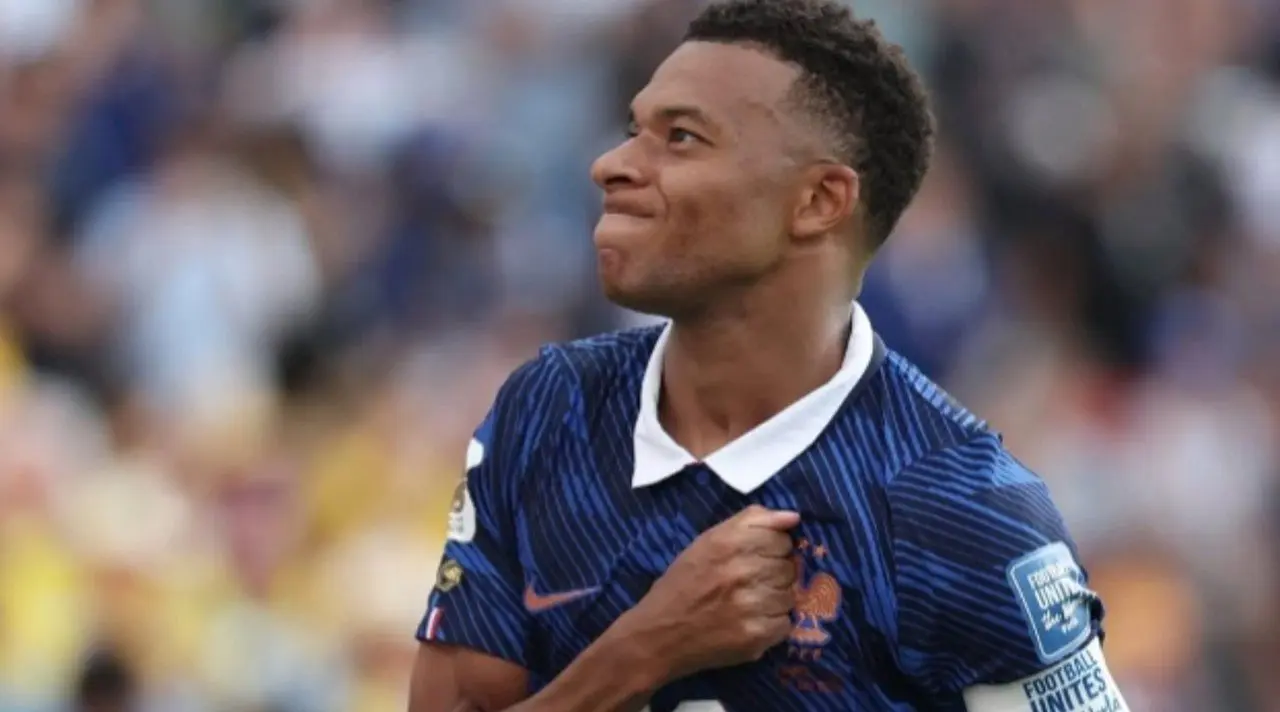
Despite strong international pressure, the chances of Paraguayan senator Celeste Amarilla facing criminal consequences in her country, due to racist attacks directed at French player Kylian Mbappé, are considered reduced.
The senator’s offensive statements, made last Saturday, July 4, shortly after France’s elimination of Paraguay in the World Cup, generated a wave of widespread indignation on social media. Authorities and sports organizations quickly came to the athlete’s defense.
Legal void in Paraguay prevents punishment for racism
Paraguayan lawyer Julio Scarone, a specialist in sports law, highlights the existence of a gap in the country’s legislation to deal with cases of racial discrimination. According to Scarone, Paraguay lacks a comprehensive law against discrimination or a specific criminal offense for racism or racial insults.
An attempt to frame the conduct as “spreading ideas based on superiority” would be possible, but the expert points out that Amarilla did not proclaim superiority, meaning that direct racist offenses are left without an explicit criminal offense. In other words, the Paraguayan Constitution prohibits discrimination, but there is no rule that expressly punishes racist offenses against anyone.

Practical difficulties in holding parliamentarians accountable
In practice, the racist insults uttered by Senator Celeste Amarilla do not fit into a specific crime under Paraguayan law, which complicates the parliamentarian’s criminal liability.
Dante Leguizamón, lawyer at the Human Rights Coordinator of Paraguay (Codehupy), agrees that the country does not have a general law against discrimination and that legislation on the subject is fragmented. However, he disagrees with Scarone’s interpretation of the adequacy of the senator’s speeches, believing that they constitute the propagation of ideas of racial superiority.
Even following Leguizamón’s vision, the senator would still have difficulty being punished. Scarone explains that the current law only protects people of African descent residing in Paraguay. As Mbappé does not reside in the country, the application of the law would be legally questionable.
Additionally, if the legislation could be applied, the sanctions envisaged would only be administrative, such as fines, public apologies or participation in educational courses, without the possibility of imprisonment.
Internal sanctions in the Senate are the most likely path
For Scarone, the most realistic scenario is that Senator Amarilla faces consequences within the Senate itself, instead of being prosecuted in court.
More on this story: Kylian Mbappé’s response to Paraguayan senator Celeste Amarilla’s racism
The lawyer assesses that “the really plausible scenario is an internal sanction by the Senate through ethical and disciplinary means, from a warning to more serious measures.”
Repudiation by the Paraguayan government
On Monday, July 6, the Paraguayan Ministry of Foreign Affairs issued a note expressing repudiation of the senator’s statements.
The document stated that the Government of the Republic of Paraguay “regrets and rejects the statements made by Senator Celeste Amarilla, addressed to the captain of the French team, Kylian Mbappé, as they are contrary to the values and principles that inspire peaceful coexistence and respect for human dignity promoted by our country”.
The note further clarified that the parliamentarian’s statements correspond “exclusively to the exercise of her individual responsibility as a member of the Legislative Branch and, in no way, represent the position of the Government of the Republic of Paraguay or the Paraguayan people.” The statement, however, did not mention the adoption of measures or punishments against the senator.
Investigation started in France
French authorities have launched an investigation into Celeste Amarilla’s racist statements. The information was released by the Paris Public Prosecutor’s Office this Tuesday, July 7th.
Following a complaint filed by the French Football Federation (FFF) also this Tuesday, the Paris MP “immediately opened an investigation” for “aggravated public defamation” based on the “origin, ethnicity, nationality, race or religion of the victim, real or presumed”.
Scarone considers that this is another case with probable practical difficulties in execution: an eventual conviction would face obstacles in having any effect on a Paraguayan parliamentarian.
On the same topic: Deschamps guarantees Mbappé focused for quarter-finals after racist attack by Paraguayan senator
He explains that “it is one thing for an investigation to be opened and progress in France; it is quite another for its execution in relation to a sitting Paraguayan senator.” The lawyer adds that a possible trial “would hardly result in detention, unless she entered French or European territory.”
See Also

Electrical discharge knocks man off roof in Jaguaruana after contact with power lines
Global auction raises US$11.9 million and Brazil’s historic currency reaches record value

Former fighter Prichard Colón dies at age 33 after decade in a vegetative state
The most likely scenario, therefore, would be that of a cause that advances and that may have a strong symbolic and reputational weight, but without an immediate executive consequence. Leguizamón also reinforces that the senator would hardly suffer the consequences of a conviction in France.
Extradition would be complex, considering her status as a senator, and progress in the process would depend on certain conditions being met. Furthermore, an initial requirement is the so-called principle of double criminality, which requires that the conduct be considered a crime or punishable in both countries.
FIFA and Conmebol are not involved in the case
Scarone clarifies that, despite the great repercussion in international football, the senator is not subject to the disciplinary rules of FIFA or Conmebol.
“This does not go through FIFA or Conmebol. The football disciplinary regime affects players, managers and associations, not a legislator outside the sporting structure”, stated the lawyer.
In this way, eventual manifestations by these entities would have a political and moral character, but would not represent a mechanism capable of applying individual sanctions against the parliamentarian.
Senator reiterates attacks and threatens to sue Mbappé
This Tuesday, July 7, senator Celeste Amarilla once again criticized the French player.
Amarilla claimed that his previous statements were made “in hot blood”, but warned the player not to underestimate the Paraguayans and recalled the episode of the arrest of former Brazilian player Ronaldinho Gaúcho.
Learn more: Mbappé responds to racist insults from Paraguayan senator during World Cup game
“Don’t mess with the Paraguayans, Mbappé. We’ve already sent Ronaldinho to jail,” he declared. Ronaldinho Gaúcho was detained in Paraguay in 2020 for entering the country with false documents.
The congresswoman once again stated that “Mbappé didn’t apologize to me, so I have no reason to apologize to him.” Amarilla reiterated a public letter he published in the morning and suggested that the player “should read it, if he knows how to read.”
UN support for Mbappé
The Office of the United Nations High Commissioner for Human Rights expressed, this Tuesday, July 7, its support for Mbappé, condemning the Paraguayan senator’s “racist” and “despicable” statements.
Thameen Al Kheetan, spokesperson for the Office of the High Commissioner, lamented in a statement that “the racist and dehumanizing statements directed against French player Kylian Mbappé by Paraguayan senator Celeste Amarilla are despicable and, unfortunately, are not an isolated case.”
Al Kheetan highlighted that these racist incidents “reflect a wider phenomenon affecting football and, more generally, sport”.
Understand the exchange of attacks between senator and player
France eliminated Paraguay last Saturday, July 5, which generated a negative reaction from the South American team. There were provocations to the opposing team’s captain, Kylian Mbappé, who responded to the players still on the field.
On social media, Paraguayan senator Celeste Amarilla defended the team and made racist attacks against the player.
Mbappé reacted to the attacks on his official account on platform X and accused the senator of showing “the worst possible image” of Paraguay.
Then, Amarilla returned to social media to rebut Mbappé. The senator demanded an apology from the player, stated that her criticism was directed exclusively at the attacker and claimed to have been a victim of gender-based violence due to the public response received.
She also again criticized statements made by Mbappé after the match, interpreting as offensive the Frenchman’s speech about “putting your hand in the mud” to win the game. According to the senator, if the player does not recant, she intends to take legal action against him.