August 2026 will have a total solar eclipse visible across much of the northern hemisphere
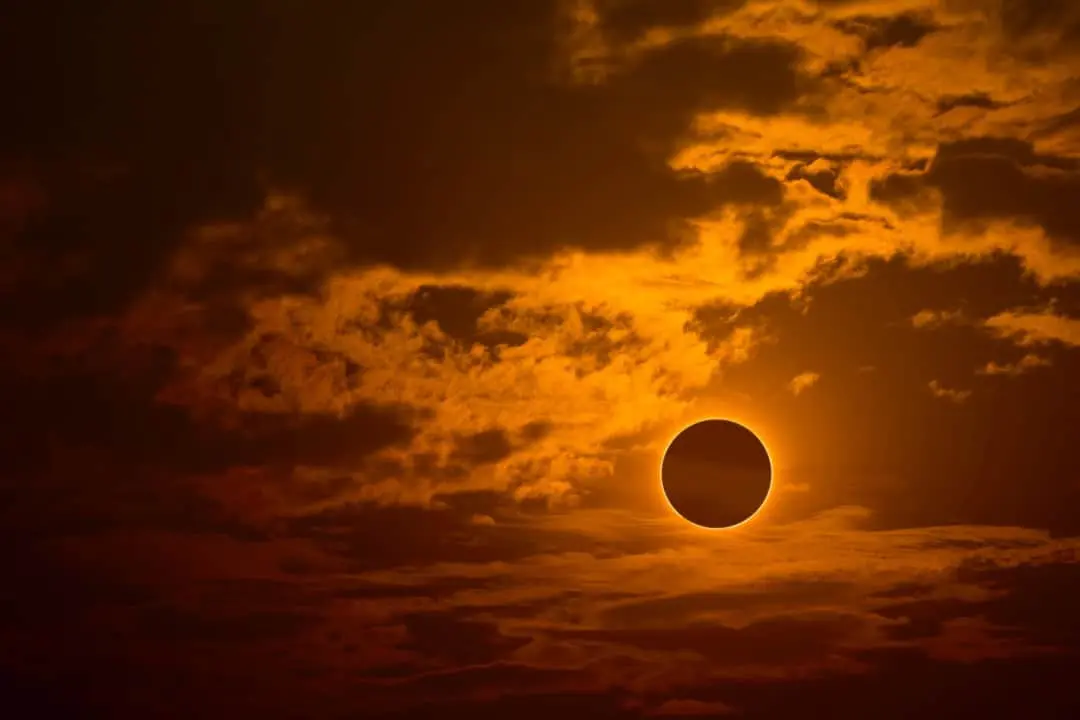
The fascinating astronomical phenomenon of a total solar eclipse will be visible on August 12, 2026, when its path will cross nations such as Greenland, Iceland, the northern region of Russia, the vast Atlantic Ocean, Spain and a portion of Portuguese territory.
On the same day, numerous other locations located in the Northern Hemisphere will also have the opportunity to observe a partial solar eclipse. This includes areas of the northern United States, ranging from Alaska to North Carolina, much of Canada, large regions of Europe and northwest Africa.
For inhabitants of the western portion of the eclipse path, especially in continental Europe and Africa, the Sun will be partially covered at sunset. This peculiarity will offer a unique viewing experience, with the event taking place during twilight.
On the same topic: Understand the total solar eclipse of August 12, the first in two decades
Understand what a total solar eclipse is and how it happens
A total solar eclipse occurs when the Moon positions itself precisely between the Earth and the Sun, completely blocking sunlight. Observers located in the center of the shadow cast by the Moon on Earth will witness the phenomenon in its fullness.
In a small and distant location in northern Russia, the moment of totality, when the Moon completely covers the solar disk, will occur around noon. In Greenland and Iceland, darkness will invade the sky in the late afternoon or early evening. In Spain and northwest Portugal, complete occultation of the Sun is predicted for the end of the night, just before sunset.
For most people within the band of totality, the Sun will remain completely eclipsed for less than two minutes. Those near the center of this range, such as in Greenland, Russia or the North Atlantic, will be able to enjoy a slightly longer time, but still under two and a half minutes.
It is crucial to highlight that only during these brief moments of totality, when the Sun’s bright face is completely blocked by the Moon, is it safe to look directly at the eclipse without any eye protection.
Before and after the period of totality, everyone who wishes to observe the Sun must use specific eye protection for the partial phases of the eclipse, in which the Moon covers only a part of the solar disk. It is recommended that you use sun protection glasses (known as “eclipse glasses”), portable sun visors, or other certified solar filters that are effective in blocking most sunlight and preventing irreversible eye damage. Observers can also opt for indirect observation methods, such as building a pinhole projector to display safe images of the Sun.
More on this story: Total solar eclipse in 2027 will have more than six minutes of dark skies and will attract scientists and tourists
🇪🇸 España inicia la cuenta atrás para vivir el primer eclipse total de Sol visible desde la Península Ibérica en 114 años.
— Ministerio de Ciencia, Innovación y Universidades (@CienciaGob) July 10, 2026
🌘 Será el inicio del #TríoDeEclipses y nuestro país se convertirá en el gran referente mundial para la observación astronómica.https://t.co/W5hO48HbdW pic.twitter.com/ISvHw4THB8
See Also

Electrical discharge knocks man off roof in Jaguaruana after contact with power lines

Global auction raises US$11.9 million and Brazil’s historic currency reaches record value

Former fighter Prichard Colón dies at age 33 after decade in a vegetative state
What will the partial solar eclipse be like in August 2026
For those who are in the Moon’s shadow, but outside the range where totality occurs, the Moon will never completely cover the Sun, resulting in only a partial eclipse. During a partial solar eclipse, it is never safe to look directly at the Sun without proper eye protection.
Learn more: 2026 total solar eclipse crosses Greenland, Iceland and northern Spain in August
The partial solar eclipse scheduled for August 12 will begin at dawn in the northern region of Russia. In Alaska and northern Canada, the event will begin and end in the morning, while Canada’s eastern provinces will see it in the afternoon. In the north of the continental United States, the partial eclipse will begin around noon, extending until mid-afternoon for locations further east. In the UK, Ireland, mainland Europe and Africa, the eclipse will reach the sky overnight.
Observers in the United States and southern Canada will see only a small “bite” in the solar disk, indicating that the Moon will just graze the Sun. In contrast, those closer to the band of totality, covering much of Europe and northwest Africa, will see most of the Sun covered.
When observing a partial solar eclipse directly, it is essential to wear sun protection glasses, often called “eclipse glasses”, or a safe portable solar viewer. It is important to highlight that common sunglasses, even the darkest ones, do not offer adequate protection when looking directly at the Sun. Safe solar visors are thousands of times darker and must comply with the international standard ISO 12312-2.
Learn more: August’s total solar eclipse will cause temporary darkness in several regions of the world
It is prohibited to look at the Sun through camera lenses, telescopes, binoculars or any other optical device using only eclipse glasses or a portable solar viewer. The concentration of sunlight can burn the filter and cause serious eye damage. A specific solar filter must be attached to the front of any optical equipment to ensure safe observation of the Sun.
If you do not have eclipse glasses or a portable solar visor, you can use an indirect observation method, which eliminates looking directly at the Sun. One option is to use a pinhole projector, which has a small opening (like a hole in a card) and projects an image of the Sun onto a nearby surface. With the Sun at your back, the projected image can be observed in complete safety. Never look at the Sun through the hole! Tree leaves, for example, act as natural holes, projecting the silhouette of the eclipse onto the surface beneath them.
Observation points and times of the phenomenon
Below, we present some important details about the eclipse in selected cities. All times mentioned are local.
An asterisk (*) next to “Partial End” indicates that the eclipse will extend beyond sunset, and the time given corresponds to sunset.
- Total eclipse
- León (Spain): Partial start 7:32 p.m., Totality begins 8:28 p.m., End of totality 8:30 p.m., Partial extensions 9:22 p.m.
- Reykjavik (Iceland): Partial start 4:47 p.m., Totality begins 5:48 p.m., End of totality 5:49 p.m., Partial extensions 6:47 p.m.
- Valencia (Spain): Partial start 7:38 pm, Totality begins 8:32 pm, End of totality 8:33 pm, Partial extensions 9:01 pm *
- Zaragoza (Spain): Partial start 19:34, Totality begins 20:29, End of totality 20:30, Partial extensions 21:07 *
- Partial eclipse
- Anchorage, Alaska (USA): Partial start 7:36 am, Maximum 8:21 am, Coverage 28%, Partial extensions 9:09 am
- Bangor, Maine (USA): Partial start 12:54 pm, Maximum 1:53 pm, Coverage 24%, Partial extensions 2:49 pm
- Boston, Massachusetts (USA): Partial start 1:01 pm, Maximum 1:55 pm, Coverage 16%, Partial extensions 2:46 pm
- Detroit, Michigan (USA): Partial start 1:03 pm, Maximum 1:36 pm, Coverage 3%, Partial extensions 2:08 pm
- Fairbanks, Alaska (USA): Partial start 7:37 am, Maximum 8:27 am, Coverage 37%, Partial extensions 9:18 am
- Juneau, Alaska (USA): Partial start 7:41 am, Maximum 8:24 am, Coverage 17%, Partial extensions 9:08 am
- New York, New York (USA): Partial start 1:07 pm, Maximum 1:54 pm, Coverage 9%, Partial extensions 2:38 pm
- Philadelphia, Pennsylvania (USA): Partial start 1:11 pm, Maximum 1:53 pm, Coverage 7%, Partial extensions 2:35 pm
- Portland, Maine (USA): Partial start 12:57 pm, Maximum 1:53 pm, Coverage 19%, Partial extensions 2:27 pm
- Washington, DC (USA): Partial start 1:17 pm, Maximum 1:53 pm, Coverage 4%, Partial extensions 2:27 pm
- Algiers (Algeria): Partial start 18:42, Maximum 19:33, Coverage 96%, Partial extensions 19:42 *
- Barcelona (Spain): Partial start 7:35 pm, Maximum 8:29 pm, Coverage 99%, Partial extensions 8:54 pm *
- Berlin (Germany): Partial start 7:15 pm, Maximum 8:08 pm, Coverage 85%, Partial extensions 8:38 pm *
- Casablanca (Morocco): Partial start 6:48 pm, Maximum 7:43 pm, Coverage 87%, Partial extensions 8:20 pm *
- Dakar (Senegal): Partial start 18:25, Maximum 19:12, Coverage 37%, Partial extensions 19:34 *
- Dublin (Ireland): Partial start 6:12 pm, Maximum 7:10 pm, Coverage 94%, Partial extensions 8:05 pm
- Edmonton (Canada): Partial start 10:02, Maximum 10:38, Coverage 6%, Partial extensions 11:15
- Halifax (Canada): Partial start 1:58 pm, Maximum 3:00 pm, Coverage 31%, Partial extensions 3:58 pm
- Krakow (Poland): Partial start 19:18, Maximum 19:56, Coverage 64%, Partial extensions 20:04 *
- Lisbon (Portugal): Partial start 6:39 pm, Maximum 7:36 pm, Coverage 95%, Partial extensions 8:29 pm
- London (United Kingdom): Partial start 6:17 pm, Maximum 7:13 pm, Coverage 91%, Partial extensions 8:06 pm
- Madrid (Spain): Partial start 7:36 pm, Maximum 8:32 pm, Coverage 99%, Partial extensions 9:16 pm *
- Milan (Italy): Partial start 7:27 pm, Maximum 8:20 pm, Coverage 92%, Partial extensions 8:35 pm *
- Montreal (Canada): Partial start 12:50 p.m., Maximum 1:45 p.m., Coverage 18%, Partial extensions 2:38 p.m.
- Nuuk (Greenland): Partial start 3:30 pm, Maximum 4:35 pm, Coverage 79%, Partial extensions 5:39 pm
- Oslo (Norway): Partial start 19:02, Maximum 19:57, Coverage 83%, Partial extensions 20:49
- Paris (France): Partial start 7:22 pm, Maximum 8:17 pm, Coverage 92%, Partial extensions 9:09 pm
- Saint John (Canada): Partial start 2:28 pm, Maximum 3:35 pm, Coverage 53%, Partial extensions 4:37 pm
- Saint Petersburg (Russia): Partial start 19:59, Maximum 20:51, Coverage 79%, Partial extensions 21:00 *
- Stockholm (Sweden): Partial start 19:03, Maximum 19:56, Coverage 81%, Partial extensions 20:46 *
- Toronto (Canada): Partial start 12:55 pm, Maximum 1:40 pm, Coverage 8%, Partial extensions 2:23 pm
- Tunis (Tunisia): Partial start 18:41, Maximum 19:11, Coverage 50%, Partial extensions 19:14 *
- Vienna (Austria): Partial start 7:22 pm, Maximum 8:10 pm, Coverage 85%, Partial extensions 8:13 pm *
- Winnipeg (Canada): Partial start 11:25 am, Maximum 12:02 pm, Coverage 5%, Partial extensions 12:40 pm