Total solar eclipse in 2027 will have more than six minutes of dark skies and will attract scientists and tourists
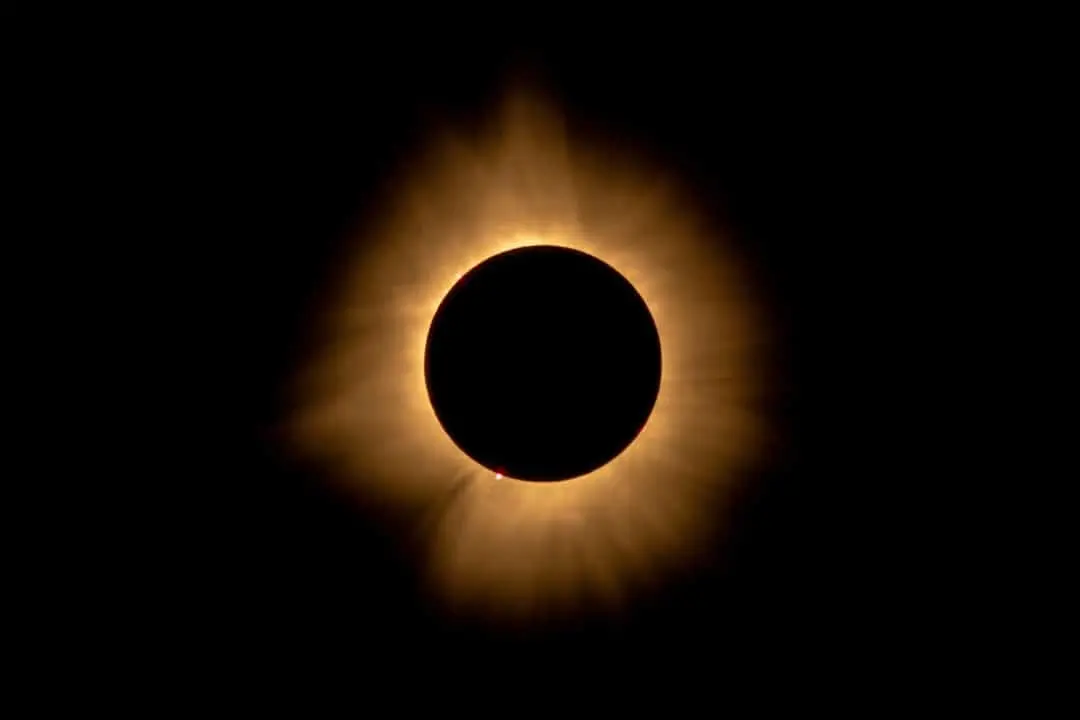
An astronomical event of unique proportions is predicted forAugust 2027, when the Moon will be positioned to completely obscure the Sun for an extraordinary period of more than six minutes. This phenomenon will turn day into night, attracting the attention of enthusiasts and travelers from all over the world, ready to witness a rare celestial spectacle.
Why will the 2027 solar eclipse be an unprecedented astronomical event?
The main characteristic that gives this phenomenon uniqueness is its prolonged duration of complete darkness in specific regions of the planet. This extended period, unusual for solar eclipses, offers an unprecedented window for scientists and observers to study the solar corona in stunning detail, revealing secrets about the Sun’s atmosphere that are visible only during totality.
This long phase of totality creates a perfect environment for detecting rapid temperature variations and analyzing possible changes in the behavior of local fauna. Consequently, several international space agencies are already mobilized, planning to record this cosmic alignment using the latest technologies.
For a complete understanding of the key elements of this grand event, check out the important details:
- The Moon will position itself precisely between the Earth and the Sun, creating a perfect alignment.
- The full shadow will sweep across continents and oceans in a band of totality.
- The phenomenon will last for a long time, with more than six minutes of darkness.
- It is crucial to use certified glasses to protect against solar radiation.
- Thousands of enthusiasts will travel to strategic points to watch the event.
Which regions will have the best visibility for the 2027 total eclipse?
Throughout the day, the path taken by the complete shadow of the eclipse will favor several nations located in Europe and Africa. Residents and visitors to these locations will have the chance to experience the height of the spectacle, watching the sky become completely covered over.
More on this story: Runout of special glasses marks preparation for rare solar eclipse in Europe
There is a lot of advance notice, and enthusiasts from all over the world are already organizing their trips to destinations with arid climates and low incidence of clouds. Careful selection of the observation location is essential to prevent unexpected cloud formations from spoiling the experience at the time of maximum darkness.
To delve deeper into the aspects covered, check out an explanatory video from the National Observatory:
Discover the countries that will be in the path of the totality of the eclipse
The trajectory of the eclipse’s totality will cover strategic regions in Spain and will quickly advance over the African continent. Astronomy experts have already outlined this route with great accuracy, mapping the lunar shadow projected on the Earth’s surface.
On the same topic: Total solar eclipse of 2027 will be the longest of the 21st century, with record duration
Globally, the path of totality will cross key points such as Spain, Morocco and Algeria, ending in the Middle East. It is important to highlight that the specific climatic conditions of each location will be decisive for a clear and detailed visualization of the solar corona.
See Also

Motorola razr fold impresses by being lighter than iPhone 17 Pro Max

Singer Robbie Williams reveals autism diagnosis and finds relief in new perspective

Hulk scores with a header and leaves everything the same in the first half of Fluminense x Palmeiras in the Brasileirão
Nations such as Morocco and Algeria will align precisely with the center of the totality band of this grand event, which will take place in August. The experts’ recommendation is that observers look for places with adequate infrastructure for an experience of monitoring and recording the phenomenon, ensuring safety and maximum enjoyment.
Key countries graced by this passage from total darkness include:
- The south of Spain’s European territory will offer excellent visibility.
- Morocco will witness the umbra, providing unforgettable moments for those who observe.
- Algeria will be in the path of the shadow, enabling in-depth scientific recordings of the solar corona.
Safety guide: how to observe the eclipse without risk to your vision
Looking directly at the Sun without proper protection can cause serious and permanent eye damage in a short space of time. Therefore, the unanimous recommendation is to purchase equipment with specific certification, ensuring total eye safety during observation.
Learn more: August 2026 will have a total solar eclipse visible across much of the northern hemisphere
Makeshift alternatives, such as conventional sunglasses or x-rays, are ineffective and pose a considerable risk. The only safe and conscious way to observe the phenomenon is using glasses designed specifically for eclipses and duly certified.
To ensure a safe and memorable observation, follow the following guidelines:
- Only use glasses that have ISO international eye safety certification.
- Avoid using unsuitable photographic film or welding filters.
- Take frequent breaks while observing partial stages of the eclipse.
Luxor, Egypt: The Top Destination for Eclipse Tourists and Scientists
The city of Luxor, known for its rich history in Egypt, has emerged as one of the most sought-after locations globally to watch the eclipse. Its historically dry climate and high frequency of clear skies considerably increase the chances of uninterrupted observation, a factor highly valued by travelers and researchers.
In addition to the favorable weather conditions, the panorama of the region’s ancient temples promises a unique setting, mixing the grand with the mystical. Photographers of various nationalities are already drawing up plans to capture the solar corona with its intense glow over the historical monuments of this spectacular area.