New evidence indicates that ancient ‘hobbits’ fed on remains left by Komodo dragons
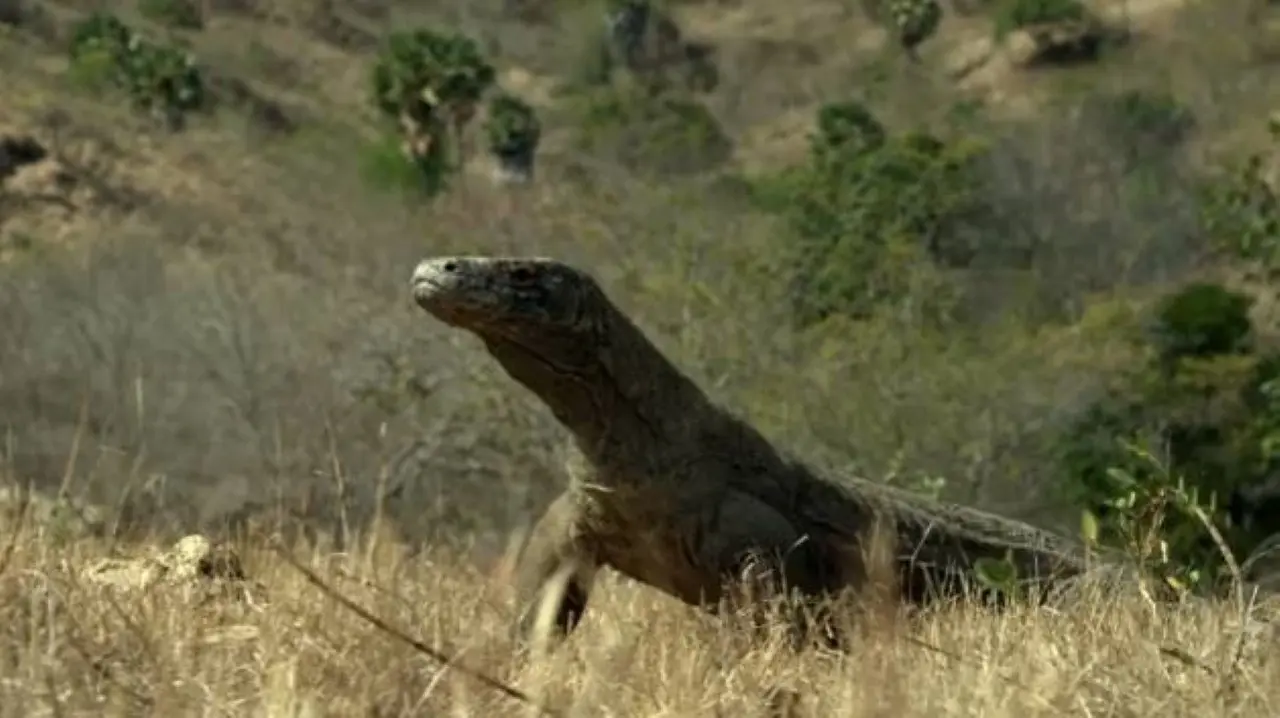
Researchers have revealed that the ancient human species known as *Homo floresiensis*, nicknamed “hobbits”, probably did not hunt large prey on the island of Flores, Indonesia. The new analysis, published in the journal *Science Advances*, suggests that these hominids actually fed on remains left by Komodo dragons, challenging a scientific interpretation that has persisted for decades. This discovery redefines our understanding of the cognitive capabilities and diet of these small human ancestors, who lived in a challenging environment.
The reevaluation of the lives of the “hobbits” in Flores
The species *Homo floresiensis* was discovered in 2003, in the Liang Bua cave, in Flores, Indonesia. Only about a meter tall and with small brains, these hominids were initially portrayed as skilled hunters, capable of making complex tools and using fire to kill large animals. The previous interpretation was based mainly on the presence of scratch marks on bones of *Stegodon*, an extinct and dwarf relative of the elephant, found alongside the stone tools of the “hobbits”.
On the same topic: Analysis of 300,000-year-old Homo naledi fossils reveals exclusively female individuals and evolutionary connections
Elizabeth Grace Veatch, a paleoanthropologist at the University of Tübingen and lead author of the study, questioned this premise. She sought to verify whether *H. floresiensis* actually hunted, as had been thought for decades. Her research led to a surprising conclusion, indicating that the island’s largest predators, Komodo dragons, came first to the most robust game.
Deciphering tooth and tool marks
To differentiate dragon marks from stone tool marks, Veatch and his team conducted an experiment at the Atlanta Zoo. They watched a Komodo dragon named Rinca feed on a goat carcass, collecting the remaining 72 bones. Detailed analysis of the marks left by the dragon’s teeth, which were shallow and wide, with striations on the serrated edges, created a reference library.
In contrast, stone tools left deeper, straighter marks. By applying this knowledge to Liang Bua’s ancient *Stegodon* bones under a high-powered microscope, the team mapped the distribution of the scratches. Komodo dragons’ markings were concentrated in areas with the most flesh, such as shoulders and hips, indicating that they consumed their prey first. Hobbit tool marks, on the other hand, appeared on less nutritious remains, such as feet and ribs, suggesting that they simply collected scraps.
More on this story: New analysis of Homo naledi fossils in South Africa shows that all specimens from the Cradle of Humankind are females
See Also

Electrical discharge knocks man off roof in Jaguaruana after contact with power lines

Global auction raises US$11.9 million and Brazil’s historic currency reaches record value

Former fighter Prichard Colón dies at age 33 after decade in a vegetative state
Why the distinction between hunting and gathering redefines our understanding of human intelligence
The ability to hunt prey larger than ourselves is often considered a crucial milestone in human evolution, as it requires cooperation, planning and the transmission of accumulated knowledge. This cognitive complexity is usually associated with species with larger brains, such as *Homo sapiens* and Neanderthals. The discovery that “hobbits” were actually passive collectors of Komodo dragon remains, rather than active hunters, suggests a reassessment of their intelligence and social structures.
This shift in perspective has significant implications for archeology and anthropology, challenging the idea that hunting large animals was a prerequisite for the development of certain cognitive abilities. Although the evidence is strong, paleoecologist Kay Behrensmeyer, from the Smithsonian’s National Museum of Natural History, highlights the difficulty in distinguishing hunting from gathering just by bone marks, maintaining some caution regarding the “just gathering” hypothesis for the “hobbits”.
Evolution of the image of “hobbits” and the mystery of fire
The new research is not the first to tweak the picture of *Homo floresiensis*’s capabilities. Over the past decade, excavations at Liang Bua had already indicated that “hobbit” tools were simpler than previously thought. There was also initial confusion about the use of fire, as younger layers of the cave, occupied by *Homo sapiens*, were mistakenly associated with “hobbits”.
Learn more: Digital reconstruction reveals facial features of Little Foot, 3.67 million-year-old ancestor
In this new study, of the 3,155 *Stegodon* bone fragments examined, only one rib showed signs of fire, and it was exactly at the junction of the layers of *Homo sapiens* and “hobbits”. This raises the possibility that the bone was burned at a later time. Thomas Sutikna, excavation director at Liang Bua, said it is rewarding to refine knowledge about *Homo floresiensis*, even if it means correcting initial interpretations.
Main reviews about Homo floresiensis:
- Diet:From hunters of large prey to collectors of remains left by Komodo dragons.
- Tools:Considered simpler and less elaborate than initially believed.
- Use of fire:Evidence of fire is now mainly associated with later occupation by *Homo sapiens*.
- Cognitive ability:Reassessment of diet and tool use suggests lower cognitive complexity than original attributions.
Science continues to unravel the mysteries of our ancestors, and the story of the Flores “hobbits” is a vibrant example of how interpretations can evolve with new methodologies and discoveries.